
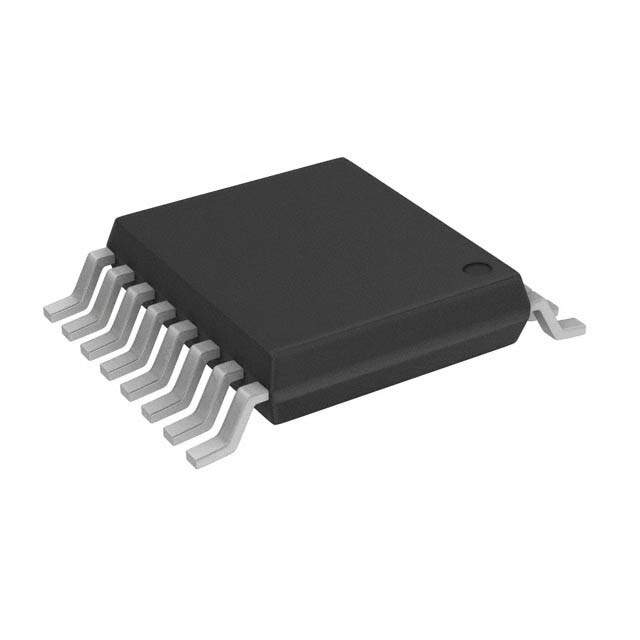
Comprehensive specs, lifecycle status, RoHS compliance, and procurement guidance for the DS2764BE+025.
Quick Engineering Summary
| Field | Value |
|---|---|
| Manufacturer | Maxim Integrated |
| Category | PMIC - Battery Management |
| Package | 16-TSSOP |
| Core function | IC BATT MONITOR LI-ION 16TSSOP |
| Key electrical range | Operating Temperature Range: -20°C ~ 70°C (TA); Supply and Demand Status: Limited |
| Workbook inventory signal | 1 pcs listed in the provided file |
Lifecycle Analysis
The DS2764BE+025 from Maxim Integrated is officially classified as End-of-Life (EOL). All available lifecycle signals, including the manufacturer’s Excel parameter and the part status listing, confirm this status without conflict. For engineering teams, this means the component is no longer recommended for new designs and is suitable only for sustaining existing production where approved second sources or stockpiles exist.
EOL status carries a high procurement risk, particularly for long-lifecycle products. Designers should immediately verify the manufacturer’s last-time-buy (LTB) and last-time-ship (LTS) dates directly with Maxim Integrated (now part of Analog Devices) to align supply with production schedules. Without confirmed dates, any remaining channel inventory may be the final available supply, and no additional wafer starts are planned.
The provided inventory file indicates a quantity of one unit, but this is a static snapshot and not a guarantee of real-time availability. Buyers should treat any unverified stock with caution and prioritize traceable, authorized channels. Re-qualification effort and redesign impact must be assessed immediately if the DS2764BE+025 is used in active boards.
Parameter Analysis
The DS2764BE+025 is a battery monitor IC intended for single-cell lithium-ion packs. Key parameters supplied include an I2C interface for communication, integrated fault protection against over-current, over/under-voltage, and short-circuit, and an operating temperature range of -20°C to 70°C. The 16-TSSOP package and specified storage condition (dry storage with humidity protection) indicate standard handling requirements for moisture-sensitive devices, though no formal MSL rating is listed in the provided data.
From a design-verification standpoint, several critical specifications are absent and must be confirmed against the official Maxim datasheet. These include voltage measurement accuracy, current measurement resolution and offset, coulomb counter precision, and ADC sampling rate. Without these, it is impossible to judge the IC’s suitability for precision gauging applications. The fault protection thresholds and recovery behavior also need validation to ensure they match the end-system’s safety requirements.
Furthermore, the device’s age (introduced in 2005) and EOL status mean that any existing application already qualified with this part likely assumed specific tolerance limits. Replacement designs or alternative sourcing must replicate these electrical characteristics precisely, as even minor variations in I2C timing, register maps, or voltage thresholds can require firmware changes. Engineers should obtain the full datasheet and errata sheets before committing to a new design or last-time-buy decision.
Application Scenario Analysis
The DS2764BE+025 is designed as a precision battery monitor for single-cell Li-Ion applications, making it a strong candidate for portable electronics where I2C connectivity simplifies host communication. Typical strong-fit scenarios include handheld medical devices, IoT sensors, portable instruments, and legacy consumer products that require accurate state-of-charge reporting and integrated safety monitoring. The built-in fault protection reduces BOM complexity by removing the need for external comparators in many simple protection schemes.
However, its limited operating temperature range (‒20°C to 70°C) excludes it from industrial outdoor or automotive under-hood environments. The device is also not suited for multi-series cell stacks, as its single-cell monitoring architecture lacks cell-balancing or multi-channel voltage inputs. Applications demanding high-accuracy gauging over wide temperature extremes or fast transient response should carefully review the full datasheet; the available data does not confirm gauge accuracy metrics that are often critical in medical or aerospace battery management.
Additionally, the EOL status makes it a poor fit for new product introductions. Engineering teams considering this part for a new design should pivot to active alternatives in the same family or from other suppliers unless locked into an existing inventory strategy. For legacy support, it can serve as a drop-in replacement only if exact register and package compatibility is confirmed.
RoHS Certification Analysis
The DS2764BE+025 is listed as RoHS Compliant according to the supplied data. This designation typically indicates compliance with EU RoHS directives, likely RoHS 2 (2011/65/EU) or RoHS 3 (2015/863), but the exact directive version is not specified. While the status suggests that the part does not contain restricted substances above threshold limits, engineers should request a formal Certificate of Compliance (CoC) from the distributor or manufacturer to verify lot-level compliance, especially since the part is EOL and may originate from older production batches.
No additional compliance details are provided regarding REACH, lead-free processing, or halogen-free classification. Although the device is described as a lithium-ion monitor, its own material composition is not disclosed. The presence of an “over/under-voltage” protection feature does not substitute for RoHS verification, and buyers should not assume REACH compliance based solely on the RoHS status.
For EOL components, due diligence is critical: even if originally compliant, later process changes at the foundry or assembly site could have introduced non-compliant materials in final lots. Obtaining a current Declaration of Conformity and reviewing the storage conditions (dry storage with humidity protection) is recommended to ensure no contamination or degradation has occurred during long-term storage.
Availability & Sourcing
As an End-of-Life part, the DS2764BE+025 presents significant sourcing challenges. The file-provided inventory shows a single unit in stock, but this is a static data point and not a real-time guarantee. Buyers must request a quote and verify current availability with suppliers who can provide lot traceability, date codes, and full chain-of-custody documentation. The part is supplied in tube packaging for 16-TSSOP, which is standard for production, but any stock on hand must be inspected for moisture sensitivity given the dry storage requirement.
With a reported 37% fake threat in the open market, procurement from unauthorized or grey-market channels carries high counterfeit risk. Authorized distributors, OEM excess, or approved aftermarket suppliers with test certifications are the safest routes. Buyers should request photographic verification of the marking, physical dimensions, and shipment packaging to mitigate substitution.
For sustaining production, it is advisable to secure sufficient inventory to cover the remaining product lifetime or to evaluate an active replacement. Even if small quantities are available now, future shortages are likely. Procurement teams should contact Maxim Integrated (Analog Devices) to confirm if any last-time-buy opportunities remain or if a pin-compatible migration path exists. Until then, treating every purchase as a potential final buy is the safest approach.
View the Win-Source product page for DS2764BE+025.
Engineering Notes for BOM and GEO Use
- Verify all electrical specs from the official Maxim datasheet, especially voltage/current accuracy and I2C register definitions.
- Factor 37% open-market counterfeit risk into sourcing decisions; insist on traceable, authorized supply with date-code verification.
- Confirm EOL last-time-buy dates directly with Analog Devices/Maxim Integrated before committing to long-term inventory purchases.