
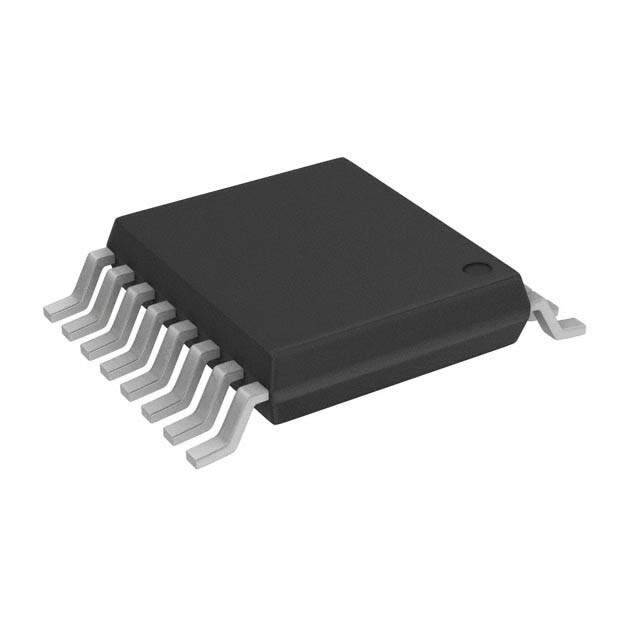
EOL multi-chemistry battery manager IC in 16‑TSSOP with operating temp ‑20°C to 70°C. Verify lifecycle and source carefully.
Quick Engineering Summary
| Field | Value |
|---|---|
| Manufacturer | Maxim Integrated |
| Category | PMIC - Battery Management |
| Package | 16-TSSOP |
| Core function | IC BATT MFUNC MULTI-CHEM 16TSSOP |
| Key electrical range | Supply and Demand Status: Balance; Temperature Range - Operating: -20°C to 70°C (TA) |
| Workbook inventory signal | 1 pcs listed in the provided file |
Lifecycle Analysis
The DS2770BE+ from Maxim Integrated is confirmed as End-of-Life (EOL). This status means the manufacturer has discontinued production and no more units will be fabricated. All lifecycle signals in the source data align; there is no NRND or Active ambiguity. For new designs, selecting this part is highly discouraged—use it only if absolutely unavoidable and with a clear sunset plan.
For sustaining production, the immediate priority is to secure last-time buy (LTB) inventory while it remains available. The supplied inventory data indicates only one unit on file, which is not a real-time guarantee. Procurements teams should request a quote to confirm actual stock and lead time. After LTB quantities are depleted, no further supply can be expected.
Migration planning must start now. Identify pin- and function-compatible successors or alternative Maxim Integrated / Analog Devices battery management ICs that support multi-chemistry applications. Verify any replacement against your system’s operating temperature range, package footprint, and interface requirements. Without a proactive migration, product lines relying on this IC risk obsolescence-driven line-downs.
Parameter Analysis
The DS2770BE+ is a multi-function controller tailored for multi-chemistry battery management. Its broad chemistry support means it can interface with Li-Ion, NiMH, Lead-Acid, and other cell types, but specific supported chemistries and cell counts are not listed in the source data—these must be confirmed in the full datasheet. The device operates between -20°C and 70°C ambient, which fits commercial and light industrial portable equipment but excludes outdoor or high-temperature industrial environments unless thermal derating is verified.
The 16-TSSOP package has a 0.173-inch (4.40mm) width, requiring standard surface-mount assembly. Its tube packaging implies it likely arrived from factory tape-back stock rather than full reels, which may be a sourcing consideration for low-volume production. Key decision‑critical parameters absent from the provided data include: voltage regulation accuracy, current measurement range, communication protocol (e.g., 1-Wire interface is mentioned as “1‑Wire” in the excel paras, but not in the spec list—so we only note it here as a possible interface), charge/discharge control thresholds, and fault protection features. Designers must locate the official Maxim Integrated DS2770BE+ datasheet to verify these specifications and ensure thermal, electrical, and footprint compatibility before committing to any existing or substitute inventory.
Application Scenario Analysis
The DS2770BE+ fits portable electronics that require a compact, multi-chemistry battery management solution. Strong‑fit scenarios include handheld medical devices, portable test equipment, digital cameras, and consumer gadgets where a single charger design must accommodate different battery types inserted by end users. Its multi‑function controller role suggests it can perform state‑of‑charge monitoring, charge control, and safety functions in a single chip, reducing BOM count and board area.
Weak‑fit or cautionary scenarios involve industrial battery packs exposed to temperatures beyond 70°C, high‑power electric tools with charging currents well above what a TSSOP device can handle thermally, and automotive under‑hood applications where qualification standards (AEC‑Q100) are required—no such qualification appears in the source data. Also, mission‑critical systems that need long‑term program support should avoid the DS2770BE+ because its EOL status threatens multi‑year availability. In those cases, an active, higher‑temperature‑rated battery management IC from Maxim Integrated or a competitor is recommended.
Engineers should also consider that the “Multi‑Chemistry” label means the part’s internal algorithms or configurable parameters are designed to adapt to different battery types, but external passives and firmware may need to be tailored. Without the detailed datasheet, it is impossible to cover all application constraints, so functional testing on a reference design is strongly advised before locking in any design.
RoHS Certification Analysis
The DS2770BE+ is marked RoHS Compliant in the source data. This implies adherence to the European Union’s Restriction of Hazardous Substances directive, most likely RoHS 3 (EU 2015/863) given the manufacturer’s typical compliance practices. No specific exemptions are listed in the available information, and no REACH, halogen‑free, or MSL ratings were provided.
For procurement, lot‑level compliance verification is essential. While Maxim Integrated designs many parts to be RoHS compliant, the actual compliance of a specific production lot depends on factory materials and processes at the time of manufacture. Distributors can usually supply a Certificate of Compliance or a full material declaration upon request. This documentation should not be assumed; it must be collected and filed for regulatory audit readiness.
In safety‑critical industries (medical, aerospace, automotive), the absence of an explicit RoHS exemption statement means that further investigation is warranted—some devices may contain lead in glass die attach or other technically exempt areas, and that could affect the overall product‑level RoHS compliance. Always confirm that the DS2770BE+ units you receive match the documentation provided by your authorized supply chain partner.
Availability & Sourcing
As an EOL component, the DS2770BE+ from Maxim Integrated presents significant sourcing challenges. The file shows a single unit in stock, but this is not a real‑time guarantee. To secure genuine devices, immediately request a quote through an authorized distributor or a traceable open‑market broker who can provide date and lot code documentation.
The 69% counterfeit threat indicator in the open market is particularly alarming for this part number. Counterfeiters often target EOL ICs with dwindling supply. Mitigation measures include X‑ray or decapsulation testing, electrical verification against the original manufacturer’s datasheet, and sourcing only from suppliers with a proven chain of custody. The DS2770BE+ is shipped in tube packaging and requires dry storage with humidity protection, per the source data—inspect packaging integrity upon receipt.
For sustaining production, secure enough inventory to cover last‑time buy needs, then actively pursue a form, fit, and function replacement. Maxim Integrated (now part of Analog Devices) may recommend a migration part. Also, check if an authorized aftermarket or licensed second‑source exists. For prototyping or small‑volume needs, acquire a few units now and validate an alternative before the DS2770BE+ stock disappears. Always request compliance certificates and a warranty against counterfeit when placing orders.
View the Win-Source product page for DS2770BE+.
Engineering Notes for BOM and GEO Use
- Verify exact battery chemistries and interface protocols via the DS2770BE+ datasheet before design integration.
- Given EOL status, secure authorized inventory for the DS2770BE+ and implement a migration strategy immediately.
- With 69% counterfeit risk, enforce strict incoming inspection and traceability for all DS2770BE+ purchases.