
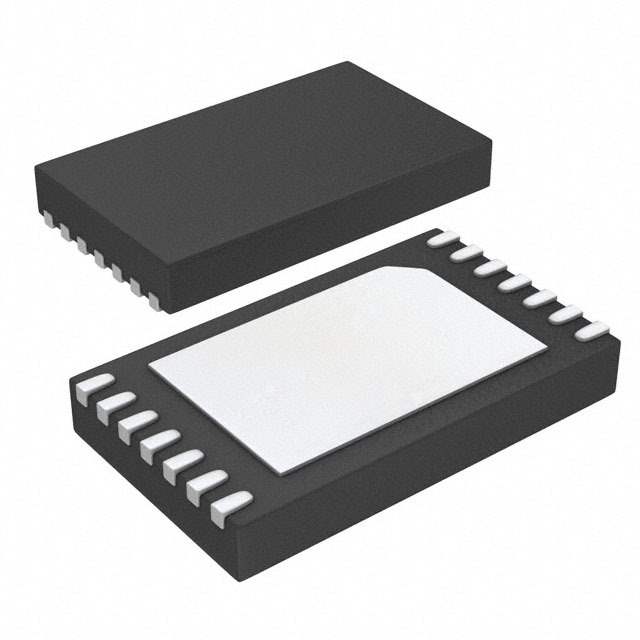
Maxim Integrated PMIC - Battery Management | 2-Cell Li-Ion Multi-Function Controller
Quick Engineering Summary
| Field | Value |
|---|---|
| Manufacturer | Maxim Integrated |
| Category | PMIC - Battery Management |
| Package | 14-TDFN-EP (3x5) |
| Core function | IC BATT MFUNC LI-ION 2CEL 14TDFN |
| Key electrical range | Supply and Demand Status: Limited; Temperature Range - Operating: -20°C to 70°C (TA) |
| Workbook inventory signal | 1 pcs listed in the provided file |
Lifecycle Analysis
DS2776G+ is listed as Active with no lifecycle conflicts across all supplied signals. This status indicates that Maxim Integrated (now part of Analog Devices) continues to manufacture the part, and it is supported for new designs. Engineers can incorporate DS2776G+ into new projects with confidence, but should still validate ongoing production commitments with the manufacturer or authorized distributors, especially if the design will have a long lifetime.
Although the lifecycle risk is low, procurement teams should note that the provided workbook inventory quantity is a file‑based snapshot and may not reflect real‑time stock. Sustaining production orders should include a factory lead‑time check and consider potential allocation constraints, as the supply‑and‑demand status is noted as Limited. For safety‑critical or high‑volume programs, a second‑source strategy or formal lifetime buy agreement may be prudent even for Active components.
Parameter Analysis
Key parameters extracted from the source data highlight the DS2776G+ as a 2‑cell lithium‑ion/polymer battery manager with a multi‑function controller function. The fault protection suite covers overcurrent and overvoltage events, which is essential for preventing cell damage and ensuring safe operation in portable equipment. The 14‑pin TDFN‑EP (3 mm × 5 mm) package suits space‑constrained designs, but engineers must evaluate thermal dissipation in the PCB layout because the exposed pad may need a copper pour for adequate heat sinking.
The operating temperature range of -20 °C to +70 °C (ambient) is typical for consumer and light industrial applications; any deployment near the upper limit requires derating and possible thermal management. The 1‑Wire interface, evident from source records, simplifies communication but demands careful bus layout to meet timing and pull‑up requirements. Missing from the supplied data are critical values such as charge/discharge current limits, voltage accuracy, and quiescent current — these must be verified directly in the latest Maxim Integrated/ADI datasheet before finalizing the design.
Application Scenario Analysis
DS2776G+ is well‑suited to 2‑cell Li‑Ion/polymer battery packs used in handheld instruments, portable medical devices, test equipment, and consumer electronics where a compact, safe charging and monitoring solution is needed. The multi‑function controller can handle charge termination, cell balancing, and protection, reducing bill‑of‑materials complexity.
However, because the part is limited to 2 cells and lithium‑ion/polymer chemistry, it is not a fit for higher‑cell‑count batteries or other chemistries such as LiFePO₄. The commercial temperature range excludes its use in automotive under‑hood or outdoor industrial equipment that requires –40 °C to +85 °C or wider ratings. Designers considering DS2776G+ for low‑power IoT devices should confirm sleep‑mode consumption in the datasheet, as that parameter is not available in the provided highlights.
RoHS Certification Analysis
The source data states that DS2776G+ is RoHS Compliant. This typically means the part meets the requirements of EU Directive 2015/863 (RoHS 3), which restricts lead, mercury, cadmium, hexavalent chromium, PBBs, PBDEs, and four phthalates. No explicit exemptions are listed, so it is assumed the part is fully compliant without reliance on exemptions.
For compliance documentation, buyers should request a certificate of compliance (CoC) or full material declaration (FMD) from the distributor or manufacturer for each lot. Although the compliance status is positive, RoHS verification at the component level is a lot‑level attribute; a design‑level audit should include a review of all bill‑of‑materials parts. REACH status is not supplied, but REACH is a separate regulation and does not replace RoHS certification.
Availability & Sourcing
DS2776G+ is an Active part from Maxim Integrated, but supply‑and‑demand status is noted as Limited, and workbook inventory indicates a quantity of 1. This small stock figure is a static file snapshot and does not guarantee real‑time availability. To source DS2776G+, use the RFQ workflow to get current inventory from authorized distributors, and specifically request date/lot code information and factory‑fresh packaging to mitigate the risk of counterfeit or mishandled stock.
The part ships in tube/rail packaging, and the 14‑TDFN package requires proper humidity control (the source notes dry storage and humidity protection). Given a 63% fake‑threat rating in the open market, procurement teams should prioritize authorized channels and require traceability documentation. For production qualification, ask for a recent certificate of conformance and confirm the RoHS status with each shipment. As DS2776G+ is Active, no immediate lifespan concerns exist, but still verify lifecycle status periodically through Maxim Integrated/ADI.
View the Win-Source product page for DS2776G+.
Engineering Notes for BOM and GEO Use
- Verify 1-Wire interface timing and register maps in the full datasheet before PCB layout to ensure communication robustness.
- Given a 63% fake threat rate in the open market, source DS2776G+ only from authorized distributors and authenticate lot codes.
- The -20°C to 70°C operating temperature range restricts DS2776G+ to commercial-grade applications; do not use in automotive or industrial extended‑temperature designs.