
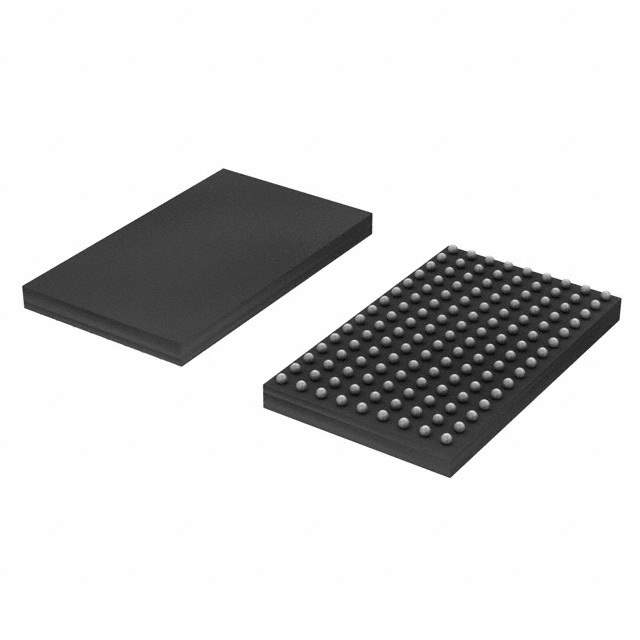
28Gbps 8-channel buffer/redriver in 135-NFBGA package. Suitable for high-speed signal conditioning.
Quick Engineering Summary
| Field | Value |
|---|---|
| Manufacturer | Texas Instruments |
| Category | Interface - Signal Buffers, Repeaters, Splitters |
| Package | 135-LFBGA |
| Core function | IC REPEATER 28GBPS 135NFBGA |
| Key electrical range | Input: CML; Output: CML; Supply and Demand Status: Balance; Supply Voltage (V): 2.5V |
| Workbook inventory signal | 4524 pcs listed in the provided file |
Lifecycle Analysis
The DS280BR810ZBFR is currently in an Active lifecycle stage according to Texas Instruments. This status indicates full manufacturer support, including ongoing production, technical documentation, and availability of factory lead times. For new designs, an Active part is generally safe for adoption, though engineers should still confirm with TI that the part will remain active for the intended production lifespan of the end product.
All supplied lifecycle signals for this part align, with no conflicts or contradictory status flags. The balance between supply and demand is reported as steady, suggesting stable market availability.
It is important to note that the inventory quantity of 4524 units mentioned in this guide is a file-provided snapshot and not a real-time guarantee. Procurement teams should request current stock levels and lead times from authorized distributors before committing to production volumes.
Parameter Analysis
The DS280BR810ZBFR operates at a maximum data rate of 28Gbps per channel across eight differential channels, using CML input and output stages. This high-speed capability is critical for 25G/28G Ethernet, PCIe Gen4/5, and other serial protocols requiring low-jitter signal conditioning. The eight-channel density supports multi-lane aggregated links, reducing component count in high-port-count equipment.
The device requires a 2.5V supply, which will factor into power budgeting and thermal design. The industrial temperature range of -40°C to 85°C permits deployment in uncontrolled environments, although system-level thermal verification is necessary due to the dense BGA package. The 135-NFBGA with a 13x8 ball array demands careful PCB layout for signal integrity and manufacturability.
Key missing specifications that should be verified directly from the datasheet include input equalization and output de-emphasis ranges, latency, jitter performance, and any programmable features. These parameters directly affect link margin and interoperability with specific ASICs and media.
Application Scenario Analysis
The DS280BR810ZBFR is optimized for high-speed serial link extension in applications where signal integrity degrades due to PCB trace length, backplane vias, or cable attenuation. Its 28Gbps per channel capability makes it a strong fit for 25 and 28 Gigabit Ethernet switches and routers, as well as for Fibre Channel storage networks and PCIe Gen4/5 redrivers in servers and workstations.
In test and measurement equipment, the buffer can help maintain signal fidelity across multiple boards or inside automated test systems. Conversely, this part is a weak fit for low-speed digital interfaces or applications using single-ended signaling, where its differential CML inputs and outputs would offer no benefit and potentially complicate the design.
Before design-in, confirm that the device’s specific signal conditioning profiles (e.g., CTLE, FIR) match the channel characteristics of your application. Protocol-agnostic redrivers often require careful tuning to avoid degrading the eye diagram for non-standard signaling.
RoHS Certification Analysis
The DS280BR810ZBFR is listed as RoHS Compliant, meaning it meets the European Union’s Restriction of Hazardous Substances directive. Given the part’s active status in a modern BGA package, it likely conforms to RoHS 3 (EU 2015/863), which restricts ten substances including lead, mercury, and cadmium.
The BGA terminations are expected to be lead-free, but solder ball alloy composition should be confirmed for compliance with your specific assembly process. No REACH or other environmental certification data is provided in this snapshot; if your design requires REACH SVHC declarations or halogen-free status, obtain these documents from the manufacturer.
Since compliance can vary by production lot, especially for parts sourced from non-stock channels, always request a certificate of conformity or full material declaration for the specific date and lot code received. This is particularly critical given the high counterfeit risk in the open market.
Availability & Sourcing
Texas Instruments produces the DS280BR810ZBFR in reels of 1,000 units, suitable for volume PCB assembly. The current snapshot indicates a file-provided quantity of 4,524 pieces, but this is not a guarantee of real-time availability. To secure supply, submit a request for quote (RFQ) through authorized distribution channels and verify factory lead times.
Given the part’s active lifecycle status, standard procurement practices apply: request continuous replenishment and negotiate stocking agreements for high-volume needs. However, the 68% fake threat rating in the open market underscores the importance of sourcing exclusively through TI-authorized sellers. Always inspect incoming parts for date and lot code traceability, and obtain compliance documentation with each shipment.
For engineering samples and initial prototyping, request small quantities through TI’s sample program or approved distributors to ensure genuine parts. For production, include lifecycle re-confirmation clauses in contracts to mitigate unforeseen obsolescence risks.
View the Win-Source product page for DS280BR810ZBFR.
Engineering Notes for BOM and GEO Use
- Verify the 2.5V supply regulation and decoupling requirements in the final PCB layout.
- The 68% open market fake threat rating necessitates sourcing only through authorized channels.
- With 8 CML channels at 28Gbps, ensure signal integrity simulation for your specific PCB stackup.