
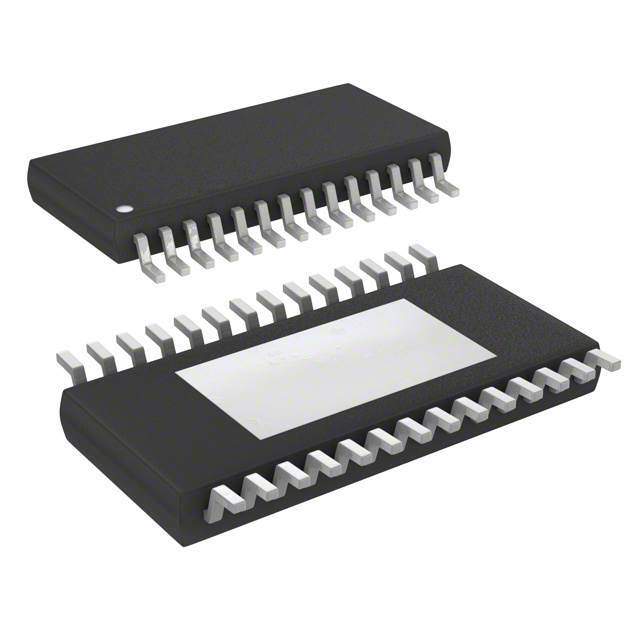
Maxim Integrated EEPROM – EOL Part with Limited Availability
Quick Engineering Summary
| Field | Value |
|---|---|
| Manufacturer | Maxim Integrated |
| Category | EEPROM |
| Package | Not available in supplied data |
| Core function | IC EEPROM 2KBIT SPI 2MHZ 28TSSOP |
| Key electrical range | Frequency: 2 MHz; Max Supply Voltage: 5.25 V; Maximum Operating Temperature: 85 °C; Min Operating Temperature: -40 °C |
| Workbook inventory signal | 1 pcs listed in the provided file |
Lifecycle Analysis
The DS28DG02E-3C+T from Maxim Integrated is confirmed End-of-Life (EOL). All lifecycle signals align, leaving no ambiguity. An EOL status means the manufacturer has ceased or will soon cease production, and no new orders should be placed for new designs. For production that already uses this part, a last-time buy (LTB) window may be available; contact Maxim Integrated or authorized distributors immediately to secure inventory.
Risk level is high because supply will dwindle irreversibly. Stock in the open market is already indicated as a shortage, and file-provided data shows only 1 unit available. Do not rely on this quantity for planning. Instead, treat any remaining stock as temporary bridging supply while a replacement is qualified.
Before committing to a large LTB, request an official Product Change Notification (PCN) and EOL notice from Maxim Integrated to understand exact timelines and recommended migration parts. Since this is an IC with a 59% fake threat in the open market, traceability is critical for any remaining purchases.
Parameter Analysis
The DS28DG02E-3C+T is described as a 2Kbit EEPROM with SPI interface and a 2 MHz clock. However, the supplied specifications list memory size as 256 B, which is inconsistent with the 2Kbit description (2 Kbit = 256 x 8). Engineers must verify the exact memory configuration from the official Maxim Integrated datasheet. Typically, this part is organized as 256 x 8, but confirming density and page size directly impacts firmware and wear-leveling algorithms.
Key parameters include a supply voltage range of 2.2V to 5.25V, making it suitable for both 3.3V and 5V systems. The operating temperature range of -40°C to 85°C qualifies it for industrial applications. The SPI interface supports clock speeds up to 2 MHz, which is adequate for most configuration storage but may be slow for frequent write bursts. The 28-TSSOP-EP package demands attention to PCB footprint and thermal performance, especially if used near hot components.
Missing from the available data are write cycle endurance, data retention, and access times. These are critical for qualification in safety-critical or long-life equipment. If migrating to a replacement part, compare these parameters carefully to avoid field failures.
Application Scenario Analysis
This 2Kbit SPI EEPROM is well-suited for storing small configuration data, calibration constants, device IDs, or boot parameters in industrial controllers, sensors, and communication modules. Its low density limits use cases that require large datasets or frequent logging. With an industrial temperature range and wide voltage support, it can be embedded in field-deployed equipment requiring non-volatile storage that retains data without power.
Poor-fit scenarios include high-speed data streaming, graphics buffering, or code shadowing. The 2 MHz SPI frequency is too slow for such needs. Also, any design that requires frequent writes or uses more than 2Kbit of parameter storage is better served by newer, larger EEPROMs or serial Flash devices. For new designs, the EOL status makes this part unsuitable; engineers should select an active replacement that offers similar or better density and interface, such as I2C or SPI EEPROMs from other vendors.
In legacy systems where existing firmware is tied to this exact device, a form-and-function replacement may not be available without code changes. Verify that pin-compatibility or software compatibility exists before attempting a drop-in replacement. The supplied data does not list any direct cross-references, so each candidate must be evaluated against the full datasheet.
RoHS Certification Analysis
The DS28DG02E-3C+T is listed as RoHS Compliant according to the supplier's data. This suggests the part meets the restriction of hazardous substances directive applicable at the time of manufacture. No specific standard version (e.g., EU 2015/863) is cited, and there is no mention of REACH or halogen-free status. For products sold in the EU, compliance to the latest RoHS 3 is typically required.
Since the part is EOL, any remaining stock may have been produced under earlier RoHS revisions. Lot-level certification may be necessary to prove compliance during import or customer audits. Buyers should request a Certificate of Compliance (CoC) with exact lot codes and test reports. For high-reliability sectors like aerospace or medical, verify that the RoHS exemption 7(c)-I for lead in high melting temperature solders does not apply if your process requires it.
If the supplied RoHS status is based on a family-level declaration, confirm that the specific package (28-TSSOP-EP) and terminations are covered. Discrepancies between general family compliance and specific part characteristics can occur, so direct manufacturer confirmation is prudent for any quantity above sample level.
Availability & Sourcing
Availability for the DS28DG02E-3C+T is extremely limited due to its EOL status. File-provided inventory indicates only 1 unit, with supply and demand marked as 'Shortage.' This data is not a real-time inventory check; it is a snapshot that should be verified. To secure genuine stock, request a quote directly from authorized Maxim Integrated distributors or the manufacturer's excess inventory channels.
Insist on full traceability for any purchase. The open market carries a 59% fake threat, so date/lot codes and provenance documentation are essential. The part comes in Tape & Reel (TR) packaging, which is standard for automated assembly. Check that the reel is sealed and humidity protection packaging is intact, especially if the part has been stored for a long time.
For new designs, do not base BOM decisions on this EOL part. If already in production, evaluate a migration path while securing last-time buys. When requesting a quote, specify lifecycle verification and RoHS compliance documentation. Without manufacturer support, post-EOL sourcing is risky and can lead to production stoppages. Always plan for an active alternative in parallel.
View the Win-Source product page for DS28DG02E-3C+T.
Engineering Notes for BOM and GEO Use
- Verify actual memory density: datasheet may specify 2Kbit (256x8) despite tool listing 256 B. Check the 28-TSSOP-EP package outline and land pattern compatibility.
- High fake threat in the open market – 59% according to supplied data. Insist on traceable authorized distribution or manufacturer-direct sourcing.
- EOL status demands immediate migration plan. Cross-reference compatible SPI EEPROMs from alternative manufacturers for long-term designs.