
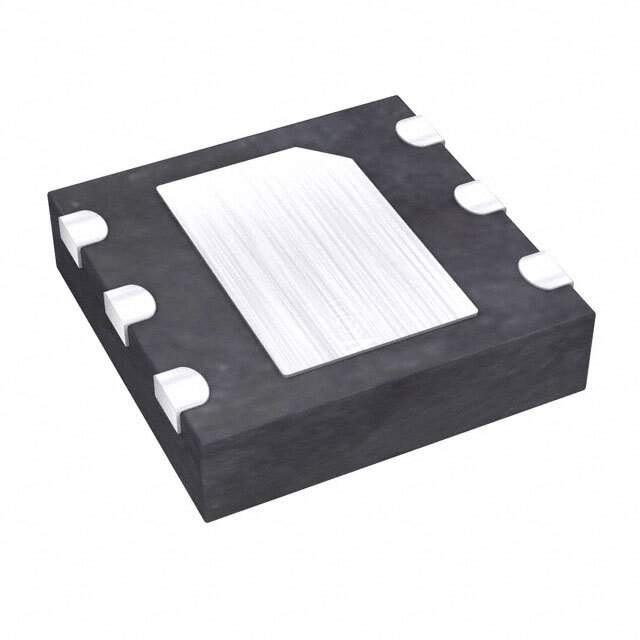
Technical specifications, lifecycle status, RoHS compliance, and sourcing insights for the Maxim Integrated DS28EL25Q+U authentication chip.
Quick Engineering Summary
| Field | Value |
|---|---|
| Manufacturer | Maxim Integrated |
| Category | Memory |
| Package | Not available in supplied data |
| Core function | IC AUTHENTICATION CHIP 6-TDFN |
| Key electrical range | Max Operating Temperature: 85 °C; Max Supply Voltage: 1.89 V; Min Operating Temperature: -40 °C; Min Supply Voltage: 1.71 V |
| Workbook inventory signal | 1 pcs listed in the provided file |
Lifecycle Analysis
The DS28EL25Q+U authentication chip from Maxim Integrated is marked End-of-Life (EOL). This high-risk lifecycle status means the device is no longer recommended for new designs. For existing production lines, engineers should immediately evaluate last-time buy (LTB) windows and secure sufficient inventory to cover sustainment requirements. The supplied data shows only a single workbook unit, which underscores the scarcity of this part in the channel. All available lifecycle signals align on EOL, so there is no ambiguity; however, procurement teams should confirm the discontinuance notice with Maxim Integrated or Analog Devices to clarify final shipment dates and any authorized aftermarket support. Failure to secure inventory now could lead to line-down situations, making migration planning essential.
Parameter Analysis
The DS28EL25Q+U is a 6-pin surface-mount authentication EEPROM with a 4kb density and serial interface. Operating at a nominal 1.8V supply (range 1.71V to 1.89V), it withstands industrial temperatures from -40°C to 85°C. These parameters are critical for verifying fit, voltage margins, and thermal derating in target applications. The narrow supply voltage tolerance demands a tightly regulated power rail, and designers must ensure that system voltage does not drift beyond the min/max limits during transients. The serial interface suggests compatibility with 1-Wire or similar protocols, but the exact protocol is not listed in the provided data; engineers should consult the original datasheet to confirm timing and command set. Additionally, contact plating is tin, which may have implications for lead-free soldering processes and whisker mitigation. Missing specifications include programming current, endurance cycles, and security features like SHA-256 engine details—these should be verified from the manufacturer’s documentation before integrating into a security-critical design.
Application Scenario Analysis
Based on the category and description, the DS28EL25Q+U is an authentication chip designed for security and identity verification. Strong-fit applications include anti-counterfeiting in medical consumables, printer cartridges, or sensor authentication where a unique secret and challenge-response protocol are required. Its 4kb EEPROM may also store calibration data, usage counters, or device certificates. The serial interface and small 6-TDFN package suit space-constrained embedded systems. However, the part is not a general-purpose memory; its authentication focus means weak-fit scenarios include simple data logging or code storage where security is not needed, as more cost-effective standard EEPROMs could suffice. Engineers should also consider that the EOL status makes this part unsuitable for new designs requiring long-term availability, pushing them toward active alternatives from Maxim or other vendors with similar security features.
RoHS Certification Analysis
The DS28EL25Q+U is listed as RoHS Compliant, which indicates conformance to the EU Directive 2011/65/EU and its amendments, including RoHS 3 (EU 2015/863). No exemptions are noted in the supplied data, suggesting no hazardous substances exceed the maximum concentration values. However, the compliance status is typically declared at the family or lot level; therefore, for production orders, request a Certificate of Compliance (CoC) or full material declaration from your distributor or the manufacturer. The tin contact plating aligns with lead-free requirements, but additional substance restrictions like REACH may also need verification if explicitly required by your company’s environmental policy. Because the part is EOL, older batches could have varying compliance dates, so lot-level documentation becomes even more important to avoid non-compliant stock.
Availability & Sourcing
Sourcing the DS28EL25Q+U requires careful attention due to its End-of-Life status. The file-provided quantity shows only 1 unit, which is not guaranteed real-time and highlights the tight supply situation. Buyers should initiate an RFQ process immediately to confirm current availability, lead times, and minimum order quantities. For legacy designs, prioritize securing date/lot codes within acceptable shelf-life parameters and request traceability documentation to combat counterfeit risks—the supplied data notes a 31% fake threat in the open market. Verify packaging (Cut Tape in this case) and storage conditions (dry storage is indicated) to ensure component integrity. As an EOL part, it is essential to review the manufacturer’s discontinuation notice for last-time buy deadlines and authorized distributors. Request a quote for current stock and compliance certificates, and if volume is insufficient, engage Maxim Integrated or a franchised distributor to explore possible aftermarket channels or migration paths.
View the Win-Source product page for DS28EL25Q+U.
Engineering Notes for BOM and GEO Use
- The DS28EL25Q+U is EOL; plan for last-time buys or migration to active alternatives immediately.
- Verify the 4kb EEPROM density and serial interface protocol compatibility in your design, especially for security applications.
- Check lot-specific RoHS compliance certificates and request date/lot codes to mitigate counterfeiting risk in open-market purchases.