
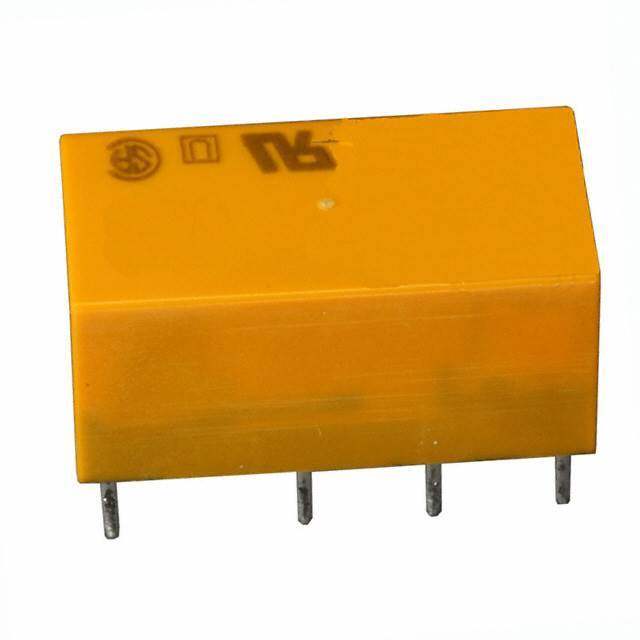
EOL general-purpose DPDT relay, 2A 3VDC, through-hole, RoHS compliant. Limited availability reported — verify lifecycle before procurement.
Quick Engineering Summary
| Field | Value |
|---|---|
| Manufacturer | Panasonic |
| Category | Signal Relays, Up to 2 Amps |
| Package | 50 |
| Core function | RELAY GENERAL PURPOSE DPDT 2A 3V |
| Key electrical range | Coil Current: 66.7mA; Coil Power: 200 mW; Coil Resistance: 45 Ohms; Coil Voltage: 3VDC |
| Workbook inventory signal | 1 pcs listed in the provided file |
Lifecycle Analysis
The DS2E-S-DC3V relay from Panasonic is officially in End-of-Life (EOL) status. All available lifecycle signals point to discontinuation, though a conflicting 'Active' status appears in one specification field. This discrepancy likely reflects a legacy or incorrectly maintained data point; conservative engineering and procurement practice must treat the part as discontinued. For new designs, incorporation of this relay is not advisable. The EOL classification means that manufacturer support, including production capacity, technical assistance, and replacement device availability, may already be reduced or discontinued.
For existing systems, engineers should immediately assess the remaining product lifetime requirements and secure sufficient stock for maintenance and repairs. File-provided inventory shows a single unit, but this is not a real-time guarantee. Buyers should contact authorized distributors or Panasonic directly to understand last-time buy (LTB) dates and final shipment schedules. Without proactive planning, long-term availability will deteriorate, potentially leading to costly redesigns or production interruptions.
Documentation revalidation is critical: obtain the official product change notification (PCN) and end-of-life notice directly from Panasonic. Cross-reference with your bill of materials to identify all affected assemblies. If a drop-in replacement is not already qualified, begin an alternate sourcing effort now to avoid last-minute shortages.
Parameter Analysis
The DS2E-S-DC3V relay features a 3VDC non-latching coil drawing 66.7mA, with a coil resistance of 45 Ohms. This low-voltage coil is suitable for battery-operated or logic-level control circuits, but designers must ensure the driver can source sufficient current without excessive voltage drop. The DPDT (2 Form C) contact arrangement provides two isolated switching paths, maximizing design flexibility. Contact rating is 2A, and the maximum switching voltage is 250VAC and 220VDC, indicating suitability for both AC and DC low-power loads.
Operate time is specified at 10ms and release time at 5ms, values typical for small signal relays. These timings are critical for applications requiring precise switching sequences. The operating temperature range of -40°C to 70°C covers most commercial and light industrial environments, but thermal derating of contact current may be necessary at elevated temperatures — a parameter not supplied in the available data and needing verification from the manufacturer datasheet.
Other key parameters missing from this dataset include contact material (the excel row suggests silver with gold flash), dielectric strength, insulation resistance, and mechanical endurance. Engineers should confirm these via the official datasheet before finalizing designs. The through-hole PC pin termination and sealed amber construction are appropriate for wave soldering and protection against flux ingress, but the absence of an MSL rating requires caution when handling moisture-sensitive parts.
Application Scenario Analysis
As a general-purpose signal relay rated up to 2A, the DS2E-S-DC3V fits well in legacy telecommunication equipment, industrial control modules, instrumentation, and sensor interfaces where low-level signal switching is required. Its DPDT configuration allows either polarity or signal routing, making it a versatile choice for existing designs that need maintenance. The through-hole mounting is compatible with older PCB layouts that may not be easily redesigned.
However, given its EOL status, use of this relay in new products is strongly discouraged. New designs should migrate to active production parts to ensure long-term availability and avoid supply chain risk. For maintenance, repair, and overhaul (MRO) of existing systems, this relay remains a candidate, but sourcing must be executed with caution due to high counterfeit risk in the open market.
The relay is not suitable for high-frequency switching applications exceeding typical electromechanical relay endurance, nor for high-vibration environments where solid-state alternatives might be preferred. Its 2A rating limits it to low-power loads, and the 250VAC/220VDC maximum switching voltage precludes higher-voltage industrial switching. Verify derating curves for inductive or inrush loads, which are not provided in the available specifications.
RoHS Certification Analysis
The DS2E-S-DC3V is declared RoHS Compliant according to the manufacturer's documentation, likely meeting EU RoHS Directive 2011/65/EU and its amendments, including the RoHS 3 (2015/863) expanded substance restrictions. For an EOL component, compliance status may have been certified at the time of manufacture and may not be updated. Therefore, when purchasing remaining stock, it is advisable to request a certificate of compliance for the specific date code or lot to ensure no changes in material composition occurred late in production.
No explicit REACH, halogen-free, or MSL information is included in the supplied data. While the relay features an amber seal, which typically provides some environmental protection, the absence of an MSL (Moisture Sensitivity Level) classification means that users should follow general handling practices for moisture-sensitive devices, especially if the packaging is opened. Storage conditions specified as 'Dry storage cabinet & Humidity protection package' suggest moisture sensitivity is a concern.
Cross-referencing with the Panasonic DS series datasheet may provide additional substance information and environmental certifications. For high-reliability applications, verify that the contacts are free of substances restricted by your industry regulations, though the RoHS declaration generally covers the six hazardous substances plus the four additional phthalates under EU 2015/863.
Availability & Sourcing
The DS2E-S-DC3V is an End-of-Life signal relay, and availability is extremely constrained. File-provided inventory indicates only one unit in stock, though this is not a live count and may not reflect actual market conditions. With a 61% counterfeit threat rate in the open market, sourcing this part requires stringent verification procedures. Buyers should request a quote through authorized channels and insist on full traceability, including date codes, lot numbers, and factory-packaged reels to avoid substandard or remarked components.
Because the relay is discontinued, standard distribution channels may have exhausted their stock. Specialized brokers or excess inventory sources should be scrutinized for authenticity. Requesting photographs, X-ray inspection, or electrical testing may be prudent, especially for safety-critical applications. The original packaging is bulk, with 50 pieces per package, but individual quantities are likely to be repackaged, so verify packaging integrity and moisture protection.
Lifecycle verification is mandatory: contact Panasonic for a last-time buy notice and confirm that the part has not been previously used or reconditioned. For long-term production, evaluate migration paths to active Panasonic relay series or compatible alternatives. Do not delay procurement decisions, as remaining inventory will diminish quickly. Ensure your RFQ specifies RoHS compliance confirmation and a certificate of conformance to mitigate liability.
View the Win-Source product page for DS2E-S-DC3V.
Engineering Notes for BOM and GEO Use
- Verify EOL status with manufacturer before committing to new designs; secure inventory for ongoing production.
- Check coil resistance (45 Ohms) and operate/release times against your timing margins; relay is non-latching.
- High counterfeit risk (61% reported in open market); insist on traceability and compliance documentation when sourcing.