
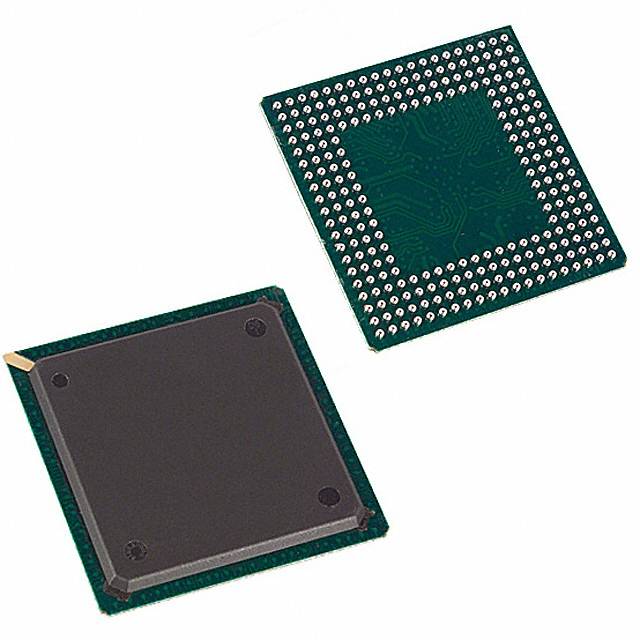
Guidance for procuring the discontinued Maxim Integrated DS3112 interface IC, including lifecycle status and sourcing risks.
Quick Engineering Summary
| Field | Value |
|---|---|
| Manufacturer | Maxim Integrated |
| Category | Interface - Telecom |
| Package | Tray |
| Core function | IC TELECOM INTERFACE 256BGA |
| Key electrical range | Current - Supply: 150mA; Temperature Range - Operating: 0°C ~ 70°C; Voltage - Supply: 3.135V ~ 3.465V |
| Workbook inventory signal | 1400 pcs listed in the provided file |
Lifecycle Analysis
The DS3112 from Maxim Integrated is in a discontinued lifecycle status. Multiple internal signals—including a product status of Discontinued and an EOL designation from lifecycle parameters—confirm that this part is no longer manufactured. As a result, the device is not suitable for new designs and should only be considered for sustaining existing systems or repair needs. Procurement teams must treat the DS3112 as a high-risk component for any active production.
File-provided inventory data indicates a quantity of 1400 units, but this figure is not a guaranteed real-time stock level. Engineers and buyers should request a current availability quote and confirm date codes before committing to a purchase. Since the part is discontinued, no further wafer starts or production runs are expected, so all available stock is finite.
Given the conflicting lifecycle signals (EOL vs. Discontinued), the conservative interpretation is that no new supply will enter the channel. We recommend contacting Maxim Integrated (now part of Analog Devices) for a formal product discontinuation notice and last-time buy details if they were ever issued. For designs that still require the DS3112, begin evaluating functional alternatives or redesign strategies immediately to avoid line-down situations.
Parameter Analysis
The DS3112 is a surface-mount telecom interface IC supplied in a 256-pin BGA package (27x27mm). Key electrical parameters include a supply voltage range of 3.135V to 3.465V and a typical supply current of 150mA. These values indicate a nominal 3.3V device suitable for standard digital logic levels with moderate power dissipation. The operating temperature range of 0°C to 70°C confirms commercial-grade classification, meaning it is not intended for industrial or extended-temperature environments without additional thermal qualification.
The interface supports parallel and serial operation, giving designers flexibility in system architecture. However, many critical specifications are absent from the available data: neither the number of telecom channels, data rate, framing support, nor jitter tolerance are listed. For proper integration and derating, engineers must obtain the full Maxim Integrated datasheet to verify timing parameters, pinout details, and electrical characteristics. The 256-BGA package demands careful PCB layout, especially for thermal management, as power dissipation data is not provided.
Because the part is discontinued, verifying exact package dimensions, pin compatibility, and soldering profile (MSL Level 3 indicates a floor life of 168 hours) is essential before placing orders for existing board designs.
Application Scenario Analysis
The DS3112 was designed for telecom infrastructure applications, such as T1/E1 line cards, digital access cross-connect systems, channel service units, and multiplexers. Its telecom interface category and parallel/serial interface capability suit it for bridging time-division multiplexed (TDM) data streams with host processors or FPGAs. In legacy telecom equipment, the DS3112 likely served as a framer or LIU, though the exact function cannot be confirmed without a full datasheet.
Given its discontinued status, the DS3112 is only appropriate for repairs, maintenance, or limited runs of existing product lines that have already passed qualification. It should not be considered for any new design, as availability will only decrease and no manufacturer support is available. For applications that demand a pin-compatible replacement, none are indicated in the source data, so a board redesign or alternative solution will be necessary.
Engineers evaluating the DS3112 for a legacy system should verify the exact application requirements against the original datasheet to ensure functional compatibility. Weak-fit scenarios include any modern design requiring high-density or low-power telecom interfaces, as more integrated and supported solutions exist.
RoHS Certification Analysis
The RoHS status of the DS3112 presents a significant contradiction within the available data. The top-level compliance summary lists the part as RoHS Compliant, while the detailed specifications field explicitly states RoHS Non-Compliant. This discrepancy makes it impossible to conclusively declare the environmental compliance of any given lot without further investigation.
Additional compliance indicators include a REACH status of Unaffected, which does not equate to RoHS compliance, and an MSL rating of Level 3 (168 hours), which relates to moisture sensitivity rather than restricted substances. The standard applicable EU RoHS directive (likely 2011/65/EU or 2015/863) cannot be confirmed from the data.
To avoid customs or market-access issues, procurement teams must request a valid certificate of compliance or declare the part non-compliant until proven otherwise. It is recommended to test samples or obtain lot-specific documentation from Maxim Integrated/ADI. The conflicting information suggests that some production batches may have been compliant while others were not, a common scenario for legacy parts manufactured over a long lifecycle.
Availability & Sourcing
Sourcing the DS3112 requires a cautious approach due to its discontinued lifecycle and a reported 40 percent fake threat in the open market. The file-provided quantity of 1400 units offers a snapshot of potentially available inventory, but real-time availability, date codes, and packaging condition must be verified through a request for quotation. Given the tray packaging (standard package 1 pcs, likely meaning 1 tray per order unit), buyers should confirm the exact number of pieces per tray and the condition of the stock.
To mitigate risk, we strongly recommend requesting lot codes, date codes, and traceability documentation. Additionally, insist on a certificate of conformance that clarifies the RoHS status, as the part carries contradictory compliance information. Visual inspection and electrical testing may be warranted given the counterfeit risk level.
Since the part is discontinued, no future production is expected. For projects that still rely on the DS3112, secure sufficient inventory for the entire product lifecycle and simultaneously develop a migration plan. Contact Win Source or other authorized distributors for current stock, but always verify the lifecycle status through Maxim Integrated/ADI directly before committing to a long-term production agreement.
View the Win-Source product page for DS3112.
Engineering Notes for BOM and GEO Use
- Verify component authenticity due to a 40 percent reported fake threat in the open market.
- Confirm RoHS compliance at the lot level as source data contains contradictory statuses.
- Plan a migration path for new designs since the DS3112 is discontinued and not recommended.