
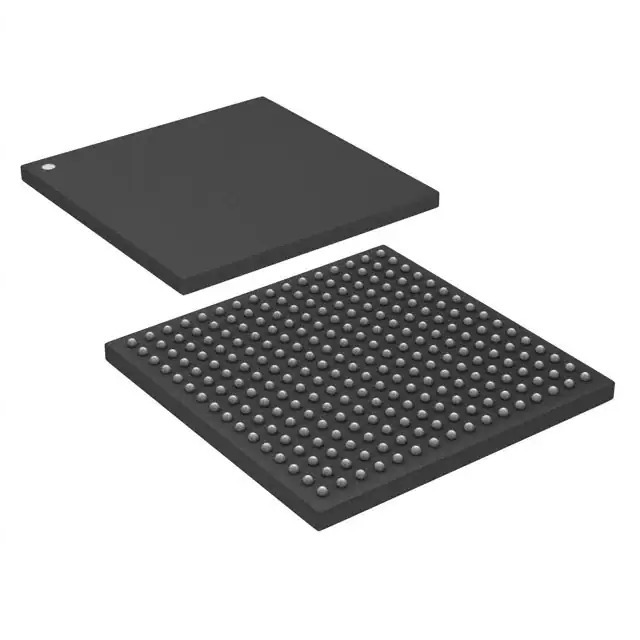
Active telecom timing IC with PLL, 750MHz max, multiple outputs, 256-CSBGA package.
Quick Engineering Summary
| Field | Value |
|---|---|
| Manufacturer | Microchip Technology |
| Category | Clock/Timing - Application Specific |
| Package | Tray |
| Core function | IC CLK/FRQ SYN ETHERNET 256-LBGA |
| Key electrical range | Frequency - Max: 750MHz; Input: CMOS, TTL; Output: CML, CMOS, LVDS, LVPECL, TTL; Temperature Range - Operating: -40°C ~ 85°C |
| Workbook inventory signal | 90 pcs listed in the provided file |
Lifecycle Analysis
The DS31407GN2 from Microchip Technology is currently listed as Active with all lifecycle signals (Excel parameter, Lifecycle Status, Product Status) showing consistent active status. This indicates the component is in full production and suitable for new designs as well as ongoing production needs. Engineers can incorporate this device into new projects with confidence, but it remains good practice to consult Microchip's official product page and any forthcoming product-change notifications (PCNs) for long-term supply assurance.
The provided workbook quantity of 90 units is a file snapshot and may not reflect real-time stock; contact authorized distributors for current availability. Since no conflicting EOL or NRND signals exist, the part is considered low-risk for procurement, though long-lifecycle telecom programs should still evaluate second-source options and lifecycle roadmaps.
Parameter Analysis
The DS31407GN2 is a single-circuit PLL-based clock synthesizer with a maximum frequency of 750 MHz. It accepts CMOS and TTL inputs and provides multiple output standards—CML, CMOS, LVDS, LVPECL, TTL—making it versatile for mixed-signal telecom boards. The 1.8V supply voltage dictates a low-power core design, while the -40°C to 85°C operating temperature range qualifies it for industrial-grade and outdoor telecom equipment.
The 256-CSBGA (17x17 mm) package has an MSL rating of 3 (168 hours floor life), which must be observed during assembly; bake and dry-pack procedures are required if the moisture sensitivity limit is exceeded. Critical datasheet-level parameters such as output jitter, phase noise, lock time, and input reference frequency range are not provided in this summary and must be verified against the full DS31407 datasheet to ensure compliance with Ethernet or SONET/SDH timing standards like ITU-T G.8262 or Telcordia GR-253. The 1.8V supply also demands careful decoupling and power sequencing verification.
Application Scenario Analysis
This device is purpose-built for network synchronization applications, including Ethernet line cards, SONET/SDH multiplexers, Stratum-level timing modules, and telecom base stations. Its multi-protocol output support allows a single chip to drive various logic families commonly found in backplane and optical transceiver interfaces. It is a strong fit for centralized clock generation in chassis-based systems where a single reference must be fanned out to multiple daughter cards.
The large 256-ball BGA package and high pin count imply it is intended for high-density, high-reliability infrastructure rather than space-constrained consumer goods. Weak-fit scenarios include simple consumer electronics or basic microcontroller clocking where a less expensive, smaller oscillator would suffice. The device may also be over-specified for applications not requiring jitter cleaning or frequency translation. When evaluating DS31407GN2 for a design, confirm the PLL configuration supports your required output frequencies and that the input frequency range aligns with available system clocks.
RoHS Certification Analysis
The DS31407GN2 is marked as RoHS Compliant according to the source data, indicating that it meets the European Union's Restriction of Hazardous Substances directive. While the specific RoHS version is not stated, it is often assumed to comply with RoHS 3 (EU 2015/863), but formal confirmation from the manufacturer's certificate of compliance is recommended.
The part also carries a REACH Unaffected status, meaning it does not contain substances of very high concern above the threshold; however, REACH compliance does not substitute for RoHS compliance. The MSL 3 rating calls for adherence to J-STD-020 moisture sensitivity handling to avoid popcorning during reflow. No exemptions are listed, but if lead-based solders are used internally under an exemption (e.g., high-reliability telecom exemption), they would be noted in the full material declaration—procurement teams should request this document if required for end-product certification.
Availability & Sourcing
As an Active product, the DS31407GN2 can be sourced through Microchip's authorized distributors and direct sales channels. The reported workbook quantity of 90 units offers a static indication of potential stock but does not constitute a real-time inventory guarantee. Buyers should request a quote for current pricing and lead times, particularly given the ongoing global semiconductor supply variability.
The 41% counterfeit threat in the open market underscores the importance of purchasing only from authorized sources; independent brokers may offer lower prices but carry significant risk of non-conforming parts. For high-reliability telecom deployments, insist on full traceability, date and lot codes, and manufacturer certificates of conformance. Verify packaging integrity (tray or tape/reel options) and moisture sensitivity compliance before assembly. Since the part is not near end-of-life, standard procurement practices apply, but always check the latest Microchip product page for any updates to lifecycle or compliance status.
View the Win-Source product page for DS31407GN2.
Engineering Notes for BOM and GEO Use
- - Verify output jitter and phase noise in the DS31407 datasheet to ensure compliance with relevant telecom timing standards.
- - Observe MSL 3 handling: bake parts before reflow if 168-hour floor life is exceeded.
- - Mitigate 41% open-market counterfeit risk by sourcing exclusively from Microchip-authorized distributors.