
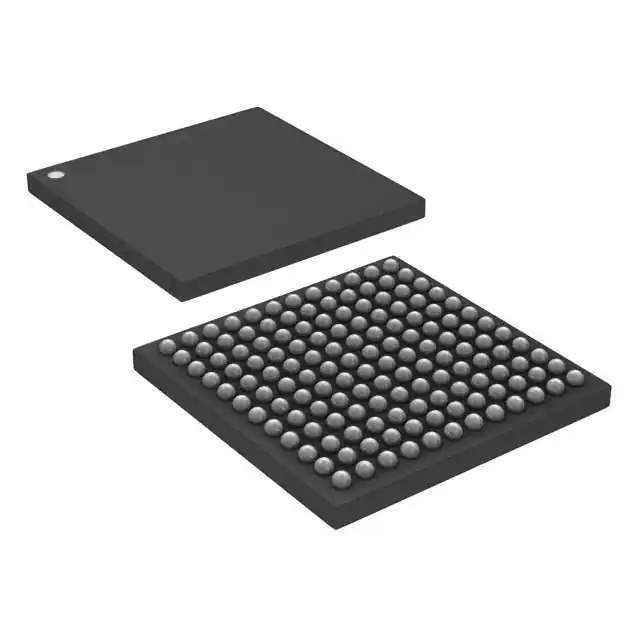
DS3141 Discontinued Telecom Interface IC – Framer and LIU in 144-TECSBGA Package
Quick Engineering Summary
| Field | Value |
|---|---|
| Manufacturer | Maxim Integrated |
| Category | Interface - Telecom |
| Package | Tray |
| Core function | IC TELECOM INTERFACE 144CSBGA |
| Key electrical range | Current - Supply: 80mA; Temperature Range - Operating: 0°C ~ 70°C; Voltage - Supply: 3.135V ~ 3.465V |
| Workbook inventory signal | 1 pcs listed in the provided file |
Lifecycle Analysis
The Maxim Integrated DS3141 is classified as a discontinued device. Multiple lifecycle signals, including EOL and Discontinued, confirm that this component is no longer recommended for new designs. For any new production programs, engineers should consider this a high-risk part and seek alternate solutions. For existing systems in sustaining production, the DS3141 may still be sourced from residual inventory, but procurement teams must verify that any stock is genuine and originally sourced from authorized channels. The file-provided inventory of one unit is not guaranteed real-time and must be confirmed with a distributor. Designers should obtain the manufacturer's official product discontinuation notice to check for last-time-buy windows or recommended migration paths. As an interface - telecom IC, its discontinuation can impact legacy telecom equipment support.
Parameter Analysis
Key parameters for the DS3141 include its function as a framer and line interface unit (LIU) for telecom interfaces, operating from a single 3.135V to 3.465V supply with a typical current draw of 80mA. The device integrates one circuit in a surface-mount 144-TECSBGA package measuring 13x13mm, with an MSL rating of 1 for unlimited floor life. The commercial operating temperature range of 0°C to 70°C limits its use to controlled environments. Supply voltage tolerance of ±5% requires careful power supply design with adequate decoupling. Missing critical parameters such as supported data rates, jitter tolerance, and specific line interface standards (e.g., T1, E1) necessitate a detailed datasheet review before design-in. Engineers should verify signal integrity requirements, timing characteristics, and pinout alignment with their application's backplane or line card layout. The BGA package demands proper PCB footprint design and reflow profiling.
Application Scenario Analysis
The DS3141, as a telecom framer and LIU, is typically used in legacy T1, E1, or J1 line card applications, digital loop carriers, and network interface units. Its commercial temperature range makes it suitable for indoor telecom equipment rooms and not for outdoor or extended-temperature deployments. Given its discontinuation, new designs should avoid this part, but it remains relevant for repairing or sustaining existing deployed systems where a pin-for-pin replacement is unavailable. The device's single-channel architecture fits systems requiring a dedicated line interface without multi-port aggregation. Modern equipment designs moving to higher data rates or packet-based interfaces will find this IC unsuitable due to its narrow application scope and obsolescence. Engineers evaluating replacement options should look for alternative telecom ASSPs or FPGA-based solutions.
RoHS Certification Analysis
The DS3141 is shown as RoHS Compliant in the available data. While the specific directive revision is not stated, compliance typically implies adherence to EU RoHS (2011/65/EU) and its amendments, including RoHS 3 (EU 2015/863). The part’s MSL rating of Level 1 (Unlimited) indicates no special moisture protection requirements during soldering, simplifying handling and storage. However, this rating applies to the original packaging; lot-level verification is advisable given the part's age and discontinuation. Exemptions are not specified in the source data, so if the device contains substances like lead in solder for internal die attach, exempt under the directive, a full material declaration should be requested. In conjunction with RoHS, compliance with REACH and other environmental regulations should be confirmed through the manufacturer's documentation, as RoHS alone does not cover all restricted substances.
Availability & Sourcing
Sourcing the Maxim Integrated DS3141 requires careful attention due to its discontinued lifecycle status and a high fake threat indicator of 67%. The file-provided quantity of one unit is not a real-time inventory guarantee and must be verified through a quote. Procurement teams should only engage with authorized or franchised distributors and request full traceability documentation, including date and lot codes. Visual inspection and electrical testing are recommended to screen for counterfeit components, especially for BGA-packaged devices. As the DS3141 is an interface - telecom IC, find alternates from Maxim Integrated's (now Analog Devices) legacy product lines or third-party sourcing partners specializing in obsolete parts. For any remaining stock, verify that RoHS and MSL certifications are current and applicable to the lot. Never commit to a design win without an official manufacturer obsolescence notice and a confirmed supply chain. Request a quote today to check current availability and obtain compliance documentation.
View the Win-Source product page for DS3141.
Engineering Notes for BOM and GEO Use
- Verify discontinuation status with Maxim Integrated (now Analog Devices) before committing to production purchases; request the official product change notice.
- Given the 67% fake threat indicator, procure only from authorized or verified distributors with traceable date and lot codes and implement incoming inspection.
- For sustaining production, evaluate the available inventory (1 unit shown is file-based and not real-time) and consider last-time-buy or redesign strategies.