
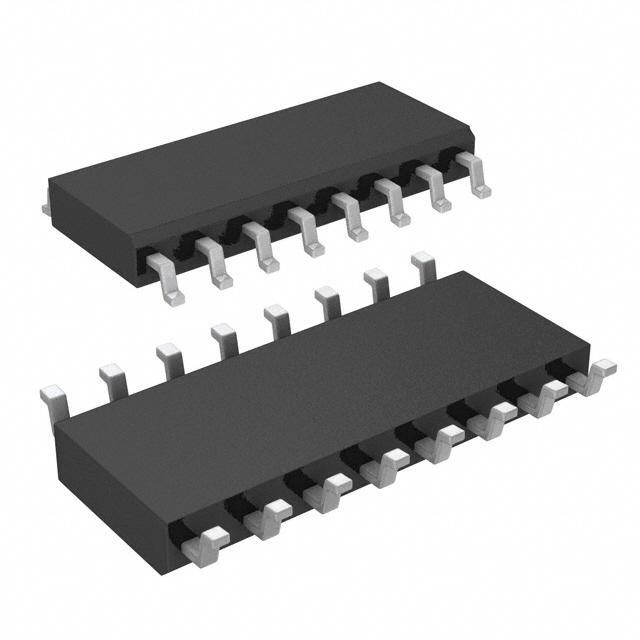
End-of-life real-time clock with integrated TCXO and I2C interface – verify availability and plan migration.
Quick Engineering Summary
| Field | Value |
|---|---|
| Manufacturer | Maxim Integrated |
| Category | Integrated Circuits (ICs) |
| Package | 16-SOIC (0.295", 7.50mm Width) |
| Core function | IC RTC CLK/CALENDAR I2C 16SOIC |
| Key electrical range | Current - Timekeeping (Max): 110μA ~ 170μA @ 3.63V ~ 5.5V; Operating Temperature: 0°C ~ 70°C; Voltage - Supply: 2.3V ~ 5.5V; Voltage - Supply, Battery: 2.3V ~ 5.5V |
| Workbook inventory signal | 323 pcs listed in the provided file |
Lifecycle Analysis
The DS3231S is marked as End-of-Life (EOL) by Maxim Integrated and carries an obsolete part status. This means the manufacturer has discontinued production, and no new designs should use this part. The EOL designation is consistent across multiple lifecycle signals, indicating a definitive discontinuation with no conflicting data. For procurement, this status presents a high risk because remaining stock is finite and typically cannot be replenished through normal factory channels.
Engineers maintaining legacy systems or requiring exact replacements must act promptly to secure existing inventory. The file-provided quantity of 323 units is a snapshot of available stock at the time of data collection and is not a real-time guarantee. Before ordering, verify the actual quantity, production date codes, and authenticity with the distributor.
When planning for production, consider that EOL components require additional documentation such as last-time-buy notices and obsolescence management plans. Without a manufacturer-recommended pin-compatible replacement provided in the available data, design teams should evaluate the system impact and source any future requirements from the limited remaining supply.
Parameter Analysis
The DS3231S functions as a clock/calendar real-time clock with an I2C 2-wire serial interface, making it straightforward to integrate into most microcontroller-based designs. Its supply voltage range from 2.3V to 5.5V provides flexibility across various power domains, and the battery input shares the same range, simplifying backup power design. The timekeeping current, specified between 110µA and 170µA at 3.63V to 5.5V, is a key parameter for power budgets in battery-backed systems.
The device includes a built‑in TCXO and crystal, which suggests better frequency stability over temperature compared to external crystal solutions, although detailed frequency tolerance and aging specifications are not provided in this data. Engineers should verify these critical parameters from the official Maxim datasheet to ensure the timekeeping accuracy meets application requirements, particularly for long‑life or precision‑critical deployments.
The 16‑SOIC package and surface‑mount mounting are standard, but the 0°C to 70°C operating temperature range limits its use to commercial and indoor applications. Additional missing datasheet details that should be reviewed include backup current, I²C bus timing, and any required external components. Always cross‑check these values with the original manufacturer documentation before finalizing the design.
Application Scenario Analysis
The DS3231S is well‑suited for legacy embedded systems where the RTC has already been qualified, such as older data loggers, industrial timers, and consumer electronics that require a battery‑backed calendar. Its I²C interface and integrated TCXO simplify PCB layout and reduce component count, making it a convenient choice for maintenance of existing equipment.
Given its EOL status, the DS3231S is not recommended for new designs that require long‑term availability. For new projects, designers should instead consider currently active RTCs that offer pin‑compatible footprints or similar software interfaces to ease migration. However, for repairing or sustaining production lines that cannot be redesigned, sourcing this exact part is necessary.
The 0°C to 70°C temperature range excludes the DS3231S from outdoor, automotive, or harsh environment applications. In addition, without verified moisture sensitivity level (MSL) data, assembly processes should handle the parts as moisture‑sensitive and follow industry standard baking procedures if required.
RoHS Certification Analysis
The DS3231S is marked as RoHS Compliant, indicating that it meets the requirements of the EU Restriction of Hazardous Substances directive. This status applies to the component as a whole, but it is important to note that RoHS compliance is evaluated on a homogeneous material level, and the supplier typically provides a declaration for each production lot.
Without explicit information on exemptions or additional reporting such as REACH or halogen‑free status, compliance documentation should be confirmed at the time of purchase. In many cases, component datasheets state RoHS compliance for the entire product family, yet individual date‑ or lot‑code variations may exist; therefore, buyers should request a current certificate when procuring EOL stock to ensure parts match the compliance label.
For international sourcing, note that RoHS applies within the EU, and other regions may have similar but not identical regulations. While the ‘RoHS Compliant’ designation is a positive indicator, verify that it aligns with your specific market requirements, especially if the device will be used in products exported to regions with stricter controls.
Availability & Sourcing
As an EOL component, the DS3231S is no longer in active production, and availability is limited to existing distributor stock. The file‑provided quantity of 323 units offers a temporary opportunity to secure parts, but real‑time availability and pricing must be confirmed by requesting a quote. Buyers should act quickly to avoid stock depletion.
When sourcing EOL parts, traceability becomes critical. Verify the date of manufacture and lot codes to ensure parts are not excessively aged and have been stored properly. Packaging is specified as tube format, which should be checked during order placement to avoid errors. Additionally, ask for certificates of conformance and RoHS compliance for the specific shipment.
We strongly recommend that engineers evaluate the manufacturer’s official end‑of‑life notice for any last‑time‑buy or last‑ship dates that may still be in effect. For future production, initiate a migration path to an active RTC to prevent supply chain disruption. To confirm current availability and document compliance, contact a distributor for a quote and reserve the needed quantity.
View the Win-Source product page for DS3231S.
Engineering Notes for BOM and GEO Use
- Verify Maxim Integrated’s EOL notice and last‑time‑buy window to avoid gaps in supply.
- Confirm timekeeping accuracy and backup current from the official datasheet before design‑in.
- Request lot‑specific RoHS compliance and date‑code documentation when purchasing.