
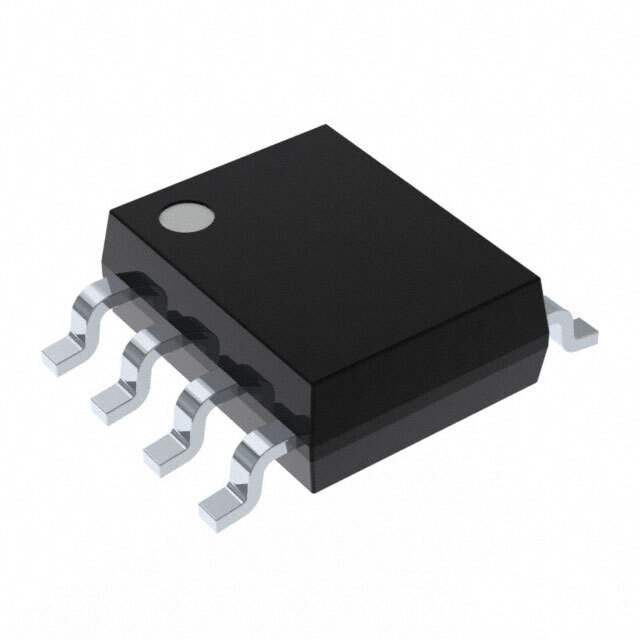
I2C RTC with integrated crystal, 236B SRAM, and alarm functions in 8-SOIC package; automotive grade AEC-Q100.
Quick Engineering Summary
| Field | Value |
|---|---|
| Manufacturer | Maxim Integrated |
| Category | Clock/Timing - Real Time Clocks |
| Package | 8-SOIC |
| Core function | IC RTC CLK/CALENDAR I2C 8SOIC |
| Key electrical range | Current - Timekeeping (Max): 175μA @ 2.3V to 4.5V; Supply and Demand Status: Limited; Supply Voltage - Operating: 2.3 V to 4.5 V; Temperature Range - Operating: -40°C to 85°C |
| Workbook inventory signal | 475 pcs listed in the provided file |
Lifecycle Analysis
The DS3232MZ/V+ carries an Active lifecycle status in typical distributor databases, but a manufacturer-originated parameter explicitly marks it as 'Not applicable for new designs.' This contradiction demands careful sourcing practice. For new product development, treat the part as NRND (Not Recommended for New Designs) until Maxim Integrated provides unambiguous, written confirmation of full production support. Engineers should evaluate alternate RTC solutions like the DS3231MZ+ or DS3232MZ+ for long-term design viability.
For sustaining production in existing systems, the Active status suggests continued availability, but procurement teams should secure inventory only after verifying the manufacturer’s product roadmap. The risk level is assessed as medium because the conflicting signals could indicate a gradual phase-out. Request a PCN (Product Change Notification) subscription from Maxim Integrated to stay informed of any status changes.
The file-provided inventory count of 475 units is a static snapshot and not a real-time guarantee. Use it only as a rough indication of channel stock and always reconfirm actual availability with suppliers.
Parameter Analysis
The DS3232MZ/V+ integrates a temperature-compensated crystal oscillator and real-time clock, featuring I2C communication, 236 bytes of battery-backed SRAM, and programmable alarms. Key electrical parameters include an operating voltage range of 2.3V to 4.5V, making it compatible with both 3.3V and 4.2V supply domains, and a low timekeeping current of 175µA maximum over temperature, which is critical for battery-powered standby scenarios.
The extended operating temperature range of -40°C to +85°C and AEC-Q100 automotive qualification make the part suitable for harsh environments, but designers must still verify clock accuracy drift over the full temperature range—a parameter often specified separately as ppm stability. The 8-SOIC SMD package is a standard form factor, easing PCB layout, though thermal considerations are minimal at this power level.
Notable missing parameters from the provided data include the exact I2C speed grade (Standard, Fast, or Fast-Plus mode), crystal frequency tolerance, and the specific battery switch-over voltage threshold. Engineers should obtain the full datasheet to confirm these items and to check timing margins against their microcontroller’s I2C peripheral.
Application Scenario Analysis
Given its integrated RTC and SRAM, the DS3232MZ/V+ excels in applications requiring accurate timekeeping with periodic alarm interrupts, such as data loggers, point-of-sale terminals, and medical devices. The I2C interface simplifies connection to a wide range of MCUs, and the 236B SRAM allows storage of small configuration parameters or error logs without an external memory chip.
Automotive and industrial applications, including telematics control units and automation controllers, are strong fit scenarios due to the AEC-Q100 qualification and wide temperature range. Conversely, ultra-low-power wearable or energy-harvesting designs may find the 175µA timekeeping current relatively high compared to specialized low‑current RTCs; the DS3232MZ/V+ is better suited where power budgets are not extremely constrained.
For consumer electronics like smart appliances or set‑top boxes, the leap year compensation and square wave output simplify system design, but the part’s automotive pedigree may be over‑specified unless reliability demands it. Always confirm that the 8‑SOIC package height fits within enclosure constraints and that the I2C bus length is within the recommended trace length for the chosen speed mode.
RoHS Certification Analysis
The DS3232MZ/V+ is listed as RoHS Compliant, meaning it is free from the six hazardous substances restricted under the original EU RoHS directive, and likely compliant with the extended list under RoHS 3 (EU 2015/863). However, the provided data does not specify whether a full Material Declaration is available or if REACH SVHC concentrations are below threshold. Procurement should request a Compliance Certificate (CoC) for the specific date/lot code being purchased, as compliance can vary between production batches.
Since the part is an analog integrated circuit, typical exemptions such as lead in glass or ceramics are unlikely to apply, but this should be confirmed if the device is being integrated into a medical or safety‑critical system with stringent documentation requirements. No halogen‑free or MSL (Moisture Sensitivity Level) ratings were included in the dataset; if board‑level reliability is a concern, especially for high‑volume reflow soldering, verify MSL and baking requirements with the manufacturer.
Availability & Sourcing
As of the data snapshot, a file‑reported inventory of 475 pieces exists, but this quantity is not a real‑time guarantee. The open market carries a 63% risk of counterfeit or substandard parts for this model, underscoring the importance of sourcing from Maxim Integrated’s authorized distribution network. Request a formal quotation with lead time and confirm that devices will be supplied in original Tube/Rail packaging with full traceability.
Given the conflicting lifecycle signals, buyers should explicitly ask suppliers for a Product Withdrawal Notice (PWN) or a confirmation that the part remains in full production. If the DS3232MZ/V+ is truly not recommended for new designs, consider migrating to the DS3231MZ+ or DS3232MZ+—though these are pin‑compatible only after confirming the pinout in the datasheet, as the data provided does not list any direct manufacturer‑recommended replacement.
For current procurement, request that each shipment include a certificate of conformance (CoC) and, if possible, a test report for basic functional verification. Do not rely on the reported stock quantity for production planning; instead, secure a supply agreement for the required volume before committing to a final design.
View the Win-Source product page for DS3232MZ/V+.
Engineering Notes for BOM and GEO Use
- The part carries a 63% fake threat in the open market; mandate date/lot code traceability and certification from authorized distributors to mitigate counterfeit risk.
- Despite an Active lifecycle label, manufacturer documentation flags it as not for new designs; confirm current status and consider alternatives such as DS3231 for future projects.
- Verify critical datasheet parameters not provided in this summary, including I2C timing constraints, crystal frequency stability over temperature, and power-up reset behavior before final integration.