
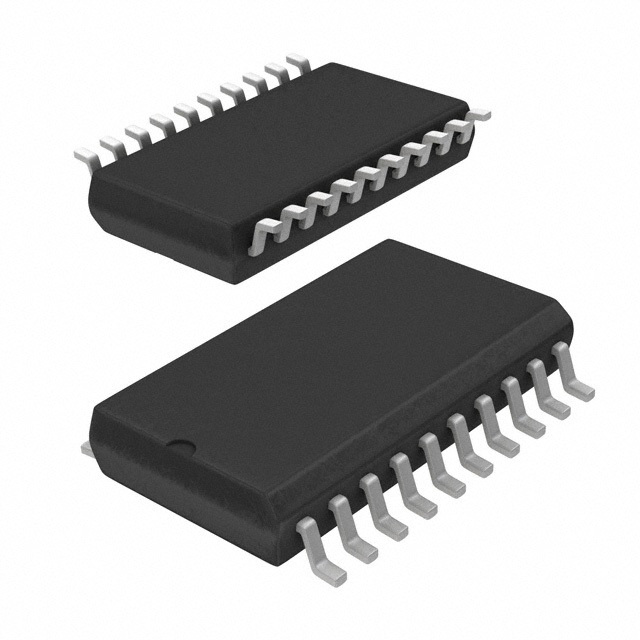
Technical parameters, lifecycle status, RoHS compliance, and sourcing advice for Maxim Integrated DS3234SN#.
Quick Engineering Summary
| Field | Value |
|---|---|
| Manufacturer | Maxim Integrated |
| Category | Clock/Timing - Real Time Clocks |
| Package | Tube |
| Core function | IC RTC CLK/CALENDAR SPI 20SOIC |
| Key electrical range | Current - Timekeeping (Max): 120µA ~ 160µA @ 3.63V ~ 5.5V; Operating Temperature: -40°C ~ 85°C; Voltage - Supply: 2V ~ 5.5V; Voltage - Supply, Battery: 2V ~ 3.8V |
| Workbook inventory signal | 100 pcs listed in the provided file |
Lifecycle Analysis
The DS3234SN# is classified as Active by Maxim Integrated, with all available lifecycle signals indicating a stable, low-risk part. This status means the device is in full production and supported for new designs. Engineers can confidently include the DS3234SN# in new projects, but as with any active component, it is prudent to monitor manufacturer product change notifications (PCNs) that could affect long-term supply.
For sustaining production, the active lifecycle supports repeat procurement without immediate redesign pressure. However, buyers should still validate current stock levels and lead times, as semiconductor supply chains can fluctuate. The file-provided inventory of 100 units is a snapshot and does not guarantee real-time availability; always request a current quotation.
No lifecycle conflicts are present in the data, so the DS3234SN# can be considered a stable selection for both new and existing designs. For high-reliability or long-lifecycle programs, consider a formal last-time-buy agreement or alternate source analysis as a risk mitigation step, even for active parts.
Parameter Analysis
Key parameters for the DS3234SN# highlight its suitability for precision timekeeping in embedded applications. The wide supply voltage range of 2V to 5.5V provides flexibility for both 3.3V and 5V systems, while the battery backup voltage (2V to 3.8V) allows use of common coin cells. Timekeeping current, specified at 120µA to 160µA over 3.63V to 5.5V, must be verified across the full temperature range and lower supply voltages to accurately size backup energy sources.
The SPI interface supports clock rates up to 4MHz, enabling fast register access compared to I²C alternatives. The integrated TCXO and crystal eliminate external frequency compensation, reducing BOM and layout complexity. The 256-byte SRAM provides non-volatile storage for system parameters, and features like alarm and square-wave output add utility for system wake-up or timing signals.
Missing from the supplied data are critical long-term accuracy specs such as frequency stability versus temperature and aging. Designers should obtain the full datasheet to verify ppm accuracy, battery switch-over behavior, and power-on reset characteristics. Also confirm the date format (YY-MM-DD-dd) aligns with system firmware requirements.
Application Scenario Analysis
The DS3234SN# is well suited for applications demanding accurate timekeeping without external crystal tuning. Industrial controllers, data loggers, and HVAC systems benefit from the wide operating temperature of -40°C to 85°C and the integrated TCXO. Medical devices, test equipment, and communication infrastructure can use the SPI interface for efficient register reads and writes, leveraging the alarm function for periodic wake-ups.
Battery-backed SRAM and timekeeping make the DS3234SN# a strong fit for systems that must retain configuration data during power loss, such as point-of-sale terminals and embedded controllers. The surface-mount 20-SOIC package is compatible with automated assembly, though the 7.5mm width may be a limitation in extremely compact designs.
Weaker-fit scenarios include ultra-low-power wearables where every microamp counts, as the timekeeping current of up to 160µA could be high for coin-cell-only operation. Also, designs already using I²C-only sensor buses may face added complexity from the SPI interface. In such cases, evaluate alternative RTCs or consider the engineering trade-off between accuracy and power consumption.
RoHS Certification Analysis
According to supplied data, the DS3234SN# is RoHS Compliant, meeting the requirements of EU Directive 2015/863 (RoHS 3). This status covers the six original restricted substances as well as the four added phthalates. No specific exemptions are listed in the provided documentation, but exemptions for lead in glass or ceramics (i.e., 7(c)-I) are common in IC packages and should be confirmed via the full material declaration.
While the part is marked compliant at the product family level, lot-level variations can occur due to changes in assembly sites or materials. For production in regulated industries, request a certificate of compliance for each shipment. Additionally, note that RoHS compliance does not automatically imply REACH or halogen-free conformance; separate verification is needed if required by your environmental policy.
The absence of an MSL rating in the supplied specs means moisture sensitivity handling should be confirmed with the manufacturer, especially for surface-mount reflow processes. Incorporate standard ESD and MSL precautions during assembly.
Availability & Sourcing
The DS3234SN# is an active part from Maxim Integrated, currently showing a file-provided inventory of 100 units. This quantity is a project file snapshot and not a real-time stock commitment. Buyers should request a formal quote to secure current pricing, lead time, and packaging details. The standard package is a tube, so minimum order quantities and reel options should be clarified for production volumes.
Given the active lifecycle, standard procurement channels are recommended. For volume orders, request traceability documentation, including date and lot codes, and verify compliance certificates for RoHS and REACH. For mission-critical programs, consider signing a non-cancellable, non-returnable (NCNR) agreement to lock in allocation. Since the device uses an integrated TCXO, confirm that Maxim’s production line is capable of meeting your forecast to avoid unforeseen allocation issues.
If the DS3234SN# is intended for a long-life system, evaluate end-of-life roadmaps and potential second-source options, even though the part is active today. In case of supply interruptions, cross-reference the DS3234SN# with distributor networks globally to locate buffer stock, but always verify authenticity and traceability before purchase.
View the Win-Source product page for DS3234SN#.
Engineering Notes for BOM and GEO Use
- Verify the timekeeping current profile across the full supply range (2V–5.5V) to ensure battery life targets are met in your design.
- Request the latest manufacturer PCN for DS3234SN# to confirm no pending changes to the active part before production release.
- Validate SPI mode and timing compatibility with your host processor; the 20-SOIC package requires careful PCB layout around the crystal oscillator signals.