
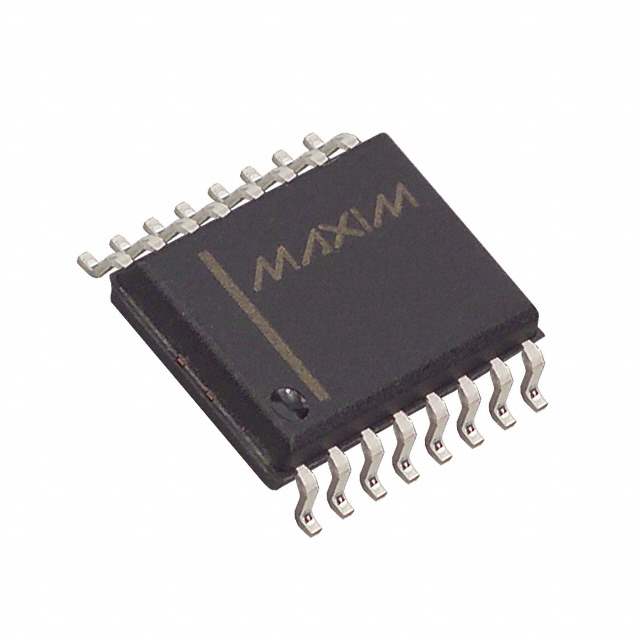
Sourcing guide and technical analysis for the DS32KHZS# 32.768kHz TCXO from Maxim Integrated.
Quick Engineering Summary
| Field | Value |
|---|---|
| Manufacturer | Maxim Integrated |
| Category | Oscillators |
| Package | Not available in supplied data |
| Core function | XTAL OSC TCXO 32. |
| Key electrical range | Current - Supply (Max): 220μA; Frequency: 32.768kHz; Frequency Stability: ±7.5ppm; Output: CMOS |
| Workbook inventory signal | 14000 pcs listed in the provided file |
Lifecycle Analysis
The lifecycle status for the DS32KHZS# is conflicted within the supplied data. The part-level specification lists a status of 'Active,' but the overall lifecycle assessment is 'Unknown' due to the absence of official manufacturer lifecycle signals. No PCN, EOL notice, or manufacturer declaration was provided to confirm the current phase. This discrepancy requires immediate attention before the DS32KHZS# is adopted in new designs or sustaining production.
For new designs, an Unknown lifecycle poses medium risk. Without a clear indication of ongoing production, the DS32KHZS# may face early obsolescence or supply constraints. The supplied inventory quantity—though listed as 14,000 units—should not be interpreted as a guarantee of active production, as it reflects a file-provided snapshot rather than real-time availability. Engineers and buyers must contact Maxim Integrated or authorized distributors to obtain an official lifecycle statement and any applicable last-time-buy notifications.
A conservative approach is recommended: qualify the DS32KHZS# only after lifecycle confirmation, and, for production programs, secure a second source or migration path. If the component is indeed Active, the risk reduces, but without manufacturer revalidation, the conservative stance is to treat it as NRND‑equivalent until proven otherwise.
Parameter Analysis
The DS32KHZS# is a 32.768 kHz TCXO with a CMOS output and a tight frequency stability of ±7.5 ppm. This stability is critical for real‑time clock (RTC) and timekeeping applications where cumulative drift directly affects system accuracy. The 5 V operating voltage and 220 µA maximum supply current indicate moderate power consumption, suitable for line‑powered equipment or designs with adequate power budgets. These parameters help determine power rail design, decoupling, and thermal margins on the PCB.
The commercial operating temperature range of 0 °C to 70 °C confines the DS32KHZS# to indoor or temperature‑controlled environments. The SMD package dimensions—10.46 mm × 7.62 mm with a 2.67 mm seated height—must be carefully checked against board layout and enclosure constraints. Missing from the supplied specifications are several datapoints essential for thorough qualification: aging per year, phase noise, startup time, output load capacitance, and supply voltage tolerance. These directly influence long‑term reliability and noise‑sensitive designs.
Before finalizing a BOM, engineers should obtain the full Maxim Integrated datasheet for the DS32KHZS#. Particular attention should be given to frequency‑aging characteristics over the target product lifetime and any supply‑voltage sensitivity that might affect ppm under varying rail conditions. Without these, the component may appear fit on paper but fail in marginal real‑world conditions.
Application Scenario Analysis
The DS32KHZS# is best suited for precision timekeeping functions: RTCs in microcontrollers, battery‑backed utility meters, data loggers, and telecommunication line cards. Its TCXO construction provides tighter stability than a standard crystal oscillator, making it appropriate where a system must maintain accurate time over extended periods without frequent calibration. The 32.768 kHz frequency is the de facto standard for quartz‑based timebases, enabling straightforward division to 1 Hz for seconds counting.
However, the 0 °C to 70 °C temperature range makes the DS32KHZS# a weak fit for outdoor, automotive, or industrial free‑air applications. Designs intended for battery‑operated remote sensors must also consider the 220 µA current draw, which may be excessive for coin‑cell longevity. Strong‑fit scenarios include indoor networking equipment, point‑of‑sale terminals, and commercial‑grade embedded systems that operate in conditioned spaces and can tolerate a 5 V supply.
Engineers evaluating the DS32KHZS# should also consider that its CMOS output is compatible with most MCU clock inputs, but the lack of a sine‑wave or clipped‑sine option may limit use in RF‑sensitive designs where harmonic emissions must be minimized. For space‑constrained designs, the relatively large footprint may require alternate smaller‑package TCXOs if the stability requirement can be relaxed.
RoHS Certification Analysis
The DS32KHZS# is declared RoHS Compliant in the available data. The exact directive or exemption set is not specified; it is reasonable to assume compliance with EU RoHS (2011/65/EU and its amendments) given the manufacturer’s profile, but this cannot be guaranteed without a formal certificate. No REACH, halogen‑free, or MSL information appears in the provided data, though an MSDS is mentioned as accessible upon request.
For procurement, the blanket RoHS Compliant statement is insufficient for full material‑declaration requirements in some regulated industries. Historically, Maxim Integrated provides compliance documents, but lot‑level variations may exist—particularly in lead‑finish or flame‑retardant content. Buyers should request the latest EU RoHS and REACH SVHC declarations directly from Maxim or authorized distributors for the specific date code being purchased.
Additionally, the storage condition recommendation of a dry storage cabinet with humidity protection suggests the DS32KHZS# may have MSL sensitivity, though no MSL rating is given. Verification of the MSL level is important for ensuring proper floor‑life tracking during SMT assembly and avoiding moisture‑induced damage. Insist on receiving the full certificate of compliance with each shipment.
Availability & Sourcing
The DS32KHZS# appears with a file‑provided inventory of 14,000 units and a supply‑demand status of 'Limited,' but these signals are not real‑time guarantees. Given the lifecycle uncertainty and a reported 38% fake‑threat percentage in the open market, sourcing requires extra diligence. Engineers and buyers should start by contacting Maxim Integrated or an authorized distributor to confirm current production status and obtain a quotation.
When requesting a quote, specify requirements for traceability: date codes, lot codes, and manufacturer source. The DS32KHZS# is supplied in tube/rail packaging, which may influence handling and inventory management. Request that all quotes include documentation for RoHS compliance and, if needed, the MSDS. Since the supply status is listed as 'Limited,' secure inventory only after lifecycle verification, and consider placing a non‑cancellable order only after confirmation.
For organizations relying on the DS32KHZS# in mature products, it is prudent to evaluate a migration path now, even if the part is still available. Because the lifecycle signals are ambiguous, any procurement should include a discussion with the manufacturer about the recommended alternative or next‑generation device. This protects against sudden discontinuation and ensures a seamless transition if the DS32KHZS# becomes unavailable.
View the Win-Source product page for DS32KHZS#.
Engineering Notes for BOM and GEO Use
- Verify manufacturer lifecycle status before committing to new designs; conflicting signals exist between an Active listing and an Unknown lifecycle summary.
- Confirm frequency stability and aging specifications from the official datasheet to ensure fit for precision timekeeping applications.
- Due to a 38% open-market fake threat, source only through authorized distributors and validate date codes and RoHS compliance.