
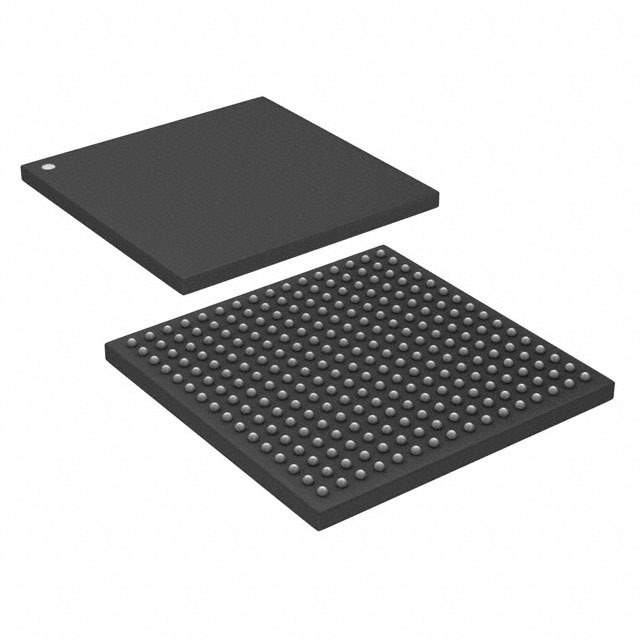
End-of-Life (EOL) data transport IC with SPI interface, 256-CSBGA package. Specs, lifecycle, and sourcing details.
Quick Engineering Summary
| Field | Value |
|---|---|
| Manufacturer | Maxim Integrated |
| Category | Interface - Specialized |
| Package | 256-BGA, CSBGA |
| Core function | IC INTFACE SPECIALIZED 256CSBGA |
| Key electrical range | Supply and Demand Status: Limited; Supply Voltage (V): 1.8V, 2.5V, 3.3V |
| Workbook inventory signal | 1 pcs listed in the provided file |
Lifecycle Analysis
The DS33M33N+ from Maxim Integrated is officially End-of-Life (EOL), as confirmed by all available lifecycle signals. This Interface - Specialized IC is no longer recommended for new designs and should be considered only for sustaining existing production. Procurement teams must verify the final purchase date and last-time buy availability directly with Maxim Integrated, as EOL status indicates that manufacturer production has ceased or will cease imminently.
Sustaining production with the DS33M33N+ requires a conservative inventory strategy. File-provided data indicates one unit in stock, but this snapshot is not guaranteed real-time. Engineers and buyers should validate current stock with distributors and consider migrating to an alternative interface solution if long-term supply is needed. The high-risk lifecycle level demands proactive obsolescence management to avoid production disruptions.
Parameter Analysis
The DS33M33N+ specifies an SPI serial interface, making it suitable for microcontroller or processor communication in data transport applications. The device supports multiple supply voltages—1.8V, 2.5V, and 3.3V—allowing integration into low-voltage logic systems. However, critical electrical parameters such as maximum clock frequency, signal voltage thresholds, and I/O drive strength are absent from the limited data set. Engineers must refer to the official Maxim Integrated datasheet for these values to ensure proper timing closure and signal integrity.
The 256-ball CSBGA package (17x17 mm) is a surface-mount device with an MSL level of 3, requiring 168 hours of floor life after the dry pack is opened. This imposes strict handling and baking procedures in manufacturing. For thermal and mechanical reliability, designers should verify the recommended land pattern and soldering profile from the manufacturer. Missing specifications like operating temperature range and power consumption further necessitate a thorough datasheet review before PCB layout or qualification.
Application Scenario Analysis
The DS33M33N+ is marketed as a specialized interface IC for data transport, suggesting its use in communication systems such as T1/E1 line interfaces, framers, or backplane connectivity. Its SPI serial interface enables configuration and status monitoring by a host microcontroller. The 256-CSBGA package implies higher integration, potentially combining multiple channels or protocol functions, making it a good fit for dense line card designs in legacy telecom or networking infrastructure.
However, because the part is EOL and detailed specifications are not provided, using it in new designs is risky. Weak-fit scenarios include any application requiring long-term availability, up-to-date compliance certifications, or performance characteristics not confirmed by a current datasheet. Engineers maintaining legacy systems may still find the DS33M33N+ suitable as a drop-in replacement, but they must verify exact pin compatibility and firmware compatibility from the original design documentation.
RoHS Certification Analysis
The DS33M33N+ is documented as RoHS Compliant according to the limited data provided. This typically indicates compliance with EU Directive 2011/65/EU including amendments, though the exact standard version—such as RoHS 3 (EU 2015/863)—is not explicitly stated. Without a full material declaration or certificate of compliance, procurement teams should request the manufacturer’s RoHS certificate for the specific date/lot code to confirm lead-free and halogen-free status.
Additionally, the device carries an MSL rating of 3, which is relevant for moisture sensitivity during lead-free reflow soldering. The 168-hour floor life after opening requires careful dry-pack management. No REACH or other environmental compliance data is presented, so buyers should verify REACH SVHC compliance separately if required. While RoHS compliance is asserted, lot-level documentation is recommended for high-reliability applications.
Availability & Sourcing
DS33M33N+ inventory is extremely constrained; file-based data shows a single unit. This count is a snapshot and not a real-time guarantee. Buyers should request a quote through authorized channels to confirm current availability. The part is supplied in tray packaging with a manufacturer pack quantity of one, which may affect handling and minimum order quantities. For EOL components, secure any needed stock promptly and evaluate last-time buy options with Maxim Integrated or authorized distributors.
Sourcing in the open market carries a 31 percent fake threat, as indicated by supply chain data. To mitigate counterfeits, enforce strict incoming inspection: date/lot code verification, X-ray inspection, and functional testing. Additionally, request traceability documentation and RoHS compliance certificates. Given the high-risk lifecycle, manufacturers should verify the part’s status directly with Maxim Integrated before committing to a purchase. For new production, initiate migration to an alternative specialized interface IC to ensure long-term supply stability.
View the Win-Source product page for DS33M33N+.
Engineering Notes for BOM and GEO Use
- Verify EOL status with manufacturer before committing to new designs; limited stock (1 unit reported) may not reflect real-time availability.
- 31% fake threat in open market means rigorous authenticity checks (date/lot codes, X-ray, electrical test) are critical for procurement.
- 256-CSBGA package requires careful SMD handling; MSL level 3 demands 168-hour floor life control after opening.