
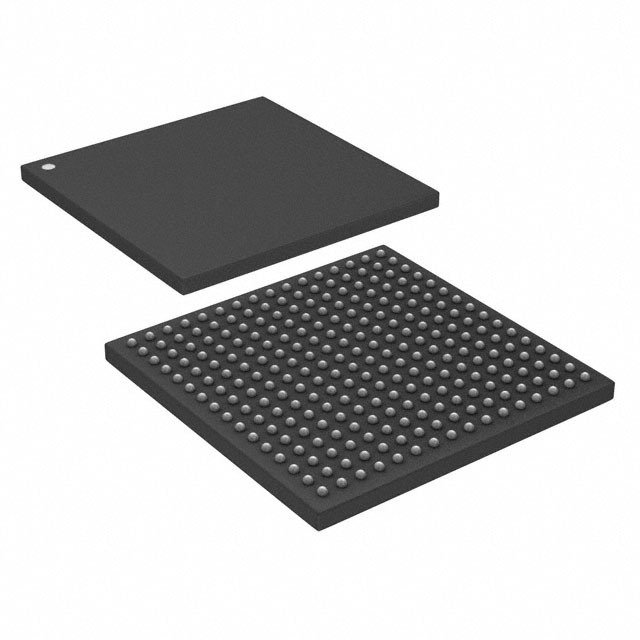
Specialized interface IC with parallel/serial data transport for legacy telecom and networking applications.
Quick Engineering Summary
| Field | Value |
|---|---|
| Manufacturer | Maxim Integrated |
| Category | Interface - Specialized |
| Package | Tray |
| Core function | IC INTFACE SPECIALIZED 256CSBGA |
| Key electrical range | Voltage - Supply: 1.8V, 2.5V, 3.3V |
| Workbook inventory signal | 1 pcs listed in the provided file |
Lifecycle Analysis
The Maxim Integrated DS33W11+ shows conflicting lifecycle signals. While the lifecycle status field reads Active, the product status is explicitly Not For New Designs, and the Excel lifecycle parameter indicates it is not applicable for new designs. This inconsistency suggests a transition toward NRND. For procurement purposes, a conservative NRND assessment is recommended: the part should not be used in new designs, and existing designs should plan for a migration path.
The risk level is medium, as the component may remain available for sustaining production but could be discontinued with limited notice. Engineers should request a formal lifecycle confirmation from Maxim Integrated or Analog Devices, the parent company. The file shows a single unit in workbook inventory, but that does not reflect real-time stock. Reliance on spot market inventory for this part is risky given its NRND posture.
For production planning, evaluate alternative parts that meet the same interface requirements. If the DS33W11+ is already designed in, secure sufficient stock for the expected product life and monitor manufacturer notifications closely.
Parameter Analysis
The DS33W11+ is a specialized interface IC supporting data transport applications. Key supplied parameters include a parallel/serial interface and a multi-voltage supply range of 1.8V, 2.5V, and 3.3V. These voltages allow integration into mixed-logic environments, but the exact signal levels and tolerance ranges need verification from the datasheet. The 256-LBGA, CSBGA package with a body size of 17x17 mm and surface-mount mounting type dictates PCB layout considerations, including pad design and thermal management.
Critical missing parameters that must be confirmed from the official datasheet include the maximum data rate, number of channels, operating temperature range, and specific protocol support. Without these, it is impossible to ensure proper timing closure and system integration. The parallel/serial interface implies the part performs serialization/deserialization, but the bit width and clocking architecture are unspecified.
For sourcing decisions, note the standard package quantity is 20 units per tray, and the MSL is Level 3 with a 168-hour floor life. This requires careful handling during assembly, especially for low-volume builds where storage conditions may be compromised. Verify all parametric boundaries against your design before committing to this part number.
Application Scenario Analysis
Given the stated application area of Data Transport and its parallel/serial interface, the DS33W11+ is likely used in legacy telecommunications equipment, such as TDM-based backhaul, line cards, or multiplexers that bridge parallel processor buses to serial transmission lines. Its multi-voltage support makes it adaptable to systems operating at different logic levels, a common requirement in mixed-generation infrastructure.
It is a strong fit for maintaining existing network installations where a drop-in replacement is needed without redesigning the board. It is also suitable for field repair depots supporting older equipment with long service lifetimes. However, its Not For New Designs status makes it a weak fit for new product development, especially in modern high-speed Ethernet or fiber-optic systems that demand newer interfaces like SGMII or XAUI.
Engineers considering the DS33W11+ for new designs should instead evaluate current Maxim Integrated or Analog Devices interface ICs that are in full production. If used in a sustaining capacity, ensure that the application's data rate requirements and I/O voltages align with the actual silicon specifications, which must be obtained from the datasheet.
RoHS Certification Analysis
The DS33W11+ is listed as RoHS Compliant according to the supplied data. This implies conformance with Directive 2011/65/EU and its amendments, restricting hazardous substances such as lead, mercury, and cadmium. The REACH status is reported as unaffected, meaning the part does not contain substances of very high concern above the reporting threshold.
However, RoHS compliance is often declared at the part family level and may not reflect variations across production lots. Buyers should request a certificate of analysis or full material declaration from the distributor to confirm compliance for the specific date code being purchased. This is especially important for components sourced from non-authorized channels.
Additionally, the MSL rating is 3 with a 168-hour floor life. This is a moisture sensitivity classification, not directly a RoHS attribute, but it is relevant for lead-free reflow profiles. Improper handling can lead to popcorning or delamination during assembly. Ensure that incoming inspection includes humidity indicator card checks and rebagging with desiccant if needed.
Availability & Sourcing
File-provided stock for the DS33W11+ shows a quantity of one unit, which is not a guarantee of real-time availability. The component is supplied in trays with a standard package of 20 pieces. Given its NRND status, lead times may be extended or indeterminate, and last-time-buy notices could appear without warning.
A significant risk factor is the reported fake threat rate of 67 percent in the open market. To avoid counterfeit or relabeled parts, source only through Maxim Integrated authorized distributors or Analog Devices franchised partners. Request full traceability documentation, including date and lot code verification, and consider in-house or third-party electrical testing for high-reliability applications.
For procurement teams, the recommended action is to initiate an RFQ to confirm current availability, lead time, and pricing from authorized sources. If the part is critical, evaluate a second-source strategy or redesign using a drop-in compatible device under an active lifecycle. Secure inventory sufficient for the product's remaining production life, and factor in MSL 3 storage requirements to avoid costly assembly rework.
View the Win-Source product page for DS33W11+.
Engineering Notes for BOM and GEO Use
- Verify lifecycle directly with Maxim Integrated; conflicting signals (Active vs. Not For New Designs) demand conservative NRND assumption.
- High counterfeit risk (67% fake threat in open market) mandates sourcing only through authorized distribution with full traceability.
- MSL 3 rating requires adherence to 168-hour floor life limits; bake components before assembly if exposure exceeds specification.