
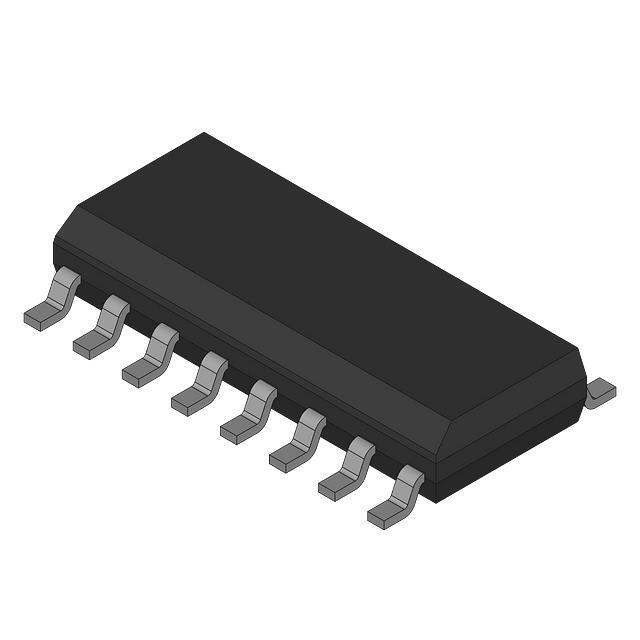
End-of-Life RS422/RS423 receiver in 16-SOIC package. Verify availability, parameters, and plan migration for your design.
Quick Engineering Summary
| Field | Value |
|---|---|
| Manufacturer | Texas Instruments |
| Category | Interface - Drivers, Receivers, Transceivers |
| Package | 16-SOIC |
| Core function | IC TRANSCEIVER 0/4 16SOIC |
| Key electrical range | Supply and Demand Status: Balance; Supply Voltage - Operating: 4.5 V to 5.5 V; Temperature Range - Operating: -40°C to 85°C |
| Workbook inventory signal | 2500 pcs listed in the provided file |
Lifecycle Analysis
Texas Instruments has designated the DS34C86TM as End-of-Life (EOL). For engineers, this means the device should not be used in new designs and procurement should focus on securing last-time-buy quantities for existing production. A conflicting 'Status: Active' field appears in some specifications, but the manufacturer's lifecycle signal is clearly EOL; treat the part as discontinued to avoid supply disruptions.
The EOL status carries high procurement risk. Without a formal last-time-buy notice, volumes may deplete unexpectedly. File-provided data indicates a stock of 2500 units, but this is not a real‑time guarantee and must be confirmed via quote. Plan an immediate bill‑of‑materials review and identify pin‑compatible or functional alternatives to prevent production line stoppages.
Parameter Analysis
The DS34C86TM is a quad receiver in a 16‑SOIC package, supporting RS422 and RS423 differential signaling. The 60 mV receiver hysteresis provides improved noise immunity, critical in industrial environments where ground noise and signal degradation occur. The 4.5 V to 5.5 V supply range aligns with standard TTL/CMOS logic, but designers should verify that the minimum output swing matches their controller’s input thresholds across the –40°C to 85°C temperature span.
Key missing parameters from the available data include maximum data rate, input voltage tolerance, and propagation delay. For high‑speed RS422 links, confirm that the receiver’s bandwidth meets your baud rate requirements. Additionally, check the datasheet for fail‑safe features, ESD protection, and pin‑to‑pin leakage to ensure robust integration. Without these, a careful qualification board test is advised before finalizing the design.
Application Scenario Analysis
The DS34C86TM fits legacy industrial automation and instrumentation systems where RS422/RS423 long‑distance differential signaling is standard. Its –40°C to 85°C operating range supports factory floors, process control panels, and field sensor interfaces. The 60 mV hysteresis helps reject noise in electrically harsh environments, making it suitable for motor drives and PLC backplanes.
For portable devices, the 5 V supply and 16‑SOIC footprint may be less ideal compared to modern low‑voltage receivers. New designs should avoid this EOL part, but it may serve as a drop‑in replacement for discontinued legacy receivers in existing communication and networking boards. Always cross‑reference exact pinout and timing with the original part to ensure compatibility.
RoHS Certification Analysis
The DS34C86TM is labeled RoHS Compliant, which indicates it meets the European Union’s directive on hazardous substances. However, the exact directive version (e.g., 2011/65/EU or 2015/863) is not specified in the available documentation. For compliance certification in your product, request a full material declaration or certificate of compliance from the supplier to confirm lead‑free terminations and absence of restricted phthalates.
Given the EOL status, ensure that any remaining inventory is from a date code after RoHS adoption to avoid older non‑compliant stock. Lot‑level verification is prudent, as family‑level compliance statements may not cover all production batches. No exemptions are noted, but if your application requires exemptions (e.g., for lead in solders), verify directly with Texas Instruments.
Availability & Sourcing
Availability for the DS34C86TM is limited due to its EOL status. The file‑provided inventory of 2500 units reflects a snapshot and must be validated through a formal RFQ process. The part is supplied in tape‑and‑reel packaging (Reel ‑ TR) suitable for automated assembly, and dry storage with humidity protection is recommended per the storage condition note.
A high counterfeit risk (67%) in the open market makes traceability essential. Insist on full lot and date code documentation, and verify that the parts are RoHS compliant from the actual production batch. Because no active production exists, secure stock immediately and cross‑reference last‑time‑buy notices directly with Texas Instruments. For future designs, evaluate migration to an active RS422 receiver to avoid single‑source dependence.
View the Win-Source product page for DS34C86TM.
Engineering Notes for BOM and GEO Use
- The DS34C86TM is a 4-channel RS422/RS423 receiver with 60 mV hysteresis for noise immunity, but verify exact threshold and speed in datasheet.
- EOL status demands immediate inventory securing and evaluation of alternative receivers to avoid production gaps.
- High counterfeit risk (67%) requires sourcing only from authorized or traceable channels with lot and date code verification.