
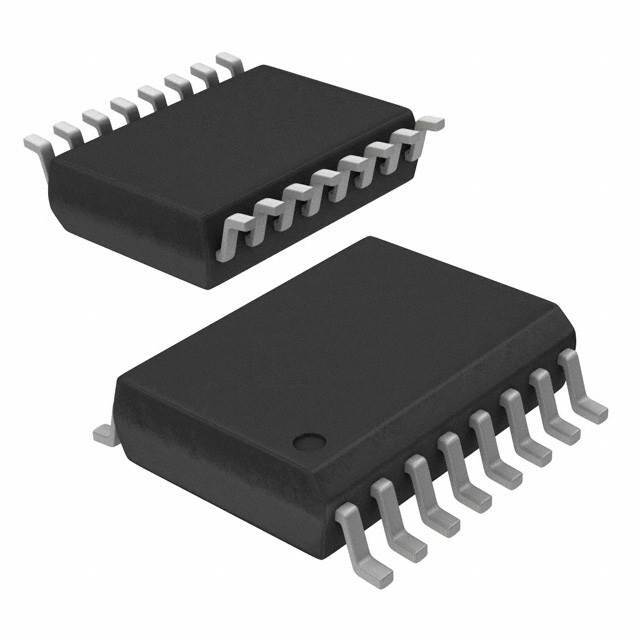
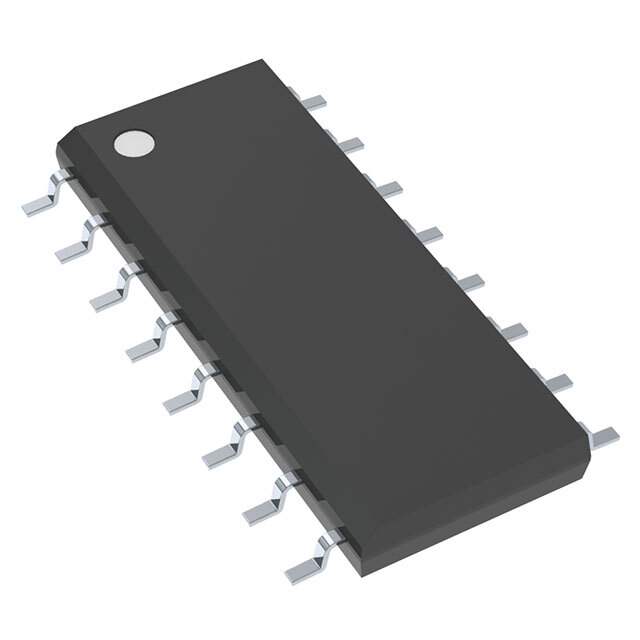
EOL quad RS-422/RS-485 driver in 16-SOIC – verify lifecycle before new designs.
Quick Engineering Summary
| Field | Value |
|---|---|
| Manufacturer | Texas Instruments |
| Category | Interface - Drivers, Receivers, Transceivers |
| Package | 16-SOIC |
| Core function | IC TRANSCEIVER 4/0 16SOIC |
| Key electrical range | Supply and Demand Status: Balance; Supply Voltage - Operating: 4.5 V to 5.5 V; Temperature Range - Operating: -40°C to 85°C |
| Workbook inventory signal | 5900 pcs listed in the provided file |
Lifecycle Analysis
The DS34C87TM is classified as end-of-life (EOL) by Texas Instruments, a high-risk status for procurement. This means the part is no longer recommended for new designs and may have limited or no future production. A conflicting 'Status: Active' entry in the specification data is likely a catalog error and should be disregarded; the EOL signal must be taken as authoritative. For new applications, avoid this part entirely and seek a pin-compatible alternative or a newer device. For existing designs, immediate action is needed: validate the last-time-buy window directly with TI, secure available stock, and initiate a redesign or qualification of a replacement. The supplied inventory figure of 5,900 units reflects a file-provided snapshot and does not guarantee real-time availability.
Engineers must treat every procurement of DS34C87TM as a bridge buy. Without manufacturer support, long-term availability is uncertain, and counterfeit risks escalate. Check distributor channels and authorized sources only, and cross-reference with TI's official product change notifications (PCNs) to confirm the exact discontinuation timeline.
Parameter Analysis
Key supplied specifications for the DS34C87TM include a 4.5 V to 5.5 V operating voltage, -40°C to +85°C temperature range, 4/0 driver/receiver configuration, and support for RS-422 and RS-485 protocols in a 16-SOIC surface-mount package. The 5 V supply and wide temperature range suit typical industrial environments, while the quad driver count enables multi-drop bus nodes. However, critical parameters are absent from the provided data, which must be verified against the official Texas Instruments datasheet.
Missing data point priorities: data rate (essential for network speed and signal integrity), driver output slew rate (affects EMI and cable length), receiver input hysteresis (for noise immunity in RS-485), common-mode voltage range (determines ground potential tolerance), and fail-safe features (open, short, and idle bus failsafe). The 16-SOIC package and SMD mounting are standard for automated assembly. Without these parameters, designers cannot guarantee interoperability or compliance with TIA/EIA-485 standards, making a full datasheet review mandatory before any design-in or last-time-buy decision.
Application Scenario Analysis
The DS34C87TM is designed for differential data transmission in RS-422 and RS-485 networks, making it a strong fit for industrial automation, building controls, instrumentation, and remote sensor arrays. Its 5 V operation and extended temperature range align with factory-floor controllers, motor drives, and HVAC systems. In these scenarios, the part serves as a quad driver for multi-point buses, but its use should be limited to sustaining existing designs due to EOL status.
Weak-fit applications include new low-power or battery-operated designs (the 5 V supply may be too high), high-speed data links exceeding typical RS-485 limits (data rate unknown), and systems requiring 3.3 V-only operation. The part is not suitable for single-ended logic interfaces or protocols outside RS-485/422. Additionally, the lack of integrated receiver channels means it cannot function as a transceiver; a separate receiver IC is required. Given EOL, its use in any new application is not recommended.
RoHS Certification Analysis
The DS34C87TM is listed as RoHS Compliant. While this indicates adherence to hazardous substance restrictions, the exact standard version (e.g., EU RoHS 2011/65/EU or RoHS 3 2015/863) is not specified. For procurement, assume the part meets current EU RoHS requirements, but request a manufacturer-issued certificate of compliance (CoC) tied to the specific date code and lot. No exemptions are noted, so full compliance is expected.
Because the part is EOL and may come from older inventory, lot-level verification is critical. Older date codes might predate RoHS revisions or could be from non-compliant stock. Additionally, if REACH compliance is required, confirm separately through the manufacturer's SVHC declarations. Do not rely on the RoHS label alone; a paper trail ensures audit readiness and avoids compliance violations in regulated markets.
Availability & Sourcing
Sourcing the DS34C87TM requires urgent attention due to its EOL classification. The file-provided inventory indicates 5,900 units, but this is not a real-time guarantee. Buyers should immediately request a quote to confirm current stock, date codes, and packaging (tape and reel per supplier data). Given a 45% counterfeit risk rating, strict traceability is essential: request original manufacturer packaging and lot certifications.
For production, evaluate last-time-buy options with Texas Instruments or authorized distributors. If no manufacturer stock remains, secure inventory from verified excess channels after thorough authenticity testing. Because the part is a common-used device in communications and sensing, demand may still exist for repairs. Always verify lifecycle status with TI before committing to a large purchase. For new designs, this part is not recommended; instead, transition to an active replacement and avoid sole-source risks.
View the Win-Source product page for DS34C87TM.
Engineering Notes for BOM and GEO Use
- Confirm EOL status with Texas Instruments and secure last-time-buy inventory if needed for production.
- Verify missing datasheet parameters like data rate and receiver hysteresis before board integration.
- Request lot-specific RoHS and traceability documentation due to high counterfeit risk (45% fake threat).