
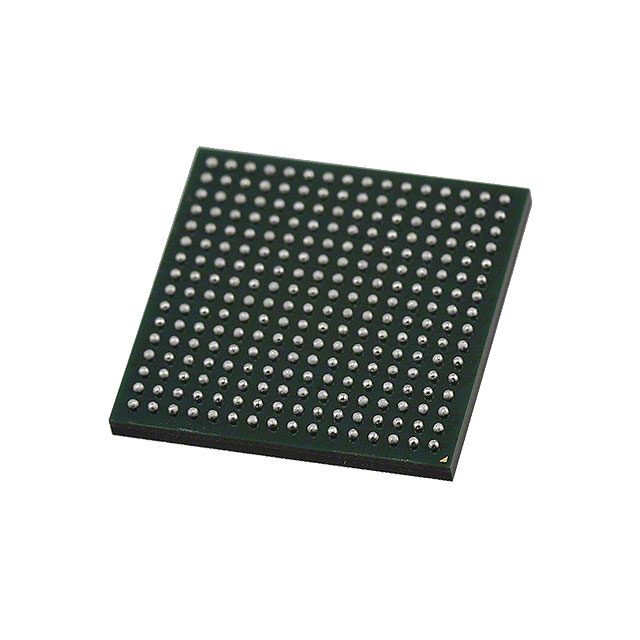
Maxim Integrated DS34S102GN+ Time Division Multiplexer in 256‑CSBGA – Data Transport Specialized IC
Quick Engineering Summary
| Field | Value |
|---|---|
| Manufacturer | Maxim Integrated |
| Category | Specialized ICs |
| Package | Tray |
| Core function | IC TIME DIV MULTIPLX 256-CSBGA |
| Key electrical range | IC TIME DIV MULTIPLX 256-CSBGA |
| Workbook inventory signal | 7200 pcs listed in the provided file |
Lifecycle Analysis
The DS34S102GN+ carries a lifecycle status of Active from Maxim Integrated, and both the manufacturer’s listed status and product status on official platforms reflect Active. However, an internal Excel parameter associated with the part shows ‘停止提供’ (stop providing), introducing a direct conflict in lifecycle signals. This inconsistency is significant: while the official record supports ongoing production, the flagged parameter suggests that supply may be limited or heading toward discontinuation.
For procurement and design teams, this means the part should not be treated as a guaranteed long‑term solution for new designs without explicit confirmation from the factory. In sustaining production, it remains usable, but any new bill‑of‑material insertion carries medium risk. A recommended step is to request a formal lifecycle statement from Maxim Integrated (now part of Analog Devices) that clarifies the contradictory data and confirms future production intent.
Until such clarification is obtained, treat the DS34S102GN+ as a component that may enter NRND or EOL status without extended notice. Secure buffer inventory if it is critical for existing products, and evaluate drop‑in or functional alternatives in parallel. The file‑provided inventory quantity of 7200 units offers a snapshot, but real‑time availability should be verified through authorized distributors.
Parameter Analysis
The DS34S102GN+ is characterized as a TDM (Time Division Multiplexing) device, packaged in a 256‑CSBGA with a 17×17 mm body size and surface‑mount mounting type. These mechanical attributes directly influence PCB layout, requiring a 256‑ball BGA footprint with adequate keep‑out zones and via fan‑out. The package’s MSL level of 3 (168‑hour floor life) imposes strict handling controls; once the moisture‑barrier bag is opened, the device must be soldered within the specified period or baked per JEDEC guidelines to prevent popcorn damage during reflow.
Available documentation does not include electrical parameters such as supply voltage, data rate, operating temperature range, or power dissipation. This gap is critical: engineers must obtain the full datasheet from Maxim Integrated to verify that the part meets system‑level requirements for clocking, I/O voltage levels, and jitter tolerance. The ‘Programmable: Not Verified’ note also indicates that if configurability is needed, additional investigation is required—typical TDM devices may offer per‑channel enable or timeslot assignment, but without confirmation, assuming programmability is risky.
For thermal and reliability qualification, the 256‑CSBGA package typically demands careful thermal modeling due to its small ball pitch and potential for high‑density interconnect. Junction‑to‑ambient thermal resistance must be derived from the manufacturer’s data or simulation to ensure junction temperatures remain within safe limits. The application field ‘Data Transport’ suggests usage in telecom or networking backplanes, where high‑speed serial interfaces are common; thus, signal integrity parameters such as rise/fall time and channel‑to‑channel skew are also essential data points to request.
Application Scenario Analysis
The DS34S102GN+ is designed for data transport applications where time‑division multiplexing aggregates multiple lower‑speed signals onto a single higher‑speed link. Strong‑fit scenarios include telecom access equipment, such as T1/E1 line cards, digital cross‑connect systems, and SDH/SONET multiplexers. In these systems, the TDM function combines voice or data channels into a framed serial stream, and the DS34S102GN+ would sit at the physical layer, interfacing with backplane drivers or line interface units.
Weak‑fit scenarios involve high‑speed serial standards like PCIe or Ethernet, unless the part specifically supports such protocols. Without electrical specifications, it is unclear whether the device can handle the jitter tolerance or data rates required for modern packet‑based networks. Similarly, use in purely analog multiplexing or as a general‑purpose switch is not supported by the given description; it is a digital TDM device intended for synchronous data transport.
Given the lack of a full datasheet, designers should avoid assuming compatibility with any specific telecom standard beyond generic TDM framing. Verification of channel count, data rate per channel, and framing overhead is necessary before integrating the DS34S102GN+ into a line‑card design. The surface‑mount package and 17×17 mm form factor also mean that applications with severe space constraints may need an alternate, smaller solution.
RoHS Certification Analysis
The DS34S102GN+ is marked as RoHS Compliant, which implies conformance to EU Directive 2015/863 (RoHS 3) restricting hazardous substances such as lead, mercury, cadmium, and certain flame retardants. In practice, this compliance is typically declared at the component family level; however, for high‑reliability or volume production, a lot‑specific certificate of compliance should be requested from the supplier to guard against batch‑level variations or production changes.
The part also carries a REACH Unaffected status, meaning no Substances of Very High Concern (SVHC) above the threshold are present. This is separate from RoHS and addresses chemical safety under EU Regulation 1907/2006. Again, while REACH unaffected is a positive indicator, it does not replace RoHS verification—both certifications should be confirmed during the quoting process.
Additionally, the MSL (Moisture Sensitivity Level) of 3 is not directly a RoHS parameter but is often referenced alongside environmental compliance because lead‑free solder processes demand higher reflow temperatures. The 168‑hour floor life and higher peak temperature requirements (typically 260 °C for lead‑free) necessitate strict adherence to J‑STD‑020 handling and baking procedures. This is especially important for BGA packages, where moisture entrapment can cause delamination or solder joint failures.
Availability & Sourcing
The DS34S102GN+ is supplied in tray packaging with a standard package quantity of 10 units per tray. A file‑provided inventory figure of 7200 pieces suggests current stock exists, but this number is not a real‑time guarantee. Actual availability should be verified by requesting a quotation from Win Source or authorized distribution partners. Given the conflicting lifecycle signals, inventory depth may fluctuate, and securing a buffer stock could be prudent for sustaining production.
Procurement teams should emphasize traceability and compliance documentation when sourcing this Maxim Integrated part. With a reported 38% counterfeit threat rate in the open market, the risk of non‑conforming or refurbished devices is significant. Request full lot code, date code, and proof of authorized supply chain provenance. The part’s MSL‑3 sensitivity also requires confirmation that packaging has remained sealed and dry, as improper storage can compromise solderability.
Given the lifecycle uncertainty, a dual‑pronged sourcing strategy is advisable: maintain a small safety stock for existing products while actively engaging with the manufacturer to clarify the discontinuation status. For new designs, unless the lifecycle is confirmed Active with a stable roadmap, migration to a pin‑compatible alternative or a newer TDM device from Analog Devices’ portfolio should be evaluated. RoHS and REACH certifications should be obtained at the quotation stage and verified with the supplier’s latest environmental declarations.
View the Win-Source product page for DS34S102GN+.
Engineering Notes for BOM and GEO Use
- Verify lifecycle directly with Maxim Integrated/Analog Devices because conflicting Active and stop‑providing signals make long‑term procurement risky for new designs.
- The 256‑CSBGA package (17×17 mm) with MSL 3 requires strict moisture handling and proper thermal profiling during SMT assembly to avoid reflow-induced damage.
- With a reported 38% counterfeit threat rate in the open market, source only through authorized channels and request full lot‑traceability, date‑code, and RoHS/REACH documentation.