
Discontinued TDM IC for Data Transport – Verify RoHS Compliance & Availability
Quick Engineering Summary
| Field | Value |
|---|---|
| Manufacturer | Maxim Integrated |
| Category | Specialized ICs |
| Package | Tray |
| Core function | IC TIME DIV MULTIPLX 256-CSBGA |
| Key electrical range | IC TIME DIV MULTIPLX 256-CSBGA |
| Workbook inventory signal | 1 pcs listed in the provided file |
Lifecycle Analysis
The DS34S104GN from Maxim Integrated is officially listed as a Discontinued part. Internal lifecycle signals uniformly point to end-of-life status, with EOL indicated in Excel parameters and Discontinued status in both Product Status and Lifecycle Status fields. This means the component is no longer recommended for new designs, and the manufacturer has likely ceased or is ceasing production.
For existing designs, immediate action is required. Engineers and buyers should verify the discontinuation timeline directly with Maxim Integrated and assess the remaining authorized inventory. The part appears in file-based data with only 1 unit shown, which is not a real-time stock guarantee but indicates limited availability. Sustaining production will depend on securing sufficient last-time buy quantities or identifying potential end-of-life surplus sources.
Given the high risk, a formal migration or redesign should be initiated if the DS34S104GN is critical. No direct replacement or substitute part numbers were provided in the supplied data, so a pin-for-pin alternative cannot be advised. The lifecycle recommendation is conservative: do not specify this part for new designs and validate all procurement channels against manufacturer notices.
Parameter Analysis
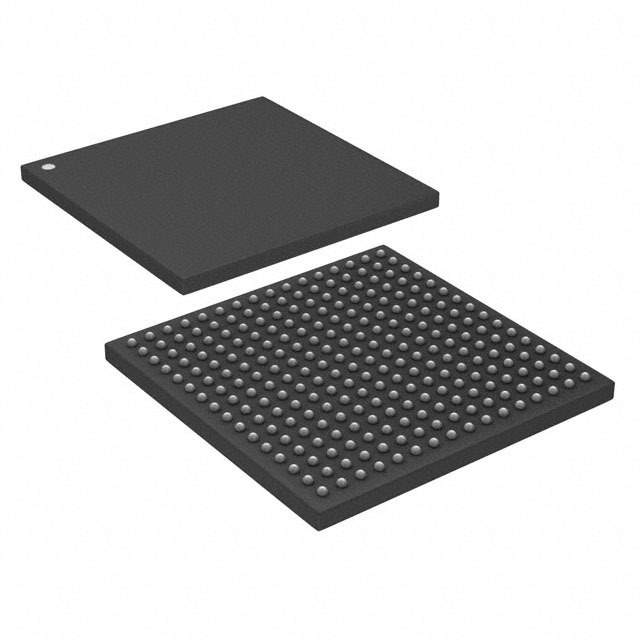
The DS34S104GN is a Time Division Multiplexing (TDM) IC targeted at data transport applications, packaged in a 256-CSBGA (17x17 mm) surface-mount case. It is supplied in trays with a standard package quantity of 90 pieces. Its Moisture Sensitivity Level (MSL) is 1, indicating unlimited floor life, which eases handling during assembly.
However, the provided specification data is minimal, lacking critical electrical and timing parameters typically found in a datasheet. Missing data includes supply voltage, operating temperature range, clock frequency, power dissipation, and detailed TDM channel characteristics. Without these, engineers cannot perform proper derating, thermal analysis, or signal integrity evaluation. The “Programmable” field is marked “Not Verified,” further reducing confidence in any flexible configuration assumptions.
When sourcing or qualifying the DS34S104GN, it is essential to obtain the full manufacturer datasheet. Priority parameters to verify include operating voltage ranges, I/O levels, maximum data rate, and timing accuracy. Additionally, the large BGA package demands careful PCB layout consideration for signal routing and thermal management, even though the MSL 1 rating reduces moisture-related reliability concerns.
Application Scenario Analysis
Based on its description as a time-division multiplexer for data transport, the DS34S104GN was likely deployed in legacy telecommunication or data communication equipment where multiple lower-rate signals are combined into a single high-speed stream. Typical applications include T1/E1 access equipment, digital cross-connect systems, and legacy transport infrastructure.
Because the part is discontinued, its best-fit scenario today is for maintenance, repair, or replacement in existing fielded systems. It is not suitable for new designs in modern packet-based networks where TDM is being phased out. A weak-fit scenario would be any new product development requiring high-speed serial interfaces, as newer ICs from Maxim Integrated or Analog Devices (which absorbed Maxim) offer more integrated and supported solutions.
Engineers evaluating the DS34S104GN for a current project must confirm that the remaining stock matches the exact revision and timing requirements of the target system. Without access to detailed datasheets, any integration into a board-level design carries significant risk of incompatibility, making this part advisable only when no migration path is available.
RoHS Certification Analysis
The provided compliance data for the DS34S104GN contains a direct conflict: the top-level compliance summary asserts “RoHS Compliant,” while the part-specific specifications list “RoHS Non-Compliant.” This discrepancy demands immediate clarification before any procurement decision. Given that the part is discontinued, it is plausible that older non-compliant inventory is being sold alongside later compliant lots, or that the summary reflects a family-level statement rather than lot-level reality.
Engineers and buyers should never rely on aggregated compliance flags alone. The specification’s RoHS Non-Compliant entry may reflect the original design’s exemption status or an unverified batch. REACH is indicated as “Unaffected,” which is positive, but REACH does not substitute for RoHS compliance. The MSL rating of 1 is unrelated to RoHS but confirms the package is not moisture-sensitive.
To mitigate risk, request a copy of the full RoHS certificate and, if possible, a lot-specific test report from the distributor. If the intended application requires RoHS 3 (EU 2015/863) compliance, additional substance restrictions like the four phthalates must be verified—the given status does not specify the directive version. For safety-critical or export-controlled applications, documented compliance is mandatory, and the conflicting data should be resolved before accepting delivery.
Availability & Sourcing
As a discontinued component, the DS34S104GN has limited market availability. File-based inventory data shows only 1 unit, which is not a live stock guarantee but indicates extremely constrained supply. Standard packaging is tray, with 90 pieces per tray, though the available quantity is far below a full tray.
Sourcing teams should initiate an RFQ process to confirm current stock, lead times, and any minimum order quantities. Request documentation including date/lot codes, traceability records, and RoHS compliance certificates for the specific lot. Because the part carries a 36% fake threat score in the open market, authentication measures are strongly advised. Verify packaging integrity and ask for photographic inspection if purchasing from non-authorized channels.
Given the high lifecycle risk, buyers should also explore last-time buy programs with Maxim Integrated or authorized distributors, even if the part is no longer actively manufactured. If the DS34S104GN is critical for sustaining production, consider working with a broker specializing in EOL and obsolete semiconductors, but with enhanced counterfeit mitigation protocols. Finally, communicate the status to engineering teams to prioritize redesign or migration away from this part in future revisions.
View the Win-Source product page for DS34S104GN.
Engineering Notes for BOM and GEO Use
- DS34S104GN is discontinued; confirm lifecycle with manufacturer before committing to design.
- RoHS status is conflicting; obtain lot-specific compliance documentation for the units you source.
- Only 1 unit shown in file inventory; plan for alternative sourcing or redesign.