
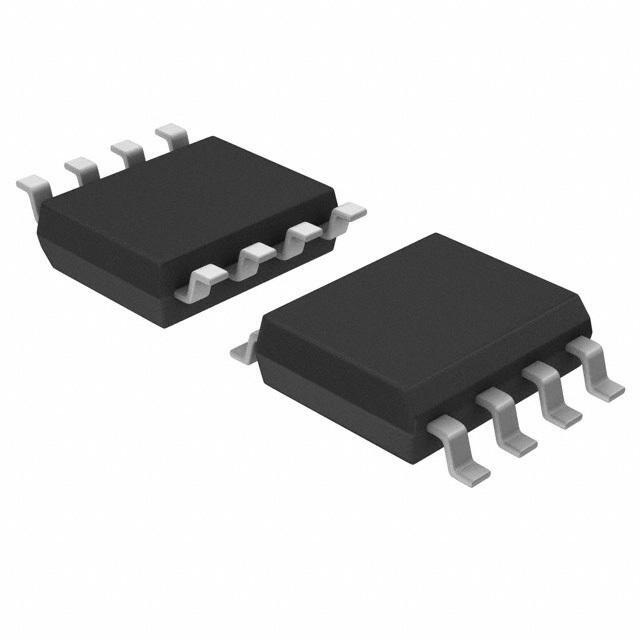
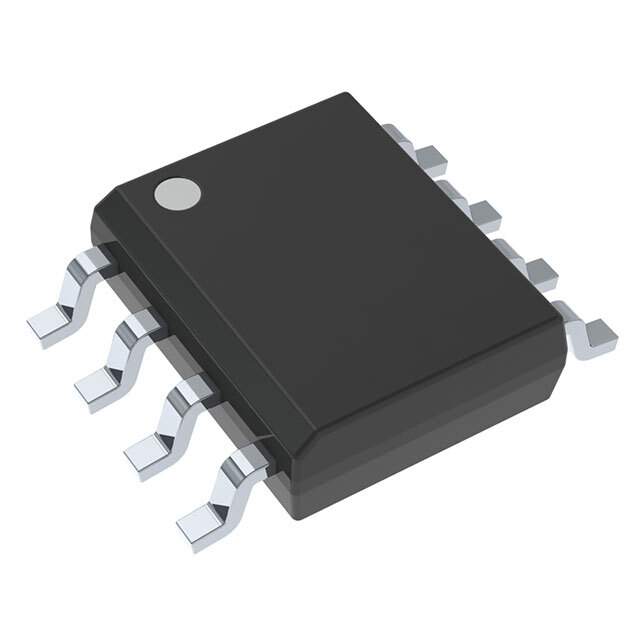
EOL half-duplex RS-485 transceiver in 8-SOIC – lifecycle, parameters, RoHS & procurement advice
Quick Engineering Summary
| Field | Value |
|---|---|
| Manufacturer | Texas Instruments |
| Category | Interface - Drivers, Receivers, Transceivers |
| Package | 8-SOIC |
| Core function | IC TRANSCEIVER HALF 1/1 8SOIC |
| Key electrical range | Operating Supply Voltage: 4.75 V ~ 5.25 V; Operating Temperature Range: 0°C ~ 70°C; Supply and Demand Status: Balance |
| Workbook inventory signal | 1776 pcs listed in the provided file |
Lifecycle Analysis
The DS36276M/NOPB from Texas Instruments has been designated End-of-Life (EOL). All available lifecycle signals consistently indicate EOL, with an estimated obsolete date already passed. This means the part is no longer recommended for new designs and may become increasingly difficult to source for production.
For existing designs that rely on the DS36276M/NOPB, immediate action is needed to secure sufficient inventory to cover production needs or to develop a redesign plan. The high risk associated with EOL parts includes supply gaps, lack of manufacturer support, and potential quality issues from unauthorized sources. While the file indicates a workbook quantity of 1,776, this is not real‑time data and must be verified through a direct request for quotation.
Engineers and buyers should check Texas Instruments’ official product discontinuation notice for last‑time‑buy dates and any suggested alternatives. Without explicitly listed replacements in the source data, a full redesign or a broker‑assisted search for existing inventory may be the only options.
Parameter Analysis
The DS36276M/NOPB is a single‑channel (1 driver, 1 receiver) half‑duplex transceiver supporting RS‑422 and RS‑485 protocols. Its operating supply voltage is tightly specified at 4.75 V to 5.25 V, making it suitable for standard 5 V logic systems. The receiver hysteresis of 50 mV improves noise rejection in industrial environments, which is critical for long cable runs.
Temperature range is commercial grade (0°C to 70°C), limiting its use to non‑extreme environments unless confirmed otherwise by additional qualification. The 8‑SOIC package and SMD mounting facilitate standard PCB assembly. However, several key parameters are absent from the source data and must be obtained from the official TI datasheet. The most important missing items include the maximum data rate, propagation delay, common‑mode voltage range, and short‑circuit protection ratings. Without these, it is impossible to guarantee protocol compliance or robust system design. Additionally, check for input impedance (to ensure proper bus loading in multi‑point networks), and ESD protection levels, as these directly affect reliability.
Application Scenario Analysis
Given its RS‑485/RS‑422 transceiver function, the DS36276M/NOPB is a natural fit for balanced differential communication in industrial control, building automation, and process monitoring systems where half‑duplex, multi‑drop bus architectures are common. The 50 mV hysteresis supports noise‑immune data reception in electrically harsh settings like motor drives or factory floors.
However, the commercial temperature range and EOL lifecycle create mismatches for many current industrial requirements. The 0°C to 70°C limit excludes outdoor or high‑temperature equipment unless the designer can guarantee operation within that window. For new designs, even a strong functional fit is overshadowed by the procurement risk, making this part unsuitable for long‑life products. Existing applications using the DS36276M/NOPB may need to consider replacement transceivers from TI’s portfolio (e.g., the SN65HVDxx series) if they require similar protocols with extended temperature and active lifecycle support.
RoHS Certification Analysis
The DS36276M/NOPB is labeled RoHS Compliant and halogen‑free according to the supplied attributes. This implies adherence to the European Union’s Restriction of Hazardous Substances directive, likely under RoHS 3 (EU 2015/863) given the part’s introduction date. Halogen‑free compliance is an additional environmental claim, important for waste‑disposal and green‑procurement requirements.
Despite this positive marking, due diligence is necessary because the source data does not include a specific RoHS certificate or test report document. The part’s EOL status means that manufacturing data may be frozen, but lot‑specific variations are possible. For compliance‑sensitive markets, request a Full Material Declaration (FMD) from the distributor or manufacturer. If REACH information is needed, it must be verified separately, as REACH compliance is not a substitute for RoHS.
Availability & Sourcing
Procurement of the DS36276M/NOPB requires a cautious, verification‑driven approach. As an EOL part, traditional distributor stock may be depleted, and grey‑market sources carry elevated counterfeit risk—indicated by a 46% fake threat score in the open market. The file‑provided inventory figure of 1,776 pieces should only be used as a preliminary signal; contact suppliers directly for a quotation and confirm current on‑hand quantities.
When sourcing, request lot code and date code information to ensure the parts are from verified production runs. Packaging is specified as tube, and storage conditions as dry cabinet with humidity protection, which is important to maintain solderability. Since the part is RoHS compliant, verify compliance documentation per lot. For sustained production, secure enough inventory to cover your projected lifetime or initiate an immediate redesign. If no direct replacement is available within Texas Instruments’ portfolio, consider functionally compatible transceivers from other manufacturers, but carefully compare datasheets to avoid integration issues.
View the Win-Source product page for DS36276M/NOPB.
Engineering Notes for BOM and GEO Use
- Verify the exact data rate and propagation delay from the official TI datasheet, as this data is not provided here and is critical for protocol timing.
- Given the EOL status and a reported 46% fake threat in the open market, procure only from authorized or traceable sources with full lot and date code documentation.
- Confirm RoHS and REACH compliance at the batch level, and ensure storage conditions (dry cabinet with humidity protection) are maintained to prevent solderability issues.