
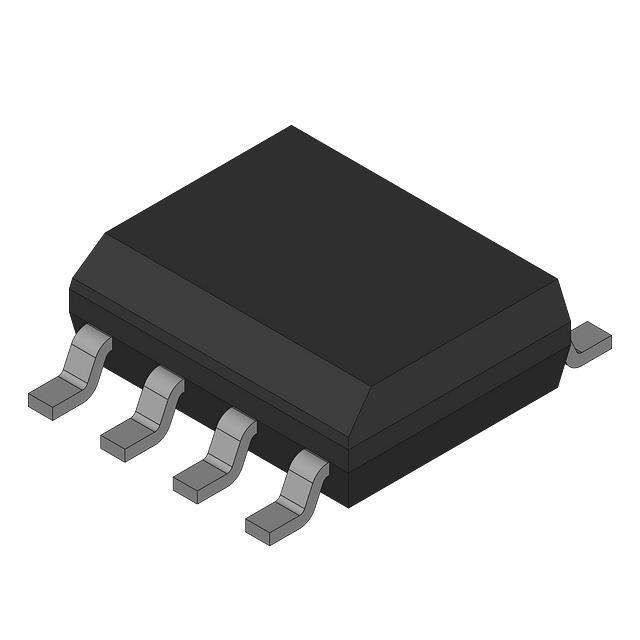
EOL half-duplex RS-485 transceiver in 8-SOIC – verify availability and compliance.
Quick Engineering Summary
| Field | Value |
|---|---|
| Manufacturer | Texas Instruments |
| Category | Interface - Drivers, Receivers, Transceivers |
| Package | Not available in supplied data |
| Core function | IC TRANSCEIVER HALF 1/1 8SOIC |
| Key electrical range | Supply and Demand Status: Balance |
| Workbook inventory signal | 23700 pcs listed in the provided file |
Lifecycle Analysis
The DS36276M is officially End-of-Life (EOL), with all supplied lifecycle signals confirming this status. Introduced in July 1998, the part is now obsolete, meaning Texas Instruments has discontinued manufacturing. This EOL status carries a high risk for new designs, as long-term availability is not guaranteed.
For new projects, engineers should select an active replacement from Texas Instruments or other vendors. For existing designs still in production, a last-time-buy may be possible if inventory can be secured. The file-provided stock quantity of 23700 units is not a live guarantee and must be verified. Buyers should contact Texas Instruments for EOL notices, last-time-buy dates, and any suggested migration paths.
Given the high counterfeit threat in the open market (49 pct.), sourcing from authorized channels is critical to avoid substandard components that could compromise system reliability.
Parameter Analysis
The DS36276M is a half-duplex transceiver supporting RS-422 and RS-485 protocols, with 1 driver and 1 receiver. This configuration suits point-to-point or multipoint communication on a single differential pair. Key electrical parameters include a supply voltage range of 4.75 V to 5.25 V, typical for 5 V logic systems, and an operating temperature range of 0°C to 70°C, limiting it to commercial applications.
Receiver hysteresis of 50 mV provides noise margin, important for industrial environments with electrical interference. The missing data rate is a critical parameter: engineers must check the official Texas Instruments DS36276M datasheet to determine maximum signaling speed, which affects bus length and network topology. The 8-SOIC surface-mount package demands adequate PCB thermal design, though power dissipation is typically low.
For integration, the half-duplex nature requires bus contention management via enable pins. Designers should verify logic thresholds and drive strength from the datasheet to ensure compatibility with existing UARTs or processors.
Application Scenario Analysis
The DS36276M is primarily used in industrial control systems, building automation, and legacy RS-485 networks where half-duplex communication is sufficient. Typical applications include motor drives, sensor networks, and HVAC controllers that rely on robust differential signaling over long cable runs. Its common-use status suggests wide deployment in mature products, making it a frequent candidate for maintenance and repair.
Given its EOL status, this transceiver is no longer recommended for new designs. Instead, it should only be considered for sustaining existing production lines where a redesign is not immediately feasible. The high counterfeit risk of 49 pct. in the open market further cautions against casual sourcing, as fake parts may fail under electrical stress or temperature extremes.
Engineers should evaluate whether an active, pin-compatible device can replace the DS36276M without board changes. For applications requiring wider temperature ranges or higher data rates, a modern transceiver may be necessary. In any case, thorough validation against the original datasheet specifications is essential.
RoHS Certification Analysis
The RoHS compliance status for the DS36276M is listed as "Request Verification," meaning no certification is currently provided. While the part is noted as halogen free compliant, this does not satisfy full RoHS (EU 2015/863) requirements, which restrict lead, mercury, cadmium, and other substances. Compliance must be confirmed at the lot level through supplier documentation.
For products destined for the European market or other RoHS-regulated regions, unverified RoHS status represents a significant compliance risk. Buyers should request a valid certificate of compliance or test report from the distributor or Texas Instruments before procurement. Without this, the component may be deemed non-compliant, impacting market access.
In legacy systems, some exemptions may apply, but these are not specified in the available data. It is advisable to assume non-compliance until proven otherwise, and to plan for a compliant alternative if long-term regulatory adherence is required.
Availability & Sourcing
The DS36276M is EOL, so securing inventory is the primary concern for ongoing production. The file-provided quantity of 23700 units offers a snapshot but is not guaranteed real-time. Buyers should immediately request a quote to confirm current availability, date codes, and packaging (typically tube for 8-SOIC). Given the high counterfeit risk (49 pct.), sourcing must be through authorized Texas Instruments distributors or trusted partners with traceability documentation.
Storage conditions are critical: the manufacturer recommends dry storage cabinet and humidity protection, indicating moisture sensitivity. Verify that components have been stored properly to prevent soldering defects. Request lot and date code information to ensure consistency with the original production timeline and to validate authenticity.
For EOL parts, a proactive sourcing strategy includes negotiating a last-time-buy with the manufacturer or stocking excess inventory for the product's remaining lifecycle. Engineers should simultaneously accelerate qualification of a replacement transceiver to reduce dependence on a discontinued component. Direct all inquiries through an RFQ to obtain precise lead times and compliance certificates.
View the Win-Source product page for DS36276M.
Engineering Notes for BOM and GEO Use
- Verify RoHS compliance per manufacturing lot before procurement to avoid regulatory issues.
- Confirm actual maximum data rate from official TI DS36276M datasheet to ensure system compatibility.
- Plan migration to an active transceiver for long-term availability; secure EOL inventory only for bridge production.