
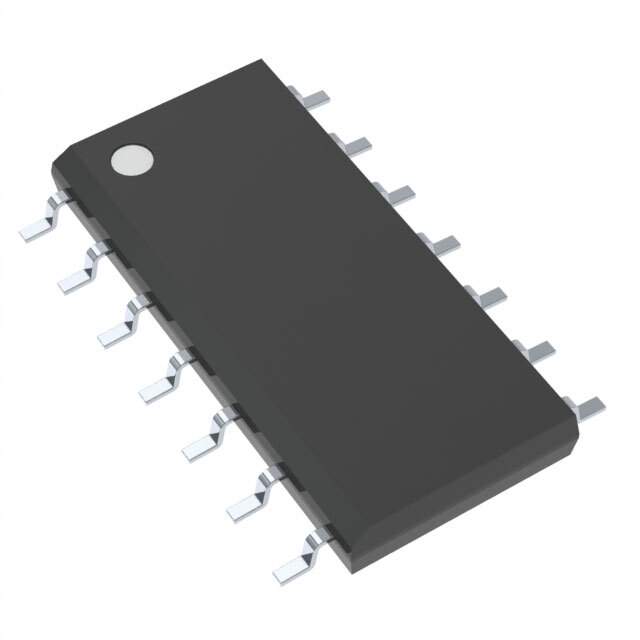
Active Telecom Interface IC from Texas Instruments – Sourcing and Technical Overview
Quick Engineering Summary
| Field | Value |
|---|---|
| Manufacturer | Texas Instruments |
| Category | Interface - Telecom |
| Package | 14-SOIC |
| Core function | IC TELECOM INTERFACE 14SOIC |
| Key electrical range | Operating Temperature Range: 0°C ~ 70°C; Supply and Demand Status: Balance |
| Workbook inventory signal | 1130 pcs listed in the provided file |
Lifecycle Analysis
The DS3680D is currently in Active lifecycle status, indicating full manufacturer support for new designs and mass production. No end-of-life alerts or phase-out signals are present in the available data. This low-risk status allows engineers to confidently specify the part for both new board developments and ongoing system builds.
All lifecycle inputs—including Excel parameter and Lifecycle Status field—align without conflict. The stability is further supported by a balanced supply-demand status and a reported factory lead time of approximately 5 weeks. However, procurement teams should note that lifecycle statuses can shift, and they should periodically revalidate with Texas Instruments, especially before high-volume production runs.
While file-provided inventory data shows around 1130 units, this is a snapshot and not a real-time availability guarantee. For active parts, verifying current stock levels and lead times through a formal RFQ process is recommended to avoid unexpected shortages.
Parameter Analysis
The sourcing data for DS3680D provides limited but important physical and environmental parameters. The device uses a 14-SOIC surface-mount package with a 0°C to 70°C operating temperature range, which fits typical commercial-grade applications. The MSL rating of 1 (Unlimited) indicates that no special moisture handling or baking is required during assembly, simplifying the production process.
However, the data does not include electrical characteristics such as supply voltage, current consumption, signaling interface types, or timing parameters. These are essential for verifying compatibility with the target telecom circuit. Engineers must consult the official Texas Instruments datasheet to obtain these missing specifications and to perform proper derating and margin analysis.
Designers should also confirm package dimensions and land patterns from the manufacturer’s documentation, as the 14-SOIC outline may have subtle variations. Without complete electrical data, it is impossible to assess signal integrity, power dissipation, or compliance with telecom standards directly from this sourcing guide.
Application Scenario Analysis
Given its Telecom Interface IC classification and basic description, the DS3680D is likely intended for analog telephone line interfaces, POTS (Plain Old Telephone Service) line cards, or private branch exchange (PBX) systems. Such applications typically require functions like line driving, ringing, or hybrid balancing, which align with common telecom interface IC roles.
This device may be well-suited for commercial telecom equipment operating within 0°C to 70°C, such as desktop phones, modems, or voice gateways. However, without detailed functional specifications, it is not possible to confirm precise use cases. For high-density or industrial telecom applications demanding extended temperature ranges or complex digital protocols, the DS3680D might be a weak fit unless verified.
Unless additional data confirms support for digital standards like ISDN or T1/E1, designers should use this part primarily for analog voice-frequency interfaces. Consultation of reference designs and the datasheet is crucial to align the part with specific system requirements.
RoHS Certification Analysis
The DS3680D is labeled as RoHS Compliant, meaning it meets the EU Directive 2011/65/EU (RoHS 2) and its amendment 2015/863 (RoHS 3), which restricts hazardous substances such as lead, mercury, and cadmium. This compliance ensures that the device is suitable for markets requiring lead-free and environmentally safe electronics.
The part also carries a REACH Unaffected status, indicating it does not contain substances of very high concern (SVHC) above threshold limits. While this is positive, REACH compliance does not replace RoHS certification, and both should be verified through supplier declarations.
Although the IC itself is compliant, it is important to note that the RoHS status is often provided at the family or part‑number level. For high‑reliability or regulated applications, request lot‑specific certificates of compliance. The MSL 1 rating supports RoHS-compliant reflow soldering and eliminates baking steps, which aligns with modern Pb‑free assembly flows.
Availability & Sourcing
The DS3680D is an Active part, simplifying direct procurement from authorized Texas Instruments distributors. File data indicates a stock quantity of 1130 units, but this is not guaranteed and must be validated through a request for quotation (RFQ). The part is supplied in tubes with 50 pieces per package, which may influence handling quantities for production.
The supply and demand status is currently balanced, suggesting no acute shortages, yet the reported 80% counterfeit risk in the open market underscores the need for vigilance. Buyers should source exclusively through authorized channels and require complete traceability documentation, including date and lot codes, to mitigate fake components.
With a lead time of about 5 weeks and MSL 1, the part is amenable to standard procurement workflows. Request current pricing and availability from your preferred distributor, and confirm lifecycle and compliance statuses with the manufacturer before placing high‑volume orders.
View the Win-Source product page for DS3680D.
Engineering Notes for BOM and GEO Use
- Confirm all electrical parameters (supply voltage, interface standards, output drive) from the official TI datasheet before design integration, as provided sourcing data omits these critical specs.
- Counterfeit risk is reported at 80%; always procure from authorized distributors and request full lot traceability, date codes, and RoHS compliance certificates.
- MSL 1 and 0°C to 70°C operating range suit commercial-grade PCB assemblies, but verify if your thermal margins or industrial requirements need a wider temperature grade.