
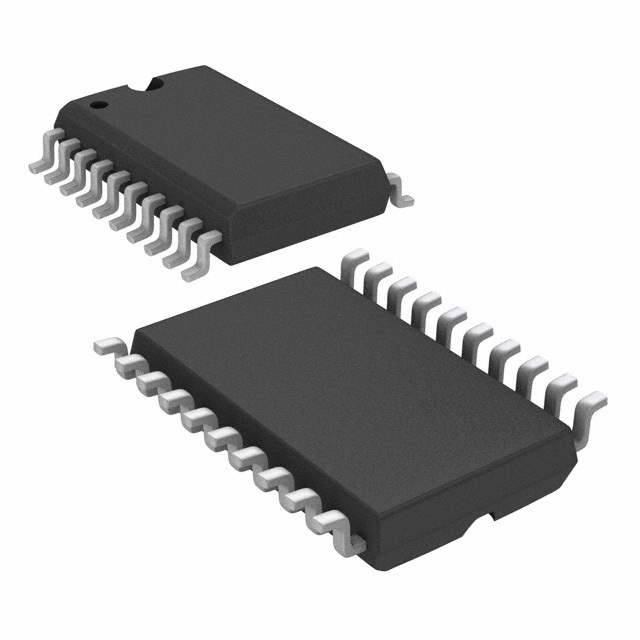
Active RS-485/RS-422 half-duplex transceiver from Texas Instruments in 20-SOIC package. Engineering specs, lifecycle, and procurement guidance.
Quick Engineering Summary
| Field | Value |
|---|---|
| Manufacturer | Texas Instruments |
| Category | Interface - Drivers, Receivers, Transceivers |
| Package | 20-SOIC |
| Core function | IC TRANSCEIVER HALF 4/4 20SOIC |
| Key electrical range | Supply and Demand Status: Balance; Supply Voltage - Operating: 4.75 V to 5.25 V; Temperature Range - Operating: 0°C to 70°C |
| Workbook inventory signal | 992 pcs listed in the provided file |
Lifecycle Analysis
The DS36954MX/NOPB is listed as Active by Texas Instruments, indicating full production support, availability of technical documentation, and suitability for new design projects. This lifecycle status carries a low procurement risk, as the part is not under end-of-life (EOL) or not-recommended-for-new-design (NRND) constraints. Engineers can proceed with PCB layout and qualification without immediate supply concerns, though periodic revalidation of the lifecycle status through official manufacturer channels remains a best practice.
The file-provided inventory shows 992 pieces, but this figure is a static snapshot and may not reflect real-time distribution stock. For production planning, especially in regulated industries, it is essential to verify current availability and lead times with authorized Texas Instruments distributors. While all lifecycle signals align, a conservative approach includes requesting a last-time-buy commitment horizon from the manufacturer for critical long-life programs.
Parameter Analysis
The DS36954MX/NOPB is a half-duplex RS-485/RS-422 transceiver with 4 drivers and 4 receivers, housed in a 20-SOIC surface-mount package. The 60 mV receiver hysteresis is a critical parameter for noise rejection in multi-point industrial networks, reducing false triggering from common-mode noise or reflections. The operating supply voltage range of 4.75 V to 5.25 V aligns with standard 5 V logic systems, and the commercial temperature range (0°C to 70°C) suits controlled environments but precludes extended industrial or automotive applications.
Key parameters absent from the available data include maximum data rate, ESD protection ratings, propagation delay, and output drive capability. These must be verified against the official Texas Instruments DS36954 datasheet to ensure compatibility with the target communication speed and system-level signal integrity. The package (20-SOIC) has a well-characterized thermal performance for typical PCB layouts, but thermal derating should be calculated based on operating frequency and ambient temperature.
Application Scenario Analysis
The DS36954MX/NOPB is optimized for industrial communication links that utilize the RS-485 differential bus, such as factory automation, HVAC control networks, and access control systems. Its half-duplex topology and 4-channel configuration make it suitable for multi-node architectures where a single twisted pair is used for transmit and receive, reducing cabling costs in centralized monitoring setups. The 60 mV hysteresis enhances noise immunity in electrically noisy environments like motor drives or power distribution equipment.
Less ideal applications include full-duplex communication where simultaneous bidirectional data transfer is required, or designs operating at 3.3 V logic levels without level-shifting. The 0°C to 70°C range restricts outdoor or unheated indoor deployments. Additionally, systems requiring galvanic isolation or high-speed data links beyond typical RS-485 limits should evaluate alternative transceivers with integrated isolation or faster edge rates.
RoHS Certification Analysis
The DS36954MX/NOPB is RoHS Compliant, as indicated in the part-level data. This typically means the device meets the requirements of EU Directive 2015/863 (RoHS 3), which limits the use of lead, mercury, cadmium, hexavalent chromium, and certain brominated flame retardants. For procurement documentation, request Texas Instruments’ official EU Declaration of Conformity, which should reference the specific part number and any applicable exemptions.
It is important to note that RoHS compliance is often assessed at the component family level; individual lot variations can occur due to minor process changes. Therefore, for high-reliability or export-sensitive products, it is prudent to confirm lot-level RoHS certificates for the exact date code being received. Additional environmental requirements, such as REACH SVHC declarations or halogen-free status, are not provided here and should be separately requested if needed.
Availability & Sourcing
Sourcing the DS36954MX/NOPB requires attention to supply chain integrity due to a reported 49% fake threat rate in the open market. Engineers and buyers should prioritize transactions with authorized Texas Instruments distributors or reputable hybrid suppliers like Win-Source, and insist on traceable packaging, date/lot code labeling, and factory-original reel and tray conditions (Reel – TR). The part is currently Active, so lead times should be standard, but quotation is recommended for current lot availability.
The workbook indicates a stock quantity of 992 pieces, but this is not a real-time guarantee. For production planning, initiate an RFQ process with the supplier of record, requesting inventory confirmation, sample availability, and RoHS compliance documentation. For Active parts, the typical CTA is to request a quote and verify lifecycle status before large orders. In case of unforeseen allocation, early engagement with TI’s product line can help secure future manufacturing slots.
View the Win-Source product page for DS36954MX/NOPB.
Engineering Notes for BOM and GEO Use
- Verify data rate and ESD tolerance from the Texas Instruments datasheet before committing to a design.
- Receiver hysteresis of 60 mV provides moderate noise immunity; consider bus termination and biasing for reliable RS-485 networks.
- The 49% fake threat rate in the open market necessitates sourcing through authorized or traceable channels with compliance documentation.