
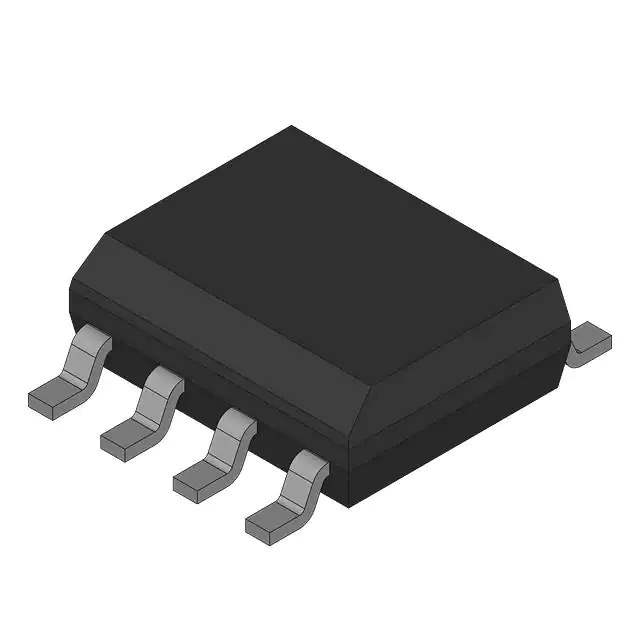
EOL half-duplex RS-422/RS-485 transceiver in 8‑SOIC; verify lifecycle and availability before procurement.
Quick Engineering Summary
| Field | Value |
|---|---|
| Manufacturer | National Semiconductor (TI) |
| Category | Interface - Drivers, Receivers, Transceivers |
| Package | Bulk |
| Core function | IC TRANSCEIVER HALF 1/1 8SOIC |
| Key electrical range | Temperature Range - Operating: 0°C ~ 70°C (TA); Voltage - Supply: 4.75V ~ 5.25V |
| Workbook inventory signal | 2740 pcs listed in the provided file |
Lifecycle Analysis
The DS3695AMX carries conflicting lifecycle information: the supplied Product Status is Active, but the Lifecycle Status field is EOL. For procurement planning, the conservative interpretation must be End‑of‑Life. An EOL classification means the manufacturer has discontinued or plans to discontinue production, and no further fabrication or support is guaranteed. This part is not recommended for new designs; it should only be considered for sustaining existing equipment where a full redesign is not feasible.
Risk is elevated because any remaining stock may be limited, shelf‑life issues can arise, and counterfeit risk increases as supply dwindles. The workbook‑reported quantity of 2,740 pieces is a file‑provided snapshot and does not reflect real‑time availability. Buyers must request current stock levels and validate date/lot codes directly with suppliers.
For production use, Texas Instruments (which absorbed National Semiconductor) should be contacted to confirm the official lifecycle status and to obtain any last‑time‑buy or obsolescence notices. Without manufacturer revalidation, treating the DS3695AMX as Active could lead to unexpected shortages. Migration to a recommended replacement should be evaluated, but alternative part numbers are not provided in the source data; the engineering team must identify a compatible transceiver.
Parameter Analysis
Key parameters for the DS3695AMX include its half‑duplex configuration, 1/1 driver/receiver count, RS‑422 and RS‑485 protocol support, and 70 mV receiver hysteresis. The half‑duplex nature means the device shares a single differential pair for transmit and receive, making it suitable for multi‑drop bus architectures but requiring direction control. The single driver and receiver limit it to simple point‑to‑point or multi‑point lines without built‑in redundancy.
Supply voltage is 4.75 V to 5.25 V, which targets 5 V logic systems. Operating temperature ranges from 0 °C to 70 °C, restricting use to commercial environments; industrial‑grade applications would require a wider range. The 70 mV hysteresis enhances noise rejection in electrically noisy environments, a common need in RS‑485 networks.
Missing from the supplied data are the maximum data rate, propagation delay, and output drive strength. These values are critical for determining if the DS3695AMX can meet the timing requirements of a specific baud rate and bus length. The original datasheet must be consulted for these missing specifications. Additionally, the MSL 1 rating indicates unlimited floor life, which eases PCB assembly handling, but the package is specified as Bulk rather than tape‑and‑reel, which may affect high‑volume pick‑and‑place compatibility.
Application Scenario Analysis
The DS3695AMX is a half‑duplex RS‑485/RS‑422 transceiver designed for legacy multi‑point industrial communication. Its strong‑fit scenarios include replacement in older process control systems, HVAC networks, building automation buses, and factory‑floor data links that already use a 5 V supply and operate within commercial temperature limits. The half‑duplex capability aligns well with modbus or proprietary protocols over twisted‑pair cabling, where a single differential pair carries bidirectional data.
Weak‑fit scenarios involve new designs that demand full‑duplex communication, extended temperature range (‑40 °C to +85 °C or wider), or low‑voltage operation (3.3 V). The device’s 0 °C to 70 °C range makes it unsuitable for outdoor or harsh‑environment nodes. Additionally, applications requiring high‑speed data rates above a few megabits per second would need to verify the missing data‑rate specification; if the transceiver is limited to legacy speeds, it may not support modern baud rates.
System designers should not use the DS3695AMX in new safety‑critical or high‑availability applications because of its EOL status and the high counterfeit risk. Proper bus termination and biasing must still be verified against the original datasheet, as these details are not included in the supplied parameters. For simple point‑to‑point RS‑422 links, the transceiver can serve adequately in sustaining tasks.
RoHS Certification Analysis
According to the supplied compliance data, the DS3695AMX is RoHS Compliant. This indicates that the part, as originally manufactured, does not exceed the maximum concentration values for lead, mercury, cadmium, hexavalent chromium, PBBs, and PBDEs as defined by the EU RoHS directive. However, the REACH status is listed as REACH Affected, meaning certain substances of very high concern (SVHC) may be present above the 0.1% weight threshold.
REACH is a separate regulation from RoHS and does not substitute for RoHS compliance. Buyers should request a full material declaration or certificate of compliance from the distributor for each lot, especially since EOL parts may come from older date codes where exemption rules could differ. The RoHS compliance stated here does not specify whether it aligns with RoHS 3 (EU 2015/863) or an earlier version; verification is necessary if the end equipment must comply with the latest RoHS amendment.
Additionally, MSL 1 rating confirms unlimited floor life at standard conditions, which reduces moisture‑related assembly risks. The lead‑free status is implied by RoHS compliance, but explicit lead‑finish details are not provided; for wave or reflow processes, the plating material should be confirmed from the original datasheet. Halogen‑free claims are also absent, so if low‑halogen requirements exist, additional documentation must be obtained.
Availability & Sourcing
Because the DS3695AMX is classified as End‑of‑Life, availability is restricted to remaining channel inventory and aftermarket stock. The workbook indicates a file‑provided quantity of 2,740 units, but this number is not a guarantee of real‑time availability. Engineers and buyers must request a formal quote from authorized distributors or independent brokers to confirm current stock, date codes, and packaging type (bulk).
Counterfeit risk for the DS3695AMX is notably high, with a 69% open‑market threat rating. This demands rigorous anti‑counterfeit measures: insist on original manufacturer date/lot codes, request high‑resolution photos of the parts, and perform visual inspection or third‑party testing as needed. Traceability documentation, including a certificate of conformance and RoHS/REACH declarations, should be obtained for every shipment.
The part’s EOL status means no futures orders can be placed; only on‑hand stock is available. Buyers should consider last‑time‑buy opportunities if they still exist but prioritize migrating to an alternative transceiver for new production. For sustaining repairs, securing a sufficient quantity in a single lot helps avoid batch‑to‑batch variation. Request a quote through Win‑Source or similar platforms, clearly stating the need for EOL verification and compliance paperwork.
View the Win-Source product page for DS3695AMX.
Engineering Notes for BOM and GEO Use
- Verify EOL status with Texas Instruments and obtain manufacturer discontinuation notice before committing to new production; conflicting lifecycle signals require conservative planning.
- 70 mV receiver hysteresis improves noise immunity in industrial RS‑485 networks, but missing data‑rate specification in supplied data requires confirmation from original datasheet for baud‑rate matching.
- MSL 1 and 8‑SOIC package simplify board assembly and storage; however, high counterfeit risk (69% open‑market threat) demands strict lot‑traceability and authorized source verification.