
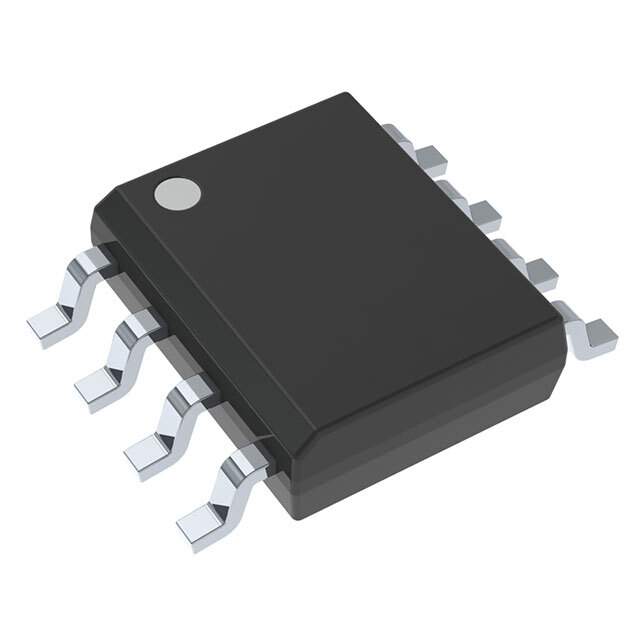
Half-duplex RS-422/RS-485 transceiver in 8-SOIC for industrial interfaces
Quick Engineering Summary
| Field | Value |
|---|---|
| Manufacturer | Texas Instruments |
| Category | Interface - Drivers, Receivers, Transceivers |
| Package | 8-SOIC |
| Core function | IC TRANSCEIVER HALF 1/1 8SOIC |
| Key electrical range | Supply and Demand Status: Sufficient; Supply Voltage - Operating: 4.75 V to 5.25 V; Temperature Range - Operating: 0°C to 70°C |
| Workbook inventory signal | 1 pcs listed in the provided file |
Lifecycle Analysis
The DS3696AM/NOPB from Texas Instruments currently shows conflicting lifecycle signals. While one source lists the lifecycle status as Active, another internal parameter indicates ‘停止提供’ (discontinued supply). This discrepancy requires careful interpretation, and for procurement purposes, the part should be treated as NRND (Not Recommended for New Designs) until confirmed otherwise by Texas Instruments. Engineers designing new systems should seek direct manufacturer confirmation before committing to this transceiver, as availability could be limited.
The file-provided inventory shows a single unit, which does not guarantee real-time stock. Sustaining production projects should secure inventory and validate alternate sources or migration paths. For any current design using the DS3696AM/NOPB, it is prudent to evaluate pin‑compatible alternatives from Texas Instruments to mitigate supply risk. The conflicting signals emphasize the need for direct communication with TI’s product lifecycle team to obtain an official EOL notice or product change notification.
Parameter Analysis
The DS3696AM/NOPB is a half-duplex RS-422/RS-485 transceiver integrating one driver and one receiver in an 8-SOIC package. Its supply voltage range of 4.75 V to 5.25 V aligns with standard 5 V logic rails, simplifying power distribution. The 70 mV receiver hysteresis enhances noise margin in electrically noisy environments, critical for long cable runs in RS-485 multipoint networks. The commercial operating temperature range of 0°C to 70°C restricts use to controlled indoor applications.
Surface-mount packaging supports automated assembly, but thermal management is minimal due to the low‑power nature of the device. Key missing specifications include the maximum data rate and propagation delay, which must be obtained from the Texas Instruments datasheet to ensure signal integrity at target baud rates. Additionally, ESD protection levels and failsafe receiver characteristics should be verified for robust field deployment. The lack of a specified slew‑rate limit may require external components if slow edge rates are needed to reduce EMI.
Application Scenario Analysis
This transceiver is suited for half-duplex serial data communication in industrial control, building automation, and instrumentation networks employing RS‑485 or RS‑422 protocols. Typical applications include sensor data acquisition, HVAC controller interfaces, and process automation where a single twisted‑pair bus links multiple nodes. The 1/1 driver/receiver configuration makes it appropriate for simple endpoint devices that do not require full‑duplex communication.
However, its commercial temperature range precludes use in outdoor or automotive environments without additional environmental protection. The lack of a specified data rate suggests it is intended for moderate‑speed links; engineers should confirm compatibility with their baud rate requirements. For high‑speed or safety‑critical applications, a more thoroughly documented transceiver or an industrial‑grade variant may be preferred. The half-duplex nature limits simultaneous bidirectional communication, so full‑duplex systems would need a different device.
RoHS Certification Analysis
The DS3696AM/NOPB is marked as RoHS Compliant, indicating conformity with EU Directive 2011/65/EU restricting hazardous substances. No explicit mention of RoHS‑3 (EU 2015/863) or REACH compliance is provided, so purchasers should request full material declarations from Texas Instruments or authorized distributors to confirm compliance with the latest amendments. Halogen‑free status and MSL (moisture sensitivity level) are not listed; these impact solder reflow profiles and long‑term storage, and should be verified before production.
Because RoHS compliance is typically assessed at the part‑family level, lot‑specific assurance may be needed for high‑reliability applications. The provided ‘Raw Materials’ description hints at silicon‑based construction with a metallic luster, but this qualitative note does not replace formal compliance documentation. A certificate of conformance should accompany each shipment to validate ongoing compliance.
Availability & Sourcing
Given the conflicting lifecycle signals for the DS3696AM/NOPB, sourcing decisions must be approached with caution. The file indicates a single unit in stock, which is a preliminary snapshot and not guaranteed. Buyers should request a current quote to confirm real‑time availability, lead time, and minimum order quantities. Packaging is tube/rail, suitable for small‑batch or manual placement, but reel options may be available for higher volume.
Given the NRND‑like status, engineers should evaluate migration to a fully active alternative from Texas Instruments while securing inventory to support existing designs. Counterfeit risk is noted at 69% in the open market, so procurement must be from authorized TI distributors with full traceability documentation, including date/lot codes and compliance certificates. For prototypes or bridge builds, request photos and test reports to verify authenticity. Direct engagement with Texas Instruments’ authorized channel is strongly recommended to avoid substandard parts.
View the Win-Source product page for DS3696AM/NOPB.
Engineering Notes for BOM and GEO Use
- Confirm lifecycle status directly with Texas Instruments; conflicting data may indicate imminent discontinuation.
- Verify maximum data rate and failsafe receiver behavior from the official datasheet before design freeze.
- Only source through authorized distributors to mitigate the high counterfeit risk (69% open‑market threat).