
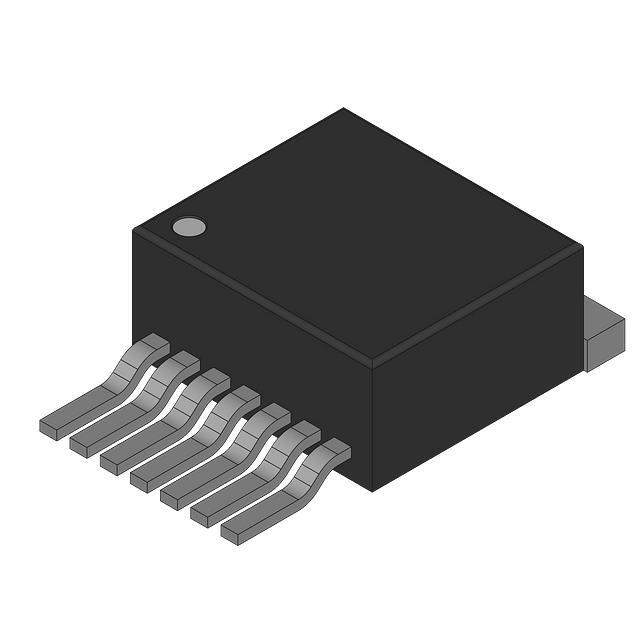
Verify obsolete status and RoHS compliance for this RS-422/RS-485 half‑duplex transceiver before procurement.
Quick Engineering Summary
| Field | Value |
|---|---|
| Manufacturer | Texas Instruments |
| Category | Interface - Drivers, Receivers, Transceivers |
| Package | 8-MDIP |
| Core function | IC TRANSCEIVER HALF 1/1 8MDIP |
| Key electrical range | Supply and Demand Status: Balance; Supply Voltage - Operating: 4.75 V to 5.25 V; Temperature Range - Operating: 0°C to 70°C |
| Workbook inventory signal | 1 pcs listed in the provided file |
Lifecycle Analysis
The DS36C278N lifecycle presents a conflict: while the primary lifecycle field is 'Unknown', a specifications record explicitly marks the part as 'Obsolete(EOL)'. For procurement planning, the more conservative EOL status must be assumed. This means the device is no longer recommended for new designs and may be subject to last-time-buy constraints. Engineers should immediately contact Texas Instruments or authorized distributors to obtain a product discontinuance notice (PDN) and confirm whether any residual factory stock exists.
For sustaining production, any remaining inventory must be treated as finite. The file-provided quantity of one unit is a snapshot and not a real‑time guarantee. Buyers should secure adequate quantities through approved channels and consider a lifetime-buy to bridge migration to a replacement. Without a manufacturer‑backed migration path, the risk of supply interruption is high. A redesign using an active alternative from the RS‑422/485 transceiver portfolio should be initiated if production volumes are expected to continue.
Parameter Analysis
The DS36C278N is a single‑driver, single‑receiver half‑duplex transceiver supporting RS‑422 and RS‑485 protocols. Its operating supply voltage range of 4.75 V to 5.25 V aligns with standard 5 V logic supplies, and the 70 mV receiver hysteresis improves noise immunity in electrically harsh environments. The commercial temperature range (0°C to 70°C) limits deployment to indoor or climate‑controlled settings.
Through‑hole 8‑MDIP packaging suits legacy designs, prototyping, or situations where manual assembly is required, but it is not optimal for modern high‑density PCBs. Critical parameters not supplied in the available data are data rate, common‑mode voltage tolerance, short‑circuit protection, and ESD ratings. Engineers must consult the original Texas Instruments datasheet to confirm these values and to assess whether the part meets system timing, fault‑protection, and electromagnetic compatibility requirements. The absence of spec‑grade details reinforces the need for thorough design verification before committing to this part.
Application Scenario Analysis
The DS36C278N is suited for half‑duplex RS‑485 or RS‑422 serial communication in industrial equipment, building automation, and legacy data‑acquisition systems that operate on 5 V rails and employ through‑hole assembly. Its single transceiver channel can implement a UART‑to‑RS‑485 interface in point‑to‑point or multidrop networks. The commercial temperature range makes it adequate for office environments or controlled indoor applications where wide‑temperature robustness is unnecessary.
Weak‑fit scenarios include new designs requiring surface‑mount packaging, wide‑temperature (–40°C to +85°C or beyond), high‑speed data rates (typically above 2.5 Mbps), or full‑duplex operation. Systems migrating to 3.3 V logic without level‑shifting would also be incompatible. Designers targeting modern, compact, or automotive‑grade RS‑485 interfaces should select a more recent, active part with complete documentation and assured supply continuity.
RoHS Certification Analysis
The DS36C278N RoHS status is inconsistent in the provided data. A high‑level compliance flag indicates 'RoHS Compliant', while the detailed specification field lists 'RoHS Non‑Compliant'. This contradiction typically arises when a product family has both compliant and non‑compliant variants, or when the recorded status was not updated for the specific date/lot code.
For any procurement, lot‑level RoHS certificates should be requested from the supplier. If full RoHS compliance (EU 2015/863) is mandatory for the target market, assume non‑compliance until proven otherwise. Similar diligence applies to REACH and halogen‑free claims, which are not included in the available data. In regulated industries, using a part with ambiguous compliance documentation can create audit risks. Verification directly from Texas Instruments or through an authorized distributor is the only safe path forward.
Availability & Sourcing
The DS36C278N is an obsolete (EOL) part, and its market availability is severely constrained. File‑provided inventory shows only 1 unit, which cannot be considered a reliable source of supply. The part carries a 69% fake threat rating, underscoring the need for rigorous authenticity verification when purchasing from open‑market vendors.
Buyers should request a formal quote to confirm current stock, date/lot codes, and original packaging (Tube/Rail, 40 units per tube). Insist on documentation proving traceability to Texas Instruments and on lot‑specific RoHS certificates. For production needs, evaluate whether a last‑time‑buy is still feasible or whether immediate migration to an alternative transceiver is required. Due to the high counterfeit risk and uncertain supply, design teams are strongly advised to qualify a replacement part rather than rely on scarce DS36C278N inventory.
View the Win-Source product page for DS36C278N.
Engineering Notes for BOM and GEO Use
- Confirm manufacturer's EOL notification and last-time-buy status directly with Texas Instruments.
- Request lot-specific RoHS certification due to conflicting compliance data in available records.
- Evaluate thermal margins and supply decoupling for 5V RS‑485 operation in through-hole 8‑MDIP packages.