
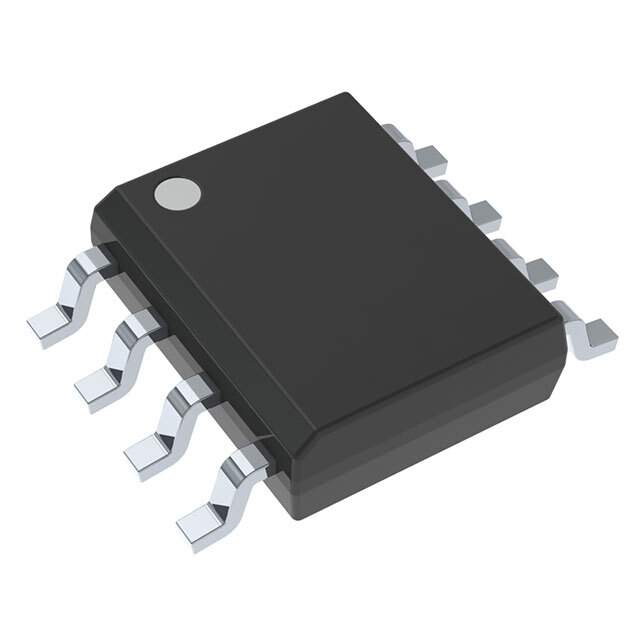
EOL half-duplex RS-485 transceiver – check inventory, compliance, and migration paths
Quick Engineering Summary
| Field | Value |
|---|---|
| Manufacturer | Rochester Electronics |
| Category | Interface - Drivers, Receivers, Transceivers |
| Package | 8-SOIC |
| Core function | IC TRANSCEIVER HALF 1/1 8SOIC |
| Key electrical range | Operating Temperature Range: -40°C ~ 85°C; Supply and Demand Status: Limited |
| Workbook inventory signal | 1450 pcs listed in the provided file |
Lifecycle Analysis
The DS36C278TM/NOPB from Rochester Electronics is confirmed End-of-Life (EOL). Both the Excel lifecycle parameter and the lifecycle status field align on this status, leaving no conflicts. For engineering teams, an EOL part means it is not recommended for new designs; all qualification and product development should target an alternative active component. Existing production systems using the DS36C278TM/NOPB must immediately evaluate remaining inventory and plan a last-time-buy if sustaining support is required.
Because the manufacturer has discontinued this device, no further wafer starts or assembly runs are expected. The available stock (file-provided as 1450 units) represents a finite pool. Designers should contact Rochester Electronics directly to confirm the last-order date, last-ship date, and any available EOL notice documentation before procurement. Waiting too long risks inventory exhaustion and forced redesign under urgent timelines.
As an EOL interface transceiver, the DS36C278TM/NOPB may still serve legacy industrial communication links, but the high fake threat (76%) in the open market demands caution. All purchases should be made through authorized distribution with full traceability to Rochester Electronics’ final production lots.
Parameter Analysis
Key confirmed parameters for the DS36C278TM/NOPB include an 1/1 half-duplex RS-422/RS-485 transceiver function, a 70 mV typical receiver hysteresis, an operating temperature range of -40°C to 85°C, and a supply voltage of 4.75V to 5.25V. The 8-SOIC surface-mount package and MSL 1 (Unlimited) simplify handling and board assembly, as no special moisture precautions are required. These specifications suit it for moderate-speed, noise-immune data transmission in industrial environments.
Critical missing parameters in the provided data include the maximum data rate, bus loading unit loads, receiver input resistance, and common-mode voltage range. Without the data rate, engineers cannot guarantee signal integrity at higher baud rates or plan termination networks appropriately. The receiver hysteresis of 70 mV improves noise rejection but is only part of the overall link budget; the actual receiver input threshold range must be verified against the original Texas Instruments datasheet (since Rochester Electronics likely produced it under license).
Before qualifying this EOL part for a legacy design, confirm the exact propagation delay, driver output voltage, and short-circuit current limits. Additionally, the supplied data lacks ESD ratings and Fail-safe operating specs, which are essential for reliable Rs-485 bus connections. These missing parameters must be sourced from the official DS36C278 datasheet to ensure electrical compatibility with existing systems.
Application Scenario Analysis
The DS36C278TM/NOPB is a half-duplex RS-485 transceiver, making it suitable for multi-point differential communication networks where only one device talks at a time, such as industrial sensor networks, HVAC control buses, and MODBUS field interfaces. Its -40°C to 85°C industrial temperature range allows deployment in non-extreme factory floor and outdoor cabinet environments. The 8-SOIC footprint is common for space-constrained boards, and the single 5V supply matches legacy embedded system rails.
However, because the part is half-duplex, it cannot support full-duplex applications like RS-422 point-to-point links that require simultaneous transmit and receive. It is also not appropriate for high-data-rate modern applications that expect 10 Mbps or faster, unless the original datasheet confirms such capability. The EOL status further restricts its use: it is only viable for sustaining existing designs where the BOM is locked and no alternative has been validated. New designs must avoid the DS36C278TM/NOPB entirely.
Engineers should also note that while the part is RoHS compliant, its EOL status may make compliance documentation harder to obtain, potentially complicating CE marking or environmental audits. For new product development, consider an active RS-485 transceiver in a similar 8-SOIC package with matching or better specs, such as Texas Instruments' SN65HVD3082E, to ensure long-term availability and support.
RoHS Certification Analysis
The DS36C278TM/NOPB is marked as RoHS Compliant in the source data, with a REACH Status of REACH Unaffected. This indicates that, at the time of its last production, the component met the restrictions on hazardous substances as defined by the EU RoHS directive then in force. The part number suffix “NOPB” in the original Texas Instruments designation often denotes lead-free, further supporting its RoHS-compliant history.
Nevertheless, since the part is EOL, the certification data may not have been updated to the latest RoHS 3 (EU 2015/863) scope, which added four phthalates. While the base RoHS status (lead-free, mercury-free, etc.) is likely still valid, the absence of a renewed manufacturer declaration means compliance at the homogeneous material level cannot be assumed without verification. For high-reliability or export-controlled projects, request a full material declaration or RoHS certificate from Rochester Electronics.
The MSL Level 1 rating means unlimited floor life before reflow, so no special hermetically-sealed packaging is needed to meet moisture sensitivity requirements. REACH unaffected status does not substitute for RoHS compliance; it merely confirms no SVHCs above 0.1% were reported at the time of inquiry. Overall, the DS36C278TM/NOPB can be used in RoHS-compliant assemblies, but procurement should insist on lot-specific compliance documentation given its EOL and counterfeit risk profile.
Availability & Sourcing
The DS36C278TM/NOPB is an EOL component with a file-provided stock quantity of 1450 units, but this figure is not guaranteed real-time and should be confirmed through a quote request. Sourcing is complicated by a high fake threat probability (76%) in the open market, making unauthorized brokers a significant risk. Engineers and buyers must only purchase from authorized Rochester Electronics distributors or directly from the manufacturer’s remaining inventory to ensure authenticity and traceability.
Given the EOL lifecycle, a last-time-buy strategy is essential for programs needing ongoing repairs or production. Contact Rochester Electronics to verify the exact last-ship date and obtain an EOL notification. The part comes in bulk packaging, and lot code/date code traceability is critical to avoid mixed-origin or counterfeit stock. Always request a certificate of conformance and full lot history before acceptance.
For new designs, skip the DS36C278TM/NOPB entirely and focus on qualifying an active alternative. Use the Win Source request-a-quote workflow to check current availability, but treat any quoted inventory as conditional until manufacturer authentication is completed. Finally, ensure the RoHS compliance status matches your production requirements with a lot-level certificate.
View the Win-Source product page for DS36C278TM/NOPB.
Engineering Notes for BOM and GEO Use
- Confirm actual data rate, bus loading, and ESD ratings from original DS36C278 datasheet before qualifying for a specific design.
- Due to EOL status, initiate last-time-buy immediately and evaluate pin-compatible alternatives like TI’s SN65HVD3082E for new designs.
- The open market counterfeit threat is 76%; always source through authorized Rochester Electronics distributors and request lot-specific traceability documentation.