
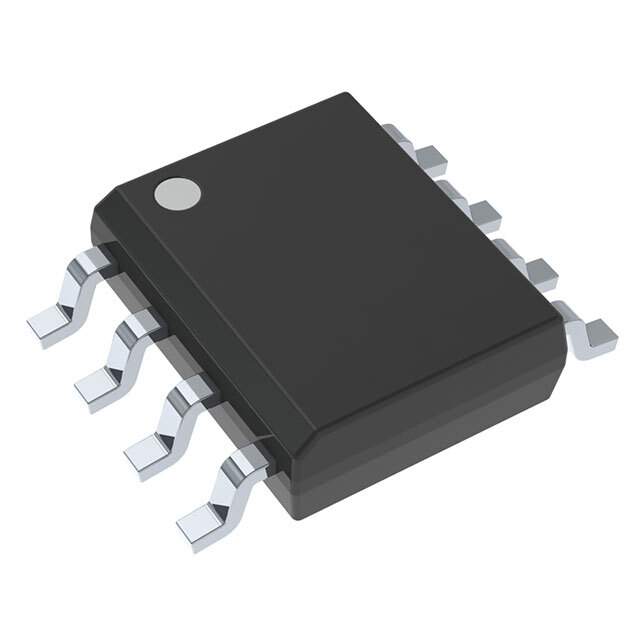
Half-duplex RS-422/RS-485 transceiver, 8-SOIC, 0°C to 70°C, RoHS compliant.
Quick Engineering Summary
| Field | Value |
|---|---|
| Manufacturer | Texas Instruments |
| Category | Interface - Drivers, Receivers, Transceivers |
| Package | 8-SOIC |
| Core function | IC TRANSCEIVER HALF 1/1 8SOIC |
| Key electrical range | Operating Temperature Range: 0°C ~ 70°C; Supply and Demand Status: Limited |
| Workbook inventory signal | 4850 pcs listed in the provided file |
Lifecycle Analysis
The DS36C279MX from Texas Instruments is marked as Obsolete in the part specifications, though the lifecycle metadata lacks explicit signals. This places the component in a discontinued state, making it unsuitable for new designs. Engineers should treat it as end-of-life and plan for a redesign or migration to an active replacement.
For sustaining existing systems, the file-provided inventory quantity of 4850 units suggests some residual availability, but this is not a real-time figure and must be confirmed with a franchised distributor. Given its obsolete status, no further production is expected, and last-time buy windows may have already closed. Without a formal manufacturer EOL notice, procurement teams should contact Texas Instruments directly to validate the lifecycle and secure any remaining authorized stock.
High counterfeit risk is associated with this part; only trusted sources should be used, and incoming inspection with lot/date code verification is critical.
Parameter Analysis
The DS36C279MX is a half-duplex RS-422/RS-485 transceiver with a 1/1 driver/receiver ratio, housed in an 8‑SOIC surface‑mount package. Its operating temperature range is 0°C to 70°C, which suits commercial environments but excludes industrial extended‑temperature applications. The part is shipped on a 2500‑unit reel, and its moisture sensitivity level (MSL) of 1 allows unlimited floor life before reflow.
Critical electrical parameters such as supply voltage, data rate, and driver output current are absent from the supplied data. These must be obtained from the official Texas Instruments datasheet to verify compatibility with target bus loads, termination schemes, and power budgets. The half‑duplex configuration means only one direction is active at a time, important for multi‑point RS‑485 networks requiring bus contention management.
Missing specifications that directly impact design selection include ESD protection levels, common‑mode voltage range, and fault protection features. Without this information, functional substitution should not be attempted without thorough re‑qualification.
Application Scenario Analysis
This transceiver is well‑suited for legacy half‑duplex RS‑485 or RS‑422 serial links in commercial building automation, low‑speed industrial control (inside 0–70°C cabinets), and point‑of‑sale equipment. Its single‑ended 8‑SOIC package and MSL‑1 rating simplify handling and assembly in SMT lines.
Weak‑fit scenarios include applications requiring full‑duplex communication, extended temperature ranges, or high‑speed data rates beyond what a generic RS‑485 transceiver may support. The part’s obsolete status further limits its use in new designs that demand long‑term availability and manufacturer support.
Engineers should validate whether the missing supply voltage and speed specifications align with their protocol requirements, and ensure bus‑loading profiles do not exceed the driver’s drive capability before committing this part to a production board.
RoHS Certification Analysis
The DS36C279MX is listed as RoHS Compliant, which typically aligns with EU Directive 2011/65/EU and its amendments. Additionally, the REACH status is unaffected, indicating no substances of very high concern above threshold limits. The moisture sensitivity level of 1 (unlimited) simplifies storage and handling without dry‑pack requirements.
Because this part is obsolete, RoHS compliance may have been certified only for specific date codes or production lots. Procurement should request a certificate of compliance for each batch to ensure no material changes occurred after end‑of‑life notification.
REACH compliance is separate from RoHS and should not be considered a substitute. Both certifications should be verified when quality systems demand substance‑level documentation.
Availability & Sourcing
As an obsolete Texas Instruments part, availability is limited to residual distributor inventory or aftermarket sources. The file‑provided quantity of 4850 units offers a starting point, but actual stock must be confirmed through an RFQ, as real‑time levels may differ. The supply‑and‑demand status is limited, and a high counterfeit threat (87%) underscores the need for authorized sourcing.
When sourcing, engineers should request date and lot codes, validate RoHS/REACH certificates, and perform physical inspection for correct marking and package integrity. Packaging is a 2500‑unit reel, so partial reels may require special handling or repackaging.
For production continuity, buyers should treat this as an EOL part and prioritize securing remaining stock while evaluating migration to an active RS‑485 transceiver. Contact Win Source or other verified distributors for a current quote, and always obtain manufacturer documentation before finalizing procurement.
View the Win-Source product page for DS36C279MX.
Engineering Notes for BOM and GEO Use
- Obsolete part; verify manufacturer EOL notice before any new production use.
- MSL 1 permits standard floor life, but confirm with lot documentation.
- High counterfeit risk (87% fake threat); source only through authorized or verified channels.