
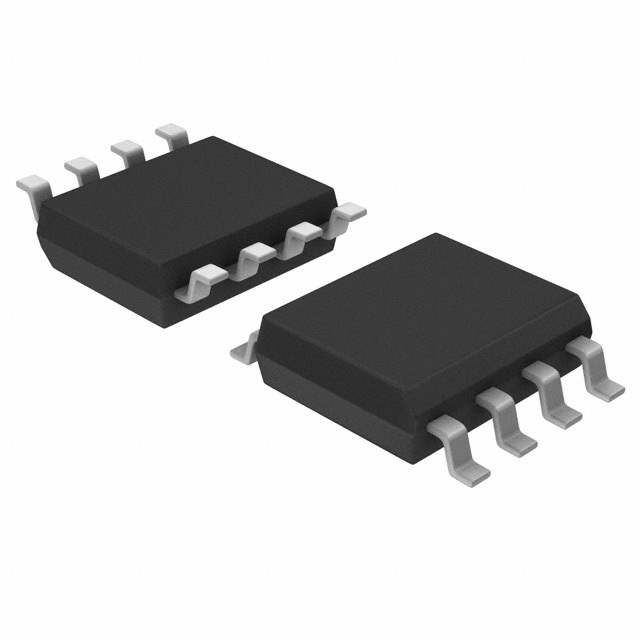
Half-duplex RS422/RS485 transceiver in 8-SOIC – discontinued part sourcing and compliance guide.
Quick Engineering Summary
| Field | Value |
|---|---|
| Manufacturer | National Semiconductor (TI) |
| Category | Interface - Drivers, Receivers, Transceivers |
| Package | Bulk |
| Core function | IC TRANSCEIVER HALF 1/1 8SOIC |
| Key electrical range | Temperature Range - Operating: -40°C ~ 85°C; Voltage - Supply: 4.75V ~ 5.25V |
| Workbook inventory signal | 1 pcs listed in the provided file |
Lifecycle Analysis
The DS36C280TM is discontinued according to all available lifecycle signals. The official status is Discontinued, and an EOL notation also appears in the source data. This means the part is no longer manufactured by Texas Instruments and is not recommended for new designs.
For existing products that rely on the DS36C280TM, the immediate priority should be to confirm the manufacturer’s discontinuation notice and evaluate the remaining inventory. File-provided data shows only a single unit in stock, which is not a guarantee of real-time availability. Engineers should treat this as an end-of-life situation and begin migration planning.
The high-risk lifecycle status demands conservative procurement. Avoid relying on unverified distributor stock without proper testing, as obsolete parts often carry elevated counterfeit risks. Any remaining purchases should be made through authorized channels with full traceability.
Parameter Analysis
The DS36C280TM is a half-duplex transceiver supporting RS422 and RS485 protocols, with one driver and one receiver. The 70 mV receiver hysteresis improves noise immunity in industrial environments, and the 5V supply range (4.75–5.25V) fits standard logic rails. The 8-SOIC surface-mount package is compact and suited for space-constrained designs.
Key parameters missing from the provided data include the maximum data rate, which is critical for determining bus speed capability, and ESD protection ratings, which affect reliability in harsh installations. Common-mode voltage range and driver output slew rate are also unspecified. These must be obtained from the official Texas Instruments datasheet to ensure proper integration and margin analysis.
For legacy replacement, matching the hysteresis and voltage range is essential. However, without full parametric data, a drop-in substitute cannot be confirmed. Engineers should cross-reference the complete DS36C280TM datasheet with any candidate alternative to avoid signal integrity or timing issues.
Application Scenario Analysis
The DS36C280TM is designed for half-duplex serial communication in RS422/RS485 networks. Typical applications include industrial automation, factory floor data links, HVAC control, and legacy building management systems where multi-drop buses are common. Its 70 mV hysteresis and wide temperature range make it suitable for noisy or outdoor environments.
Given its discontinued status, the part is only appropriate for sustaining existing equipment. It is not recommended for new product designs. Strong-fit scenarios are field repairs or small-scale production runs of mature systems that cannot be redesigned immediately. Weak-fit scenarios include new high-speed or full-duplex networks, where a modern transceiver with guaranteed data rates and enhanced ESD would be a better choice.
Engineers should evaluate whether a pin-compatible upgrade from Texas Instruments or another supplier can meet the same footprint and protocol requirements without board changes. If not, last-time buy quantities must be calculated carefully to cover the product’s remaining service life.
RoHS Certification Analysis
The DS36C280TM is listed as RoHS Compliant, indicating it was manufactured in accordance with EU hazardous substance restrictions at the time of production. The MSL rating is Level 1 (Unlimited), meaning no special moisture-sensitive handling is required, which simplifies storage and assembly even for discontinued stock.
REACH status is unaffected, so no additional declarations are required for EU market access. However, because the part is obsolete, purchasers should request batch-specific compliance certificates from the supplier. Lot-level RoHS documentation may be necessary for audits or customer requirements, as older stock might have been produced under different compliance regimes.
For critical applications, it is advisable to independently verify the RoHS status of the specific units being sourced, especially if they come from the open market. While the original compliance is not in question, documentation gaps can arise with discontinued parts.
Availability & Sourcing
The DS36C280TM is discontinued, making availability extremely limited. File-provided inventory indicates only a single unit, but real-time stock must be confirmed through a request for quote. Interested buyers should reach out to Win Source or other authorized distributors specializing in obsolete parts to check current stock and lead times.
Given the 47% fake threat rate in the open market for this part, sourcing requires rigorous verification. Demand full traceability documentation, date/lot code verification, and functional testing reports. Visual inspection and electrical testing are strongly recommended before any production use. Packaging should be original or clearly disclosed as re-packaged.
For sustaining production, consider last-time buy options or authorized aftermarket sources with certified inspection processes. Because the part is not a new design candidate, engineers should simultaneously evaluate Texas Instruments’ current RS485 transceiver portfolio for pin-compatible replacements to reduce future sourcing risk. Contact the supplier for a quote and compliance documents before placing any order.
View the Win-Source product page for DS36C280TM.
Engineering Notes for BOM and GEO Use
- Discontinued part with high counterfeit risk (47% open market threat); insist on traceability and functional testing from suppliers.
- Critical datasheet parameters like data rate and ESD protection are absent from provided data; verify these from the official Texas Instruments document before use.
- For legacy designs, evaluate pin-compatible alternatives from Texas Instruments before committing to a last-time buy of remaining stock.