
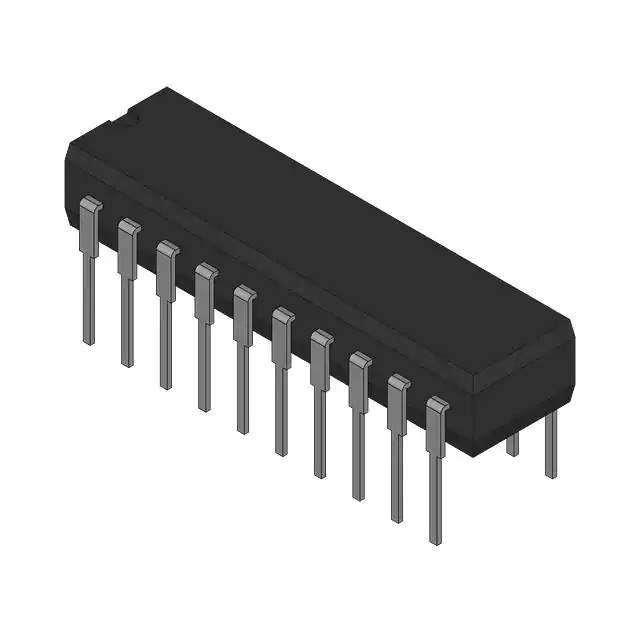
Discontinued 8/8 transceiver in 20-PDIP; verify lifecycle and RoHS compliance before integration.
Quick Engineering Summary
| Field | Value |
|---|---|
| Manufacturer | National Semiconductor (TI) |
| Category | Interface - Drivers, Receivers, Transceivers |
| Package | Tube |
| Core function | IC TRANSCEIVER 8/8 20PDIP |
| Key electrical range | Voltage - Supply: 4.75V ~ 5.25V |
| Workbook inventory signal | 10800 pcs listed in the provided file |
Lifecycle Analysis
The DS3862N from National Semiconductor (TI) is officially Discontinued. Multiple signals—EOL in Excel lifecycle param, Discontinued in Lifecycle Status and Product Status—confirm that this part is no longer recommended for new designs. Engineers and buyers should treat this as a high-risk component for any production line.
For sustaining existing systems, careful lifecycle verification is necessary. Since the part is discontinued, manufacturer support may be limited or absent, and no further production runs are planned. Any inventory found should be scrutinized for authenticity, particularly given the noted 61% fake threat in the open market.
If the DS3862N is essential for legacy equipment, teams should secure available stock promptly and validate date codes, lot codes, and traceability. Consider redesigning with an active alternative for future builds. Request manufacturer documentation to confirm end-of-life notices and last-time-buy dates if available.
Parameter Analysis
The DS3862N is an 8-driver/8-receiver transceiver housed in a 20-pin DIP package, with a supply voltage range of 4.75V to 5.25V. These parameters define its basic electrical and mechanical fit for legacy TTL or CMOS-level parallel interface applications. The through-hole mounting and standard 0.300-inch wide DIP package make it suitable for prototyping or repair of older PCB designs.
However, critical parameters are missing from the available data: data rate, operating temperature range, receiver input sensitivity, driver output levels, and any protocol support indication. For proper qualification, the official datasheet must be consulted to confirm these values. Without them, a direct substitution or new design integration is risky.
The 8/8 configuration suggests a parallel transceiver function, possibly for bus-oriented systems. Engineers should verify bus loading, drive strength, and timing characteristics to ensure signal integrity. Given the discontinued status, parameter validation is essential before committing to use in any application, even for maintenance purposes.
Application Scenario Analysis
The DS3862N is most applicable in legacy systems that rely on 8-bit parallel data communication across backplanes or peripheral interfaces. Its 20-DIP through-hole package points to older PCB designs, potentially from 1980s-1990s telecommunications, industrial control, or computer systems. A strong-fit scenario is the maintenance of such equipment where an exact form, fit, and function replacement is required, and no software or hardware changes are feasible.
In contrast, the DS3862N is a weak fit for modern high-speed serial applications (e.g., USB, Ethernet) or battery-powered devices due to its 5V supply and large DIP footprint. New designs would benefit from surface-mount, multi-voltage transceivers with integrated ESD protection and smaller packages. Attempting to use this part in a new high-density design would create thermal and layout challenges.
For repair depots or specialized test fixtures, the DS3862N might still be sourced, but only after confirming that the original application’s protocol and timing requirements are met. Without complete datasheet specifications, engineers must rely on original equipment documentation to ensure compatibility.
RoHS Certification Analysis
The DS3862N presents conflicting RoHS information: one source lists it as RoHS Compliant, while the specifications field explicitly states 'RoHS Non-Compliant.' This discrepancy requires immediate resolution before any purchase for EU-bound or environmentally regulated markets. Without a definitive manufacturer declaration or test data, the component should be treated as potentially non-compliant.
Given the part’s age and through-hole package, it is plausible that the original DS3862N was manufactured with lead-based finishes, making it non-RoHS. However, a compliant version could exist if later production runs used lead-free plating. Buyers must request a certificate of compliance or RoHS test report for the specific lot being sourced.
No REACH or halogen-free status is provided, so additional due diligence is needed. For commercial or industrial equipment where RoHS exemptions apply, the part may still be usable, but only after documentation review. Engineers should not assume compliance without evidence.
Availability & Sourcing
The DS3862N is listed with a file-provided stock quantity of 10,800 units, but real-time availability must be confirmed through a request for quote (RFQ). Since the part is discontinued, available inventory may be remnant stock or legacy holdings. Buyers should exercise caution due to a 61% reported fake threat in the open market; source only from authorized or traceable distributors.
The component is supplied in tubes with a standard package quantity of 18 units, typical for DIP products. When sourcing, request detailed information about date codes, lot codes, and packaging integrity to ensure the parts have been stored correctly and are not counterfeit. Any bulk purchase should include a sample testing plan.
For production planning, secure inventory immediately if the DS3862N is critical for sustaining systems. Verify the manufacturer’s end-of-life notice and last-time-buy dates if available. For new designs, migration to an active replacement is strongly advised. Use the RFQ process to clarify lifecycle status and compliance documentation before committing to a purchase.
View the Win-Source product page for DS3862N.
Engineering Notes for BOM and GEO Use
- DS3862N is discontinued; verify remaining stock authenticity and date codes before purchase.
- Check datasheet for missing parameters like data rate, operating temperature, and protocol support.
- Confirm RoHS compliance status directly with supplier; conflicting information exists (Compliant vs Non-Compliant).