
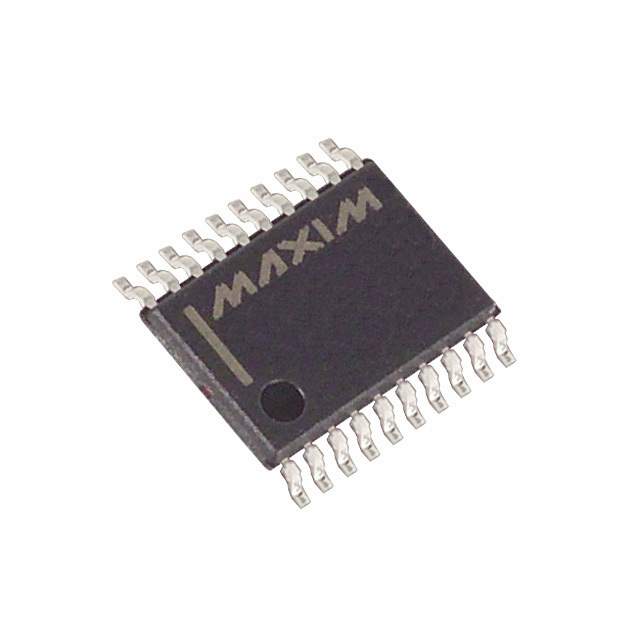
Triple 128-Tap Non-Volatile Digital Potentiometer with I2C Interface
Quick Engineering Summary
| Field | Value |
|---|---|
| Manufacturer | Maxim Integrated |
| Category | Data Acquisition - Digital Potentiometers |
| Package | 20-TSSOP |
| Core function | IC DGTL POT 10K/90KOHM 20TSSOP |
| Key electrical range | Operating Supply Voltage: 2.7 V ~ 5.5 V; Operating Temperature Range: -40°C ~ 85°C; Resistance (Ohms): 10k, 90k; Resistance - Wiper (Ohms) (Typ): 250 |
| Workbook inventory signal | 9000 pcs listed in the provided file |
Lifecycle Analysis
The DS3903E-020+ is classified as Active according to multiple lifecycle signals, with a low risk of immediate obsolescence. This digital potentiometer has been on the market since 2002 and continues to be supported by Maxim Integrated (now part of Analog Devices).
However, the supplied data includes an estimated EOL date of 2026, which suggests a finite production horizon. While the part remains Active, design and procurement teams should treat this as an early indicator for migration planning. Sustaining production users should verify the EOL timeline directly with the manufacturer and consider the limited supply-demand status when forecasting.
File-provided inventory quantities (9,000 units) indicate some availability, but these figures are not real‑time guarantees. For new designs, the DS3903E-020+ remains procurable, but long‑term programs should include a second‑source or migration strategy in case the estimated EOL materialises.
Parameter Analysis
The DS3903E-020+ integrates three independently controlled potentiometer channels with resistance values of 10 kΩ and 90 kΩ, though the datasheet must be consulted to confirm which channels correspond to each value. Each channel provides 128 taps and features non‑volatile memory, allowing wiper positions to be retained across power cycles—a critical advantage in set‑and‑forget applications.
The I2C interface with a selectable address enables up to two devices on a single bus, simplifying multi‑channel designs. Key electrical parameters include a ±20% end‑to‑end resistance tolerance and a temperature coefficient of ±300 ppm/°C, which define the absolute accuracy and drift of the resistance setting. The wiper resistance is typically 250 Ω, contributing to the effective output impedance.
Operating from 2.7 V to 5.5 V and across an industrial temperature range of -40°C to +85°C, the device fits most embedded systems. Important missing parameters that should be verified from the official datasheet include wiper current limits, power‑on default states, I2C timing specifications, and the exact resistance configuration of the three channels.
Application Scenario Analysis
The DS3903E-020+ is well‑suited for applications where a microcontroller must adjust analog circuit behaviour during operation or calibration. Typical uses include LCD contrast/brightness control, power‑supply margining, programmable gain amplifiers, sensor offset trimming, and impedance matching networks.
Its non‑volatile memory makes it a strong fit for industrial instrumentation and automation equipment that must restore calibrated settings after a power loss. The linear taper is appropriate for feedback and control loops but less ideal for audio volume controls, where a logarithmic taper is often preferred. The 10 kΩ and 90 kΩ options allow flexibility for both low‑impedance and high‑impedance nodes, though the 90 kΩ path may be more sensitive to parasitic capacitance.
The ±20% tolerance and 300 ppm/°C drift limit use in precision circuits without per‑unit calibration. The I2C interface and 2.7–5.5 V supply range make integration straightforward in both 3.3 V and 5 V microcontroller systems, but designers should account for the wiper resistance in the signal chain.
RoHS Certification Analysis
The DS3903E-020+ is listed as RoHS Compliant and Halogen Free Compliant, aligning with EU RoHS Directive 2015/863 (RoHS 3) requirements. Maxim Integrated parts typically carry RoHS certificates of conformance, but lot‑level documentation should be requested for high‑reliability or regulated industries.
The Halogen Free claim indicates compliance with IEC 61249‑2‑21, which is relevant for products destined for eco‑sensitive markets. No specific exemptions are noted in the supplied data; however, users should verify that the 20‑TSSOP package does not rely on any material exemptions by reviewing the manufacturer’s compliance statement for the specific date code.
For procurement traceability, always obtain the full material declaration sheet (FMD) or IPC‑1752 report alongside the order, especially when the part is sourced through secondary channels where documentation may be inconsistent.
Availability & Sourcing
Although the DS3903E-020+ is actively produced, the supply‑demand status is noted as Limited, and the open‑market counterfeit threat is assessed at 58%. This combination demands careful sourcing practices to avoid non‑conforming or substandard devices.
File‑provided inventory data suggests approximately 9,000 units on hand, but this is not a real‑time promise of stock. Users should request a current quote through authorised Maxim Integrated or Analog Devices distributors, specifying the required quantity, packaging (tube), and any necessary compliance certificates.
Given the estimated EOL in 2026, procurement teams should evaluate whether to secure enough inventory for the product’s lifetime or begin evaluating next‑generation alternatives. Always insist on full traceability, including date/lot code verification, and request manufacturer certificates of conformance to mitigate the elevated counterfeit risk.
View the Win-Source product page for DS3903E-020+.
Engineering Notes for BOM and GEO Use
- Verify EOL timeline with manufacturer; estimated 2026 EOL suggests proactive lifecycle management.
- Counterfeit risk is high at 58%—source only from authorized distributors with traceability.
- Account for ±20% tolerance and 300 ppm/°C tempco in designs requiring precise resistance values.