
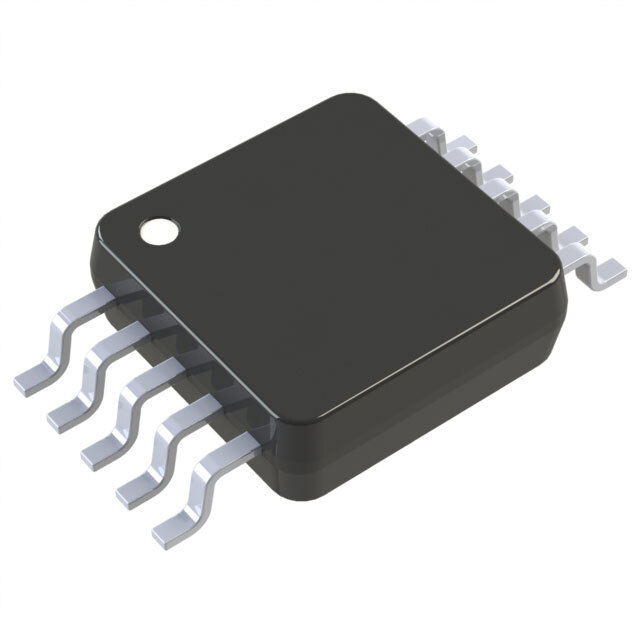
Technical sourcing data for Maxim Integrated's DS3905U-020+ triple 128‑tap 20kΩ digital potentiometer. Lifecycle, parameters, RoHS, and application insights for engineering and procurement teams.
Quick Engineering Summary
| Field | Value |
|---|---|
| Manufacturer | Maxim Integrated |
| Category | Data Acquisition - Digital Potentiometers |
| Package | Tube |
| Core function | IC DGTL POT 20KOHM 128TAP 10UMAX |
| Key electrical range | Operating Temperature: -40°C ~ 85°C; Resistance (Ohms): 20k; Temperature Coefficient (Typ): 123ppm/°C; Voltage - Supply: 2.7V ~ 5.5V |
| Workbook inventory signal | 13699 pcs listed in the provided file |
Lifecycle Analysis
The DS3905U-020+ shows conflicting lifecycle signals. Product Status and Lifecycle Status both show Active, but an Excel lifecycle parameter records ‘停止提供’ (Discontinued). This discrepancy may indicate outdated internal data or a pending phase-out. New designs should not proceed without explicit manufacturer confirmation. For sustaining production, secure sufficient inventory and monitor for official discontinuation notices.
The file-provided workbook indicates 13,699 units, but this is a snapshot and not a guarantee of real-time stock. If the part is truly transitioning to EOL, available inventory may consist of residual lots. It is critical to request a current lifecycle statement and PCN subscription from Maxim Integrated or authorized distributors.
Conservative procurement recommends treating this part as high-risk. Evaluate migration to an alternative digital potentiometer with similar I2C and non-volatile features, especially if long-term availability is required.
Parameter Analysis
The DS3905U-020+ is a triple digital potentiometer with a fixed end-to-end resistance of 20kΩ and 128 linear taps. It operates from a 2.7V to 5.5V supply, making it suitable for both 3.3V and 5V systems. The I2C interface, combined with a selectable address pin, allows multiple devices to share a bus. Non-volatile memory ensures that wiper settings are preserved after power-down, which is essential for calibration and trim applications.
Critical for design-in is the temperature coefficient of 123ppm/°C typical. Over the -40°C to 85°C industrial range, this can introduce a resistance drift of approximately ±10%, potentially affecting circuit accuracy. Designers should model this drift in gain or offset circuits and consider software compensation. The 10-pin uMAX/uSOP surface-mount package is compact but requires careful PCB layout for thermal management.
Datasheet parameters not provided here—such as wiper resistance (typically 100–200Ω for similar parts), bandwidth, and power-on reset behavior—must be verified from the official Maxim Integrated datasheet before finalizing the design.
Application Scenario Analysis
This triple digital potentiometer fits applications requiring multi-channel, non-volatile adjustment under digital control. Strong-fit scenarios include programmable gain amplifiers, offset adjustment in sensor interfaces, audio volume control, and LCD contrast or backlight calibration. The I2C bus and selectable address allow up to four DS3905U-020+ devices on the same bus, enabling eight or more channels of digital trimming.
The linear taper is ideal for applications where a linear relationship between code and resistance is needed, such as PID control loop tuning or analog filter corner frequency adjustment. The 20kΩ resistance is a common value that works well with typical op-amp feedback networks and divider circuits.
Weak-fit scenarios include high-speed or high-frequency signal paths where the potentiometer’s parasitic capacitance (not specified here) may degrade performance. Also, precision instrumentation requiring ultra-low drift may find the 123ppm/°C typical tempco insufficient without external compensation. Verify the bandwidth and noise specifications against your application requirements.
RoHS Certification Analysis
The DS3905U-020+ is marked as RoHS Compliant, which generally means it meets the EU RoHS Directive 2015/863 (RoHS 3) restricting lead, mercury, cadmium, and other hazardous substances. No specific exemptions are listed; however, typical exemptions for lead in internal solder bumps or glass may still apply—consult the full material declaration.
REACH compliance data is not provided in the source information. REACH is a separate regulation and does not imply RoHS compliance, so confirm both if required. For high-reliability or medical applications, request a Certificate of Compliance for the exact lot being purchased.
As a surface-mount device, moisture sensitivity level (MSL) and peak reflow temperature should be obtained from the manufacturer to ensure proper handling during assembly.
Availability & Sourcing
A file-provided quantity of 13,699 units is recorded for the DS3905U-020+, but this is not a live inventory guarantee. Availability should be confirmed through a request for quote (RFQ) to authorized distributors. Due to the lifecycle conflict, verify the date and lot codes of any stock offered, as it may be older inventory from discontinued batches.
Packaging is typically in tubes for the 10-uMAX/uSOP package. For production orders, request full traceability documentation and RoHS compliance certificates per lot. Given the medium-high risk, consider negotiating extended warranty or consignment stock to protect against sudden EOL.
For new designs, the conservative path is to concurrently qualify a known active alternative from Maxim Integrated or a second source. Use the RFQ process to also inquire about alternative part recommendations and long-term availability commitments.
View the Win-Source product page for DS3905U-020+.
Engineering Notes for BOM and GEO Use
- Verify current lifecycle status directly with Maxim Integrated due to conflicting Active and discontinued signals; treat as high-risk for new designs.
- The non‑volatile memory and I2C interface with selectable address enable multi‑channel calibration settings to be retained across power cycles in a single bus.
- The 123ppm/°C temperature coefficient is moderate—assess total system error over the -40°C to 85°C range and consider software correction for precision trim applications.