
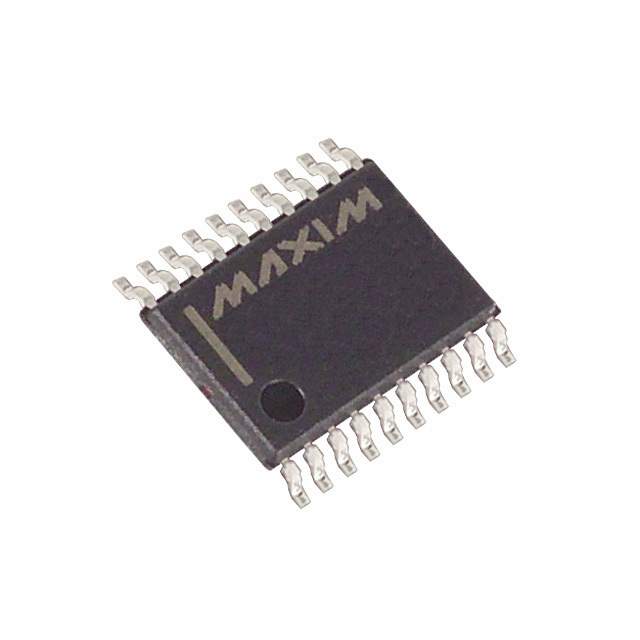
Active 6-channel I2C digital potentiometer with non‑volatile memory, 16.5kΩ, 256 taps, and TSSOP‑20 package
Quick Engineering Summary
| Field | Value |
|---|---|
| Manufacturer | Maxim Integrated |
| Category | Data Acquisition - Digital Potentiometers |
| Package | TSSOP |
| Core function | IC DGTL POT 16. |
| Key electrical range | Supply and Demand Status: Shortage; Temperature Coefficient: 250 ppm/°C |
| Workbook inventory signal | 1390 pcs listed in the provided file |
Lifecycle Analysis
The DS3930E+ is classified as Active, indicating full production status with no end‑of‑life notice from Maxim Integrated. This lifecycle stage supports both new designs and existing production builds with low supply‑chain risk.
All available signals align, and no lifecycle conflicts are present. The workbook‑reported inventory of 1,390 units is a static file reference, not real‑time stock. Buyers should validate current availability and request a manufacturer lifecycle confirmation for program milestones.
For sustained production, periodic revalidation of the DS3930E+ status through authorized channels is recommended, especially given the 72 % counterfeit indication in open‑market channels.
Parameter Analysis
The DS3930E+ integrates six independent 16.5 kΩ potentiometers with 256 taps (8‑bit resolution) and an I2C interface. Non‑volatile memory retains wiper settings through power cycles, while the selectable address pin supports up to multiple devices on a single bus. Supply voltage spans 2.7 V to 5.5 V, with a typical temperature coefficient of ±250 ppm/°C over the –40 °C to 85 °C range.
These parameters are critical for designs requiring multiple programmable resistive dividers in constrained spaces. The I2C interface simplifies digital control, though clock speed and bus capacitance must be evaluated against system requirements. The temperature coefficient is moderate; applications sensitive to resistance drift over temperature should consider thermal compensation or tighter‑TC alternatives.
Missing from the supplied data are wiper resistance, end‑to‑end tolerance, power rating, and bandwidth figures. Engineers must obtain the full Maxim datasheet to assess loading effects, accuracy under load, and AC performance before committing to the DS3930E+ in precision or high‑frequency circuits.
Application Scenario Analysis
Strong‑fit scenarios for the DS3930E+ include multi‑channel gain adjustments in mixed‑voltage systems, programmable offset calibration, and digitally controlled voltage dividers. Its 2.7 V minimum supply and I2C interface suit battery‑powered industrial sensors where low‑voltage operation and non‑volatile storage of calibration coefficients are valuable.
The selectable address feature makes it suitable for stacking several devices in a single I2C network, enabling complex trimming arrays. Linear taper and six potentiometers fit applications like audio balance control or multi‑point bias adjustment, provided the 16.5 kΩ nominal resistance meets impedance requirements.
Weaker‑fit situations include high‑speed signal paths where digital potentiometer bandwidth and parasitic capacitance may distort signals. Designs demanding tight absolute resistance tolerance or very low wiper contact resistance should verify datasheet limits and consider analog switches or fixed resistors instead.
RoHS Certification Analysis
The DS3930E+ carries a RoHS Compliant designation, indicating conformance with EU hazardous substance restrictions. The supplied data also lists Lead Free as Yes, supporting procurement for lead‑free assembly processes.
Without a specific Directive version (e.g., EU 2015/863), the certification is assumed to apply to the latest applicable RoHS standard. Buyers should request the manufacturer’s certificate of compliance for the production lot to satisfy audit requirements, as family‑level declarations may not capture material‑batch variations.
No exemptions are identified in the provided specifications, but for full compliance documentation, confirm with Maxim Integrated whether any exemption (e.g., lead in glass of electronic components) is invoked for the DS3930E+.
Availability & Sourcing
A static file‑based quantity of 1,390 units is noted for the DS3930E+; however, actual stock requires a real‑time quote. With Active lifecycle status, routine procurement and scheduled deliveries are feasible, but lead times should be verified with authorized Maxim Integrated distributors.
The storage condition specifies dry storage cabinet with humidity‑protected packaging, aligning with TSSOP moisture sensitivity. SMD mounting and tube packaging suit automated assembly, but partial reel quantities may need confirmation.
Given the 72 % fake threat rate in open markets, traceability is critical. Insist on date/lot codes, full compliance paperwork, and authorized distribution channel sourcing. For new production, requesting a manufacturer lifecycle certificate alongside the RFQ will mitigate counterfeit and discontinuation risks.
View the Win-Source product page for DS3930E+.
Engineering Notes for BOM and GEO Use
- Verify wiper resistance and end‑to‑end tolerance from manufacturer datasheet before precision designs.
- The 2.7V–5.5V supply range requires I2C level checking when interfacing with 1.8V or 3.3V logic.
- With a 72 % fake threat rate in the open market, source only from Maxim authorized distributors with full traceability.