
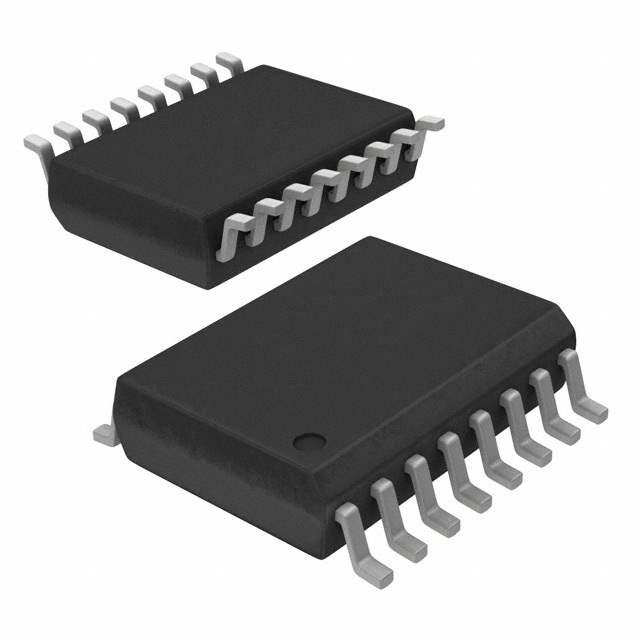
End-of-Life (EOL) 51.84 MHz TCXO in 16-SOIC package from Maxim Integrated.
Quick Engineering Summary
| Field | Value |
|---|---|
| Manufacturer | Maxim Integrated |
| Category | Clock/Timing - Programmable Timers and Oscillators |
| Package | 16-SOIC |
| Core function | IC OSC TCXO 51. |
| Key electrical range | Frequency: 51.84MHz; Operating Supply Current: 1.5mA; Supply and Demand Status: Limited; Supply Voltage - Operating: 3.135 V to 3.465 V |
| Workbook inventory signal | 1 pcs listed in the provided file |
Lifecycle Analysis
The DS4026S+QCN from Maxim Integrated is fully discontinued, holding an end-of-life (EOL) status according to all supplied lifecycle data. This means the part is no longer manufactured and should not be designed into new products. For existing production, procurement becomes a matter of securing dwindling residual stock. The risk level is high; engineers must immediately verify last-time-buy availabilities directly with Maxim Integrated or its authorized distribution network.
A file-provided inventory record lists a single unit, but this snapshot is not real-time and may no longer reflect actual stock. Relying on it without confirmation is risky. With EOL parts, the open market becomes the primary source, but the reported counterfeit threat of 68% necessitates extreme caution. Any purchase should include full traceability documentation, including manufacturer date codes and lot numbers.
Long-term, the only sustainable solution is to migrate to an alternative oscillator. The fact that this is a fixed-frequency 51.84 MHz TCXO narrows the search but does not eliminate the need for careful parametric matching. Treat the remaining DS4026S+QCN inventory as a temporary bridge while a redesign is executed.
Parameter Analysis
The DS4026S+QCN centers on a few critical specifications that dictate its integration. The fixed 51.84 MHz output frequency places it squarely in networking and telecom infrastructure applications, where this common SONET/SDH rate demands high accuracy. The supply voltage range of 3.135 V to 3.465 V requires a well-regulated 3.3 V rail; any deviation beyond these limits could degrade performance or cause malfunction.
The specified operating supply current of 1.5 mA is relatively low, easing power budget concerns and allowing the oscillator to be placed on densely regulated power rails without excessive heat. The -40°C to 85°C temperature range covers extended industrial use, and the TCXO construction implies internal compensation that maintains frequency stability across that span, though the exact stability in ppm is not provided in the source data and must be verified in the original Maxim datasheet.
The 16-SOIC package is a standard surface-mount outline, but the datasheet must be consulted for the recommended land pattern and thermal pad connections. Critical missing parameters include output waveform type (CMOS, LVDS, etc.), rise/fall times, phase noise, and long-term aging data. Without these, a complete qualification for signal integrity is impossible. Engineers should secure the full datasheet before committing to any design reuse.
Application Scenario Analysis
Given its 51.84 MHz fixed frequency and TCXO architecture, the DS4026S+QCN was designed for applications that demand a stable clock source in the face of temperature variation. The most fitting scenarios include telecommunications line cards, optical network units, base station clock generators, and timing circuits for FPGAs in networking equipment. The industrial temperature range and low power draw further support embedded industrial controls that might experience thermal swings.
In contrast, applications with relaxed timing requirements, such as simple microcontroller clocking, low-frequency digital logic, or consumer gadgets, would not benefit from a TCXO. For those, a standard crystal oscillator without temperature compensation would be sufficient and more economical. Even within telecom, this part’s EOL status means it can only serve as a stopgap for legacy equipment; it is not viable for any new platform launch. Engineers should evaluate whether an active, drop-in TCXO from another vendor can meet the same form factor and frequency requirements.
RoHS Certification Analysis
According to the supplied data, the DS4026S+QCN is RoHS Compliant. This typically means it meets the requirements of the EU RoHS Directive, restricting lead, mercury, cadmium, and other hazardous substances. No specific standard version or exemption number is provided, so buyers should assume compliance with at least the original EU RoHS, but verification against the latest 2015/863 (RoHS 3) is advisable if the end product is destined for the European market.
REACH status is not mentioned, and REACH compliance is a separate chemical safety requirement and should not be inferred from the RoHS status. For high-reliability or regulated industries, a full material declaration form is recommended. Because the DS4026S+QCN is EOL, any remaining inventory may have been manufactured years ago; lot-level testing for restricted substances can provide peace of mind that no process changes introduced non-compliance late in the product’s life.
Availability & Sourcing
Sourcing the DS4026S+QCN demands heightened vigilance. This part is EOL, and the open market carries a reported 68 percent counterfeit threat, making unauthorized distributors a significant risk. The file-provided inventory shows a single unit, but this is not a live guarantee; actual availability must be confirmed through a quote request.
When procuring, insist on full documentation: manufacturer date code, lot code, certificate of compliance, and proof of original packaging. The standard tube/rail packaging and recommended dry storage conditions indicate moisture sensitivity, so verify that storage and handling have followed proper procedures. The part’s lifecycle status means that any new supply is likely residual distributor stock or reclaimed material; it is critical to test samples before commiting to a production buy.
If the DS4026S+QCN must be kept in use for legacy systems, secure whatever inventory can be validated and accelerate the transition to a qualified active replacement. For new designs, avoid this part entirely. Contact your sourcing partner for a current quote and to discuss lifecycle verification services.
View the Win-Source product page for DS4026S+QCN.
Engineering Notes for BOM and GEO Use
- Verify the exact output waveform and frequency stability from the original Maxim Integrated datasheet before using in any design.
- Due to EOL status and high counterfeit risk (68% open-market threat), only source through authorized distributors and perform incoming inspection on all batches.
- Plan an immediate board redesign to a currently active 51.84 MHz TCXO, as the DS4026S+QCN is no longer manufactured.