
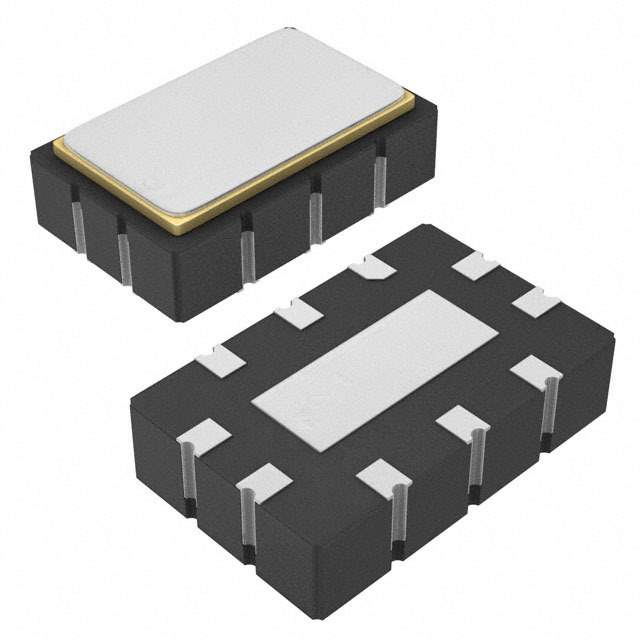
Maxim Integrated DS4250D+ 250MHz Oscillator: Discontinued Part Procurement Insights
Quick Engineering Summary
| Field | Value |
|---|---|
| Manufacturer | Maxim Integrated |
| Category | Clock/Timing - Programmable Timers and Oscillators |
| Package | Tray |
| Core function | IC OSC CLOCK 250MHZ 10-LCCC |
| Key electrical range | Current - Supply: 52 mA; Frequency: 250MHz; Temperature Range - Operating: -40°C ~ 85°C; Voltage - Supply: 3.135V ~ 3.465V |
| Workbook inventory signal | 1 pcs listed in the provided file |
Lifecycle Analysis
The DS4250D+ from Maxim Integrated (now Analog Devices) is confirmed as Discontinued. Lifecycle signals are consistent across product status and Excel parameters, all indicating end-of-life. This status means the part is no longer manufactured, and no new orders are being accepted by the factory.
For engineers involved in new designs, this part should not be considered. Any bill of materials containing the DS4250D+ must be reworked to identify a pin-compatible or functionally equivalent alternative. For ongoing production, immediate verification with Analog Devices regarding last-time buy notices and any remaining authorized inventory is essential.
File-provided data shows a quantity of 1, which is not a real-time stock guarantee. The high risk level reflects the difficulty of sourcing genuine parts and the need for redesign. Procurement teams should treat all available stock as limited and subject to prior sale.
Parameter Analysis
Key parameters of the DS4250D+ include its 250MHz output frequency, 3.135V to 3.465V supply voltage, and 52mA typical supply current. The frequency is the primary selection criterion, determining suitability for clocking high-speed digital circuits. The supply voltage range aligns with standard 3.3V rails, providing straightforward integration.
The operating temperature span of -40°C to 85°C qualifies it for industrial environments, and the 10-LCCC exposed pad package with surface mount design demands attention to PCB thermal management. The exposed pad aids heat dissipation, but designers must ensure proper soldering and thermal vias.
Missing from the provided data are critical parameters: phase noise, period jitter, output signal type (e.g., LVDS, LVPECL, CMOS), and frequency stability over temperature. These specifications directly impact signal integrity and interoperability. Engineers must consult the original Maxim Integrated datasheet to confirm these values before qualifying any replacement.
Application Scenario Analysis
The DS4250D+ clock oscillator is designed for high-speed timing applications requiring a stable 250MHz reference. Typical strong-fit scenarios include networking switches, FPGA-based designs, and embedded systems where a fixed oscillator drives clock trees or SerDes blocks. The industrial temperature range supports deployment in non-weather-protected environments such as telecom base stations.
Weak-fit scenarios involve low-frequency or battery-powered devices where the 52mA current consumption and 250MHz frequency are excessive. Additionally, applications needing programmable frequency or spread-spectrum modulation would not be served by this fixed oscillator.
Because the part is discontinued, its use is now limited to maintaining existing equipment. Engineers sustaining legacy boards may still source residual stock, but for any new project, the DS4250D+ is not a viable choice. A migration analysis should compare footprint, output logic levels, and stability requirements against active products.
RoHS Certification Analysis
The DS4250D+ is listed as RoHS Compliant, indicating conformance to the EU Restriction of Hazardous Substances directive (likely RoHS 3 under EU 2015/863). This means the part is free of lead, mercury, cadmium, and other restricted substances above threshold limits. REACH status is reported as Unaffected, which separately addresses chemical substance registration and does not substitute for RoHS compliance.
MSL Level 1 (Unlimited) is a significant advantage for manufacturing, as it eliminates special handling for moisture sensitivity after opening. This rating remains valid for the part's original packaging from the factory.
For a discontinued component, buyers should request a certificate of compliance for the specific batch rather than relying solely on family-level data. As the part ages, older inventory might have been manufactured under earlier versions of the standard, so re-confirmation with the supplier is advised.
Availability & Sourcing
Sourcing the discontinued DS4250D+ requires a careful RFQ process. Authorized distributors are unlikely to have stock, so buyers must rely on independent brokers or excess inventory channels. The file-provided quantity of 1 underscores the extreme scarcity and should not be treated as firm availability.
To mitigate the 56% open market fake threat rate cited in the data, implement a thorough counterfeit avoidance protocol. Require photographs of date/lot codes, request a statement of originality, and consider third-party electrical testing for a sample from the lot. Traceability back to Maxim Integrated or Analog Devices is paramount.
For any production need, request a quote only after verifying lifecycle and authenticity. Given the discontinued status, the recommended action is to secure enough verified inventory to cover immediate bridge requirements while accelerating a redesign. Do not commit to new production builds relying on this part without a clear migration plan.
View the Win-Source product page for DS4250D+.
Engineering Notes for BOM and GEO Use
- Verify output logic type (e.g., LVDS, LVPECL) and jitter specifications from the original DS4250D+ datasheet before selecting any alternative.
- Due to the 56% fake threat rate in the open market, implement incoming inspection including date/lot code traceability and electrical testing.
- Plan migration to an active clock oscillator from Analog Devices or compatible supplier to avoid supply chain interruptions.