
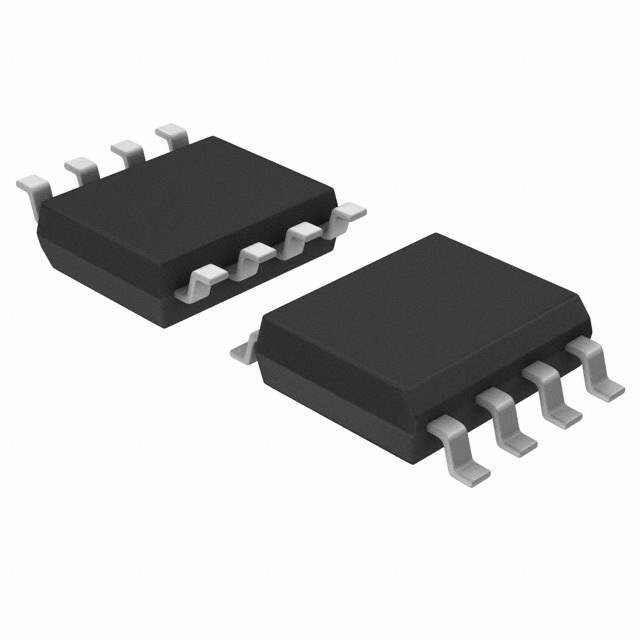
Half-duplex RS-422/RS-485 transceiver, EOL status, verify lifecycle for new designs, request quote for availability.
Quick Engineering Summary
| Field | Value |
|---|---|
| Manufacturer | National Semiconductor (TI) |
| Category | Interface - Drivers, Receivers, Transceivers |
| Package | Bulk |
| Core function | IC TRANSCEIVER HALF 1/1 8SOIC |
| Key electrical range | Temperature Range - Operating: -40°C ~ 85°C; Voltage - Supply: 4.75V ~ 5.25V |
| Workbook inventory signal | 1 pcs listed in the provided file |
Lifecycle Analysis
The DS481TM/NOPB from Texas Instruments carries conflicting lifecycle indicators. The Excel lifecycle parameter and the Lifecycle Status field both show EOL, yet the Product Status field shows Active. This inconsistency demands a conservative procurement stance: the part should be treated as End‑of‑Life until confirmed otherwise by the manufacturer. For new designs, selecting this transceiver is not recommended; engineers should instead choose an active, recommended alternative.
The file‑based inventory shows a quantity of 1, which does not constitute a real‑time availability guarantee. Procuring teams must request a current quote and verify the exact lifecycle status with an authorized distributor. Relying on limited stock without a confirmed last‑time buy plan can disrupt production. For legacy systems still using the DS481TM/NOPB, immediate action is needed to secure sufficient units or to qualify a replacement part.
Parameter Analysis
Key specifications shape the DS481TM/NOPB’s suitability. With one driver and one receiver in a half‑duplex configuration, it targets simple RS‑422 or RS‑485 point‑to‑point or multidrop links. The data rate of 2Mbps is modest by modern standards but adequate for many industrial control and monitoring applications. Receiver hysteresis of 70mV improves edge detection and noise rejection on long or noisy bus lines. The 5V supply range (4.75–5.25V) aligns with legacy 5V logic, while the -40°C to 85°C temperature range supports indoor and outdoor equipment.
Several parameters are not provided in the available data and must be verified from the official datasheet. Among these are common‑mode voltage range, ESD protection levels, propagation delay, and receiver input sensitivity. These missing details can be critical for robust design, especially at 2Mbps over long cable runs. Thermal characteristics and package power dissipation should also be reviewed for high‑density PCB layouts.
Application Scenario Analysis
The DS481TM/NOPB is a half‑duplex RS‑422/RS‑485 transceiver, making it a candidate for industrial networks where multidrop communication is required over twisted‑pair cabling. Typical strong‑fit applications include factory automation, building management systems, remote sensor networks, and PLC interfaces. The 70mV hysteresis and 2Mbps data rate are suitable for moderate‑speed, noise‑prone environments.
Weak‑fit scenarios emerge when full‑duplex communication is needed, since the device operates only in half‑duplex mode. Designs requiring data rates above 2Mbps or low‑voltage supplies (e.g., 3.3V) are not supported. Most importantly, because the DS481TM/NOPB is classified as EOL, it is a poor choice for any new product development. Engineers should instead evaluate active RS‑485 transceivers that meet the same footprint and performance while offering long‑term availability.
RoHS Certification Analysis
The DS481TM/NOPB is marked as RoHS Compliant, indicating it meets EU Directive 2011/65/EU with no restricted substances above threshold levels at the time of manufacture. Additionally, a REACH Unaffected status confirms no substances of very high concern (SVHC) above reporting limits. MSL level 1 means the part is not moisture‑sensitive and has unlimited floor life before soldering, streamlining handling in production.
These compliance declarations are typically made on a family or lot basis. For older inventory, there is a possibility that manufacturing dates precede the latest amendments to RoHS (e.g., RoHS 3). Procurement teams should request up‑to‑date certificates of compliance when purchasing DS481TM/NOPB units, especially if the lot date code is older than 2019 when additional phthalate restrictions came into effect.
Availability & Sourcing
As an EOL part from Texas Instruments, the DS481TM/NOPB has constrained availability. The source data shows only a single unit in file‑based inventory, which is not a real‑time figure. Buyers must contact a supplier for a current quote to determine if any stock remains. Given the end‑of‑life status, executing a last‑time buy may be the only path to secure units for legacy system support.
When sourcing EOL components, verify the date/lot code and request traceability documentation. Ensure that compliance certificates (RoHS, REACH) correspond to the actual lot being shipped. For future‑proofing, simultaneously evaluate footprint‑compatible active alternatives such as the Texas Instruments SN65HVD family or equivalent parts from other manufacturers. Relying on small, file‑reported quantities without manufacturer confirmation carries significant supply risk.
View the Win-Source product page for DS481TM/NOPB.
Engineering Notes for BOM and GEO Use
- Because lifecycle signals conflict, confirm EOL status with Texas Instruments before committing to production purchases.
- The 70mV receiver hysteresis provides noise margin for RS‑485 multipoint applications; verify it meets your system’s noise budget.
- Given EOL classification, start migration planning immediately and request a quote for any remaining stock.