
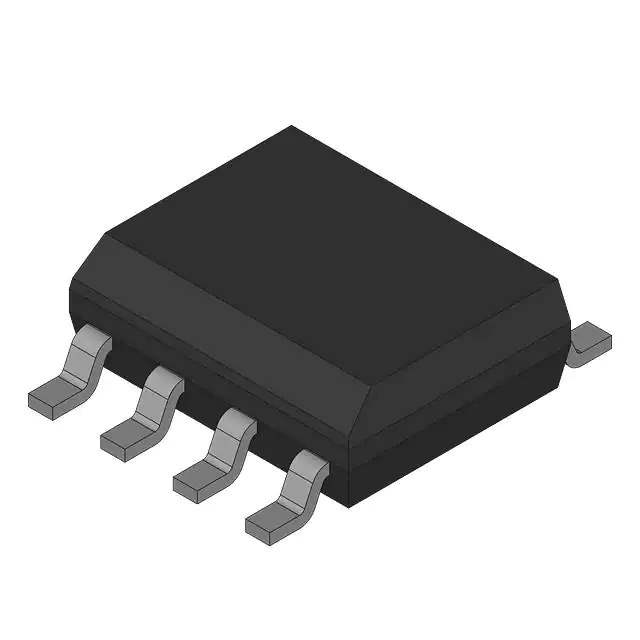
Half-Duplex RS-485 Transceiver from National Semiconductor (TI) – Discontinued, Verify Availability
Quick Engineering Summary
| Field | Value |
|---|---|
| Manufacturer | National Semiconductor (TI) |
| Category | Interface - Drivers, Receivers, Transceivers |
| Package | Bulk |
| Core function | IC TRANSCEIVER HALF 1/1 8SOIC |
| Key electrical range | Temperature Range - Operating: -40°C ~ 85°C; Voltage - Supply: 4.75V ~ 5.25V |
| Workbook inventory signal | 1 pcs listed in the provided file |
Lifecycle Analysis
The DS481TM is classified as Discontinued, with a high risk level for sourcing and long-term availability. Indications from manufacturer data (EOL, Discontinued) are consistent: the part is no longer in active production and is not recommended for new designs. For ongoing production, engineers should immediately verify remaining in-house or distributor stock and evaluate a pin-compatible or functional replacement from National Semiconductor (TI) or a third-party supplier.
The supplied file inventory suggests a minimal quantity (1 unit), which is not real-time and may already be depleted. Procurement teams should treat this as a last-time buy signal and avoid committing to new production runs without secured stock. Because lifecycle signals sometimes lag manufacturer announcements, cross-check the official TI product page and any Product Change Notifications to confirm the end-of-life timeline.
Parameter Analysis
The DS481TM is a half-duplex RS-422/RS-485 transceiver with one driver and one receiver. Key electrical parameters include a data rate of 2 Mbps, supply voltage range of 4.75 V to 5.25 V, and an industrial temperature range of -40°C to 85°C. Receiver hysteresis is listed at 70 mV, providing a basic noise margin for differential signaling. The device comes in a standard 8‑SOIC surface‑mount package.
These specifications matter for bus loading, power budgeting, and PCB layout. However, several critical parameters are absent from the provided data: bus-pin ESD protection, fail‑safe biasing features, driver slew‑rate control, unit load characteristics, and common‑mode voltage limits. Without them, a thorough design review cannot be completed. Engineers must obtain the full datasheet from National Semiconductor (TI) to verify these values and ensure compatibility with the intended RS‑485 network topology and termination scheme.
Application Scenario Analysis
The DS481TM fits low‑speed industrial serial communication applications that use half‑duplex RS‑485 or RS‑422 physical layers. Typical use cases include building automation (HVAC controllers, access panels), process control sensors, utility meter reading, and simple point‑to‑multipoint data links. Its 5 V operation and moderate data rate are well suited for legacy systems that do not require high‑speed data transfer.
Because the part is discontinued, it is suitable only for maintenance, repair, or replication of existing boards. It is a poor fit for any new product development, especially in markets requiring extended lifecycle assurance or green‑packaging compliance. Applications demanding full‑duplex communication, higher data rates (e.g., 10 Mbps or more), or operation in harsh environments with greater ESD threats should look to modern TI transceivers that incorporate enhanced protection and low‑power features.
RoHS Certification Analysis
RoHS compliance for the DS481TM is ambiguous. The structured compliance field indicates “RoHS Compliant”, yet the part’s specification list explicitly states “RoHS Non‑Compliant”. This discrepancy likely stems from a data entry mismatch or re‑classification over time. Procurement must treat the non‑compliant claim as the more conservative interpretation until verified.
For European or similarly regulated markets, RoHS compliance is mandatory. If the part is truly non‑compliant, its use is restricted to exempt applications or regions without RoHS enforcement. Lot‑level certification from the supplier or a third‑party test report is the only way to resolve this conflict. Also note that REACH status is not mentioned in the data and cannot substitute for RoHS. For any new order, explicitly request RoHS and REACH documentation to avoid compliance gaps.
Availability & Sourcing
Availability of the discontinued DS481TM is extremely limited. The provided workbook indicates a single unit in stock, which is not real‑time and should be confirmed before committing. Open‑market counterfeit risk is elevated (53% threat in historical data), so sourcing must include traceability verification, date/lot code inspection, and supplier qualification.
Standard packaging is listed as “Bulk,” and the supplier device package is the 8‑SOIC. For any remaining lots, request a formal quote through your distributor or broker, specifying full traceability and RoHS/compliance documents. For new designs, engage TI to identify an active replacement. If this part is mission‑critical for an existing system, evaluate a lifetime buy and secure inventory immediately, but only after verifying authenticity and compliance.
View the Win-Source product page for DS481TM.
Engineering Notes for BOM and GEO Use
- The part is discontinued: only source for repair or existing production; do not design into new boards.
- Resolve conflicting RoHS data: request lot-specific compliance documentation before procurement.
- Verify missing datasheet parameters (ESD rating, fail-safe behavior, unit load) before integration.