
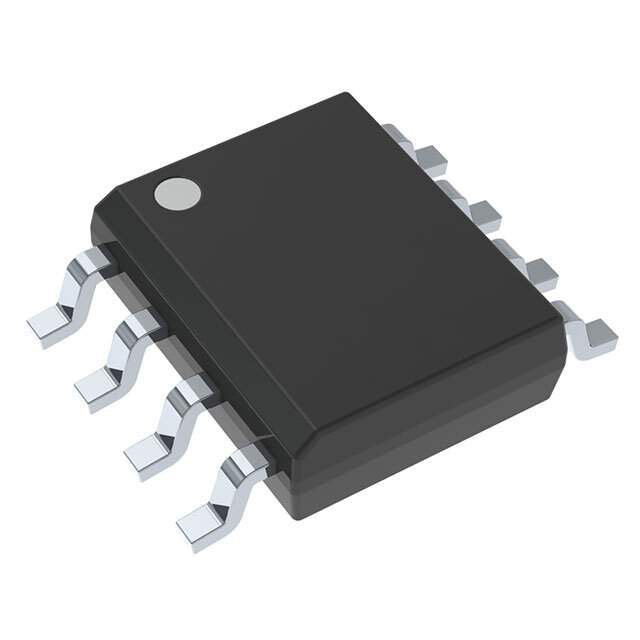
EOL part – verify availability before design-in. 2.5Mbps, 8-SOIC, half-duplex RS-485/RS-422 transceiver.
Quick Engineering Summary
| Field | Value |
|---|---|
| Manufacturer | Texas Instruments |
| Category | Interface - Drivers, Receivers, Transceivers |
| Package | 8-SOIC |
| Core function | IC TRANSCEIVER HALF 1/1 8SOIC |
| Key electrical range | Supply and Demand Status: Limited; Supply Voltage - Operating: 4.75 V to 5.25 V; Temperature Range - Operating: 0°C to 70°C |
| Workbook inventory signal | 2365 pcs listed in the provided file |
Lifecycle Analysis
The Texas Instruments DS485M is officially classified as End-of-Life (EOL). This status indicates that Texas Instruments has discontinued production, and the part is no longer recommended for new designs. Engineers and procurement teams should only consider the DS485M for sustaining existing production lines where a redesign is not immediately feasible. However, even for legacy products, securing a stable supply will be challenging as manufacturer stocks dwindle over time.
A data conflict exists: the provided specifications also list a 'Status: Active' field, which contradicts the EOL signal. This discrepancy could arise from outdated database entries or legacy records. To avoid design risks, always confirm lifecycle status directly with Texas Instruments or an authorized distributor. Relying on the EOL indicator is conservative and safer for supply chain planning.
The file-provided inventory quantity of 2365 units is not a real-time guarantee. Given the EOL status and a fake threat rate of 28% in the open market, any available stock should be treated with caution. Traceability and authentic sourcing are essential to avoid counterfeit risks.
Parameter Analysis
The DS485M is a half-duplex transceiver supporting RS-485 and RS-422 protocols, with one driver and one receiver integrated into the 8-SOIC package. Its maximum data rate of 2.5Mbps is typical for moderate-speed industrial communication, such as Modbus or simple master-slave networks. The 70mV receiver hysteresis improves noise immunity by preventing false triggering in noisy environments, a critical feature for long cable runs.
The operating voltage range is 4.75V to 5.25V, indicating the part requires a well-regulated 5V supply. This narrow range demands careful power supply design with adequate decoupling. The specified operating temperature range of 0°C to 70°C limits the DS485M to commercial environments; it is unsuitable for industrial temperature extremes without verification. Some alternate datasheet sources suggest a wider -40°C to 85°C range, so engineers must verify the exact grade from the manufacturer’s documentation.
Several key parameters are missing from the provided data, including common-mode voltage tolerance, ESD protection rating, propagation delay, short-circuit current limits, and thermal resistance. These values are essential for rugged industrial designs and should be sourced from the official Texas Instruments datasheet before finalizing any design-in or qualification decision.
Application Scenario Analysis
The DS485M is well-suited for half-duplex, multi-point communication buses in commercial and light industrial applications. Typical use cases include building automation (HVAC controllers, lighting systems), factory floor data collection (sensor networks, PLC backplanes), and security systems. The 2.5Mbps data rate supports many legacy RS-485 protocols like Modbus RTU, making the DS485M a drop-in candidate for existing field-proven designs.
However, the part is less appropriate for full-duplex communication, high-speed requirements above 2.5Mbps, or harsh environment deployments due to its commercial temperature range and unknown ESD robustness. Its EOL status further restricts its use to maintenance of existing equipment; new projects should evaluate active and modern alternatives such as Texas Instruments’ THVD series or equivalent parts from other vendors that offer enhanced features like wider voltage ranges, higher speeds, and integrated protection.
When planning a migration strategy, consider pin-compatible upgrades or transceivers with similar footprints and improved performance. The DS485M’s 8-SOIC footprint is common, so physical compatibility is feasible, but electrical characteristics must be compared carefully.
RoHS Certification Analysis
The DS485M is listed as RoHS Compliant, which generally means it meets the requirements of the European Union’s Restriction of Hazardous Substances directive. Without a specific version stated, it likely conforms to the current RoHS standard (EU 2015/863), but verification with the manufacturer is recommended. The compliance status applies to the component as a homogeneous material designation, but full system-level RoHS compliance also depends on the assembly process.
No exemptions are indicated in the supplied data. Some lead finishes or internal materials may still fall under allowed exemptions (e.g., lead in high-temperature solder). Buyers should request a formal RoHS Certificate of Compliance or a signed EU Declaration of Conformity from the distributor or manufacturer to ensure lot-specific adherence, especially when procuring EOL parts from non-franchised sources.
Additional environmental compliance data such as REACH, halogen-free, and moisture sensitivity level (MSL) are not available in the provided specifications. Without MSL data, standard handling precautions for moisture-sensitive devices should be applied during assembly, given the 8-SOIC package typical MSL rating of MSL-1 or MSL-3. Confirm these details before soldering.
Availability & Sourcing
The DS485M is an EOL component with limited market availability, as reflected by its 'Supply and Demand Status: Limited' and a fake threat rate of 28%. The file-reported stock quantity of 2365 units is not real-time and should be verified before placing orders. Distribution packaging is shown as Reel – TR with 95 pieces per package, and the storage condition calls for dry storage cabinets with humidity protection, indicating standard moisture-sensitive handling.
Given the EOL lifecycle, procurement teams should avoid relying on spot market sources unless absolutely necessary for urgent repairs. When sourcing, insist on full traceability documentation including manufacturer date/lot codes, certificates of conformance, and proof of RoHS compliance. The high counterfeit risk necessitates thorough visual and electrical testing of incoming batches, ideally through third-party inspection services or authorized test houses.
To secure supply, request a quote from authorized distributors or reputable independent distributors who can provide authenticity guarantees. For new designs, explore active alternatives from Texas Instruments or other manufacturers to avoid future availability bottlenecks. Contact our team for a current quotation and assistance with lifecycle verification and migration planning.
View the Win-Source product page for DS485M.
Engineering Notes for BOM and GEO Use
- DS485M is EOL; avoid new designs and verify official lifecycle with Texas Instruments to prevent line-down risks.
- The conflicting 'Active' status in data highlights the need for manufacturer validation of all specifications before procurement.
- With a 28% fake threat rate, demand full traceability, date codes, and authenticity testing for every lot purchased.