
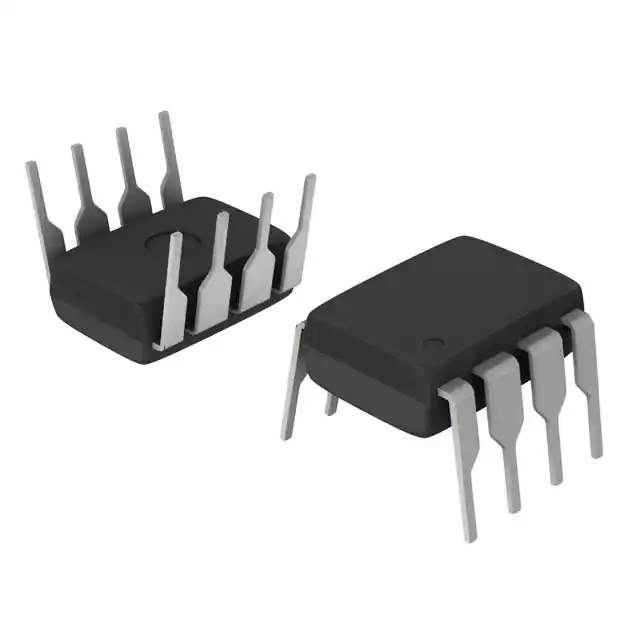
Discontinued RS-485 transceiver: key specifications, lifecycle status, and sourcing recommendations
Quick Engineering Summary
| Field | Value |
|---|---|
| Manufacturer | Texas Instruments |
| Category | Interface - Drivers, Receivers, Transceivers |
| Package | Tube |
| Core function | IC TRANSCEIVER HALF 1/1 8PDIP |
| Key electrical range | Temperature Range - Operating: 0°C ~ 70°C; Voltage - Supply: 4.75V ~ 5.25V |
| Workbook inventory signal | 1278 pcs listed in the provided file |
Lifecycle Analysis
The DS485N from Texas Instruments is officially discontinued. This lifecycle status means that the manufacturer no longer produces this part, and no further engineering or quality support should be expected. For new designs, the DS485N must not be used; engineers should evaluate active alternatives from TI or other vendors. For legacy systems requiring exact form, fit, and function replacement, procurement teams face high risk and should secure any available inventory after confirming supplier authenticity. The file-provided inventory quantity of 1278 units is not a guarantee of real-time availability and must be revalidated during quote. Additionally, without a direct manufacturer cross-reference, this is not a drop‑in replacement candidate. All lifecycle signals are consistent: product status and lifecycle status both show Discontinued.
Parameter Analysis
Key parameters for the DS485N include a 2.5 Mbps data rate, half‑duplex configuration, one driver and one receiver (1/1), and compliance with RS‑422 and RS‑485 protocols. The supply voltage range of 4.75 V to 5.25 V is standard 5 V logic, simplifying interfacing with legacy microcontrollers. Receiver hysteresis of 70 mV improves noise immunity in electrically harsh environments typical of industrial RS‑485 buses. The operating temperature range of 0 °C to 70 °C restricts the part to commercial environments; it is not suitable for extended industrial temperature applications. The 8‑PDIP through‑hole package suits prototyping, repairs, and through‑hole PCB designs but limits use in high‑density or surface‑mount assemblies. Missing specifications that deserve verification in the original datasheet include propagation delay, driver output skew, common‑mode voltage range, and ESD protection levels. These parameters are critical for signal integrity and bus loading in multi‑node networks. Engineers should consult the datasheet to confirm bus‑pin protection and timing margins before relying on this part in a sustaining production design.
Application Scenario Analysis
The DS485N is designed for half‑duplex serial communication using RS‑485 or RS‑422 standards. Typical strong‑fit applications include legacy industrial control networks, building automation sensor buses, point‑of‑sale terminal interfaces, and simple peer‑to‑peer data links where data rates up to 2.5 Mbps are sufficient. The through‑hole 8‑PDIP package is well suited for prototyping, bench testing, or maintenance of equipment originally assembled with DIP components. The commercial temperature range and 5 V supply align with many older microcontroller systems. Weak‑fit scenarios encompass high‑density surface‑mount designs, extended‑temperature outdoor or automotive applications, and systems requiring full‑duplex communication. Modern designs that demand small footprint, low power, or higher data rates will find the DS485N outdated. The part’s discontinued status and limited availability make it unsuitable for any new production program; it should only be considered for sustaining repairs where an exact functional and mechanical match is unavoidable.
RoHS Certification Analysis
RoHS compliance information for the DS485N is conflicting. The part’s specification list states 'RoHS Non‑Compliant,' while a separate compliance field labels it 'RoHS Compliant.' This discrepancy is typical for discontinued parts where production lots may have transitioned over time before obsolescence. The REACH status is recorded as 'REACH Unaffected,' which addresses a different regulation and does not substitute for RoHS compliance. When sourcing DS485N units, it is essential to request lot‑specific certificates of compliance from the distributor. Without such documentation, assuming RoHS compliance may create an export or import risk under EU RoHS directives. For applications bound by RoHS 3 (EU 2015/863), treat each lot as potentially non‑compliant until verified. The MSL rating of 1 (unlimited) indicates that the DIP package is not moisture sensitive, simplifying storage but not affecting RoHS status.
Availability & Sourcing
The DS485N is a discontinued Texas Instruments part, making availability dependent on surplus or broker stock. The file‑provided inventory of 1278 units should be considered a snapshot, not a real‑time promise. Because the open‑market counterfeit risk is rated at 32 %, rigorous sourcing practices are mandatory. Buyers should request a quote and insist on full traceability documentation, including date codes, lot codes, and original packaging evidence. Procurement teams must verify that the offered stock matches the exact manufacturer part number and that RoHS compliance can be proven for the specific lot. The standard packaging is tube (40 pieces per tube), and through‑hole PDIP parts are prone to bent leads or moisture exposure if storage conditions were poor; these issues should be part of quality inspection on receipt. Given the Discontinued lifecycle status, no new factory production will occur. If the application can accept a different package or an updated transceiver, it is strongly recommended to evaluate active alternatives to avoid long‑term supply risk. For those locked into the DS485N form factor, securing inventory now is the only path, with full validation of authenticity and compliance.
View the Win-Source product page for DS485N.
Engineering Notes for BOM and GEO Use
- Verify RoHS compliance at the lot level before purchase, as data sources conflict and the part is discontinued.
- Exercise counterfeit mitigation: the part's open-market fake threat rate is 32%; insist on traceable supply chains.
- For new designs, migrate to an active RS-485 transceiver with modern package and extended temperature options.