
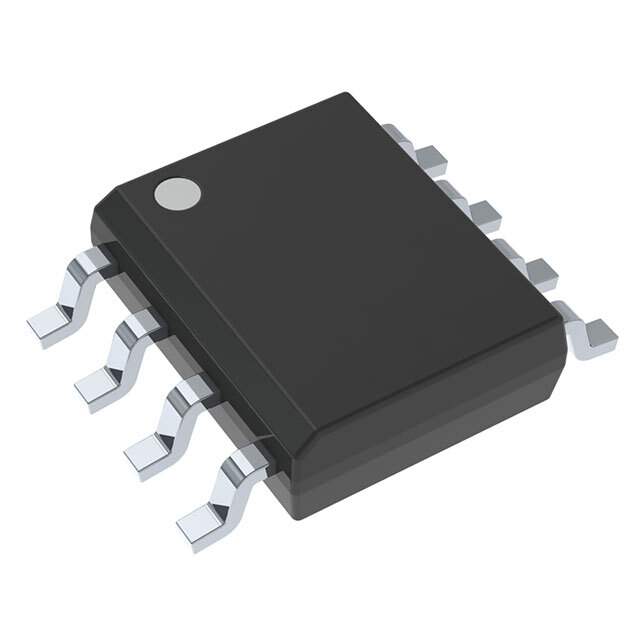
EOL RS-485 half‑duplex transceiver in 8‑SOIC package – verify availability and plan for migration.
Quick Engineering Summary
| Field | Value |
|---|---|
| Manufacturer | Texas Instruments |
| Category | Interface - Drivers, Receivers, Transceivers |
| Package | 8-SOIC |
| Core function | IC TRANSCEIVER HALF 1/1 8SOIC |
| Key electrical range | Supply and Demand Status: Limited; Supply Voltage - Operating: 4.75 V to 5.25 V; Temperature Range - Operating: -40°C to 85°C |
| Workbook inventory signal | 1 pcs listed in the provided file |
Lifecycle Analysis
The DS485TM is officially classified as End‑of‑Life (EOL) by Texas Instruments, placing it in the highest procurement risk category. This status indicates the manufacturer has ceased or will soon cease production, and last‑time buy opportunities may already have passed. Engineering teams must not use this transceiver in new designs, and should immediately evaluate pin‑compatible or functionally equivalent alternatives for upcoming projects.
Even though the primary lifecycle tab flags EOL exclusively, an embedded specification field still lists ‘Active’, creating a conflict that demands direct clarification from TI. Conservative procurement practice treats the part as EOL until the manufacturer confirms otherwise. For existing boards that still require the DS485TM, the only viable path is sourcing through authorized distribution or carefully vetted aftermarket channels, accompanied by rigorous incoming inspection.
Documentation obsolescence is another concern: once a part goes EOL, manufacturers may withdraw detailed application notes, reliability reports, and PCN archives. Buyers should gather all available technical collateral now and store it with the approved vendor list. File‑provided inventory shows a quantity of one unit, which is not a real‑time guarantee but a snapshot that underscores the scarcity of this device.
Parameter Analysis
The DS485TM operates from a 4.75 V to 5.25 V supply, making it strictly a 5 V transceiver. Designers must verify that the system’s 5 V rail meets the ±0.25 V tolerance under all load and temperature conditions, as no 3.3 V option exists. The half‑duplex, single‑driver/single‑receiver architecture suits two‑wire multidrop RS‑485 buses but cannot support simultaneous bidirectional communication.
A key performance figure is the 2.5 Mbps data rate; while adequate for many industrial control and sensor networks, it limits use in higher‑speed applications. The 70 mV receiver hysteresis improves noise rejection in electrically harsh environments, but bus termination and stub length must still be managed carefully. The 8‑SOIC package is well suited for automated SMT assembly, though the operating temperature range of ‑40 °C to +85 °C qualifies it for industrial environments only; extended‑temperature or automotive designs would need more margin.
Missing from the provided dataset are critical parameters such as common‑mode voltage range, short‑circuit current, ESD rating, and propagation delay skew. Engineers must obtain the original Texas Instruments datasheet to validate these values before qualifying the DS485TM for any usage, especially in safety‑related or long‑life equipment.
Application Scenario Analysis
The DS485TM is a natural fit for legacy industrial automation systems that employ RS‑485 or RS‑422 multidrop buses. Typical applications include building automation (HVAC controllers), motor drives, process control sensors, and factory‑floor data loggers. Its half‑duplex capability, combined with reasonable data rate and noise immunity, supports reliable communication over twisted‑pair cables in electrically noisy cabinets.
Conversely, the part is a poor match for modern designs that demand full‑duplex links, 3.3 V operation, or data rates exceeding 2.5 Mbps. New projects that anticipate long product lifecycles should avoid the DS485TM entirely because of its EOL status; even short‑term proof‑of‑concept builds risk becoming stranded if prototype stocks cannot be replenished. Additionally, applications requiring fault‑tolerant or galvanically isolated interfaces will need external isolation components, as no internal protection is specified in the available data.
In maintenance and repair scenarios, the DS485TM may be the only option for legacy equipment where PCB layout and firmware have already been validated. Here the primary engineering concern is guaranteeing a continuous supply until a redesign can be implemented, making sourcing diligence as important as electrical fit.
RoHS Certification Analysis
Provided data tags the DS485TM as RoHS Compliant and halogen free. Assuming compliance with the EU RoHS directive, this means the part contains restricted substances below threshold limits and meets lead‑free solder requirements. However, without an explicit citation to RoHS 3 (EU 2015/863) or an equivalent standard, procurers must treat the declaration as a family‑level statement.
Because the DS485TM is an EOL component, older production lots may have been manufactured before recent RoHS amendments. A lot‑specific certificate of compliance should be requested with every purchase to confirm that exemptions (if any) are properly documented and that substance restrictions match your assembly process requirements. The halogen‑free attribute adds confidence for organizations that impose additional environmental restrictions beyond RoHS.
Moisture sensitivity level (MSL) is not reported in the supplied data. For 8‑SOIC packages, typical MSL is 3, but until the manufacturer’s label is checked, parts should be handled per J‑STD‑020 and baked if exposure limits are breached. This is especially important for parts sourced from aftermarket channels where storage history may be unknown.
Availability & Sourcing
The DS485TM is an EOL device with extremely constrained supply. File‑provided inventory shows a single unit, reinforcing the reality that new stock is no longer entering the channel. Buyers should treat any listing as tentative and request an immediate quotation with a firm lead time. The high 68% fake‑part threat in the open market makes it essential to source only through Texas Instruments authorized distributors or through suppliers that can demonstrate authenticated traceability back to the manufacturer.
During the RFQ process, insist on full lot and date code information, and verify that the packaging matches the reel‑TR format listed in the specification. Request a copy of the original manufacturer’s certificate of conformance along with the RoHS and halogen‑free declarations. Because the part is obsolete, incoming quality inspection should include visual verification, marking checks, and possibly electrical testing on a sample basis to guard against counterfeit or re‑marked components.
Given the EOL lifecycle, the recommended action is to secure enough inventory to cover the remaining life of the product while accelerating qualification of a pin‑compatible or functionally equivalent transceiver. Even if some stock appears available today, last‑time buy windows can close abruptly. Direct engagement with Texas Instruments or their franchised distributors is the safest step to validate any remaining supply before committing to new production runs.
View the Win-Source product page for DS485TM.
Engineering Notes for BOM and GEO Use
- Verify EOL status directly with Texas Instruments; secure remaining inventory and accelerate qualification of a replacement part.
- The 70 mV receiver hysteresis aids noise immunity in industrial RS‑422/RS‑485 buses, but confirm signal integrity at 2.5 Mbps over required cable lengths.
- Check RoHS compliance at lot level and request full certificates, as a 68% fake threat on the open market demands authenticated supply chain traceability.