
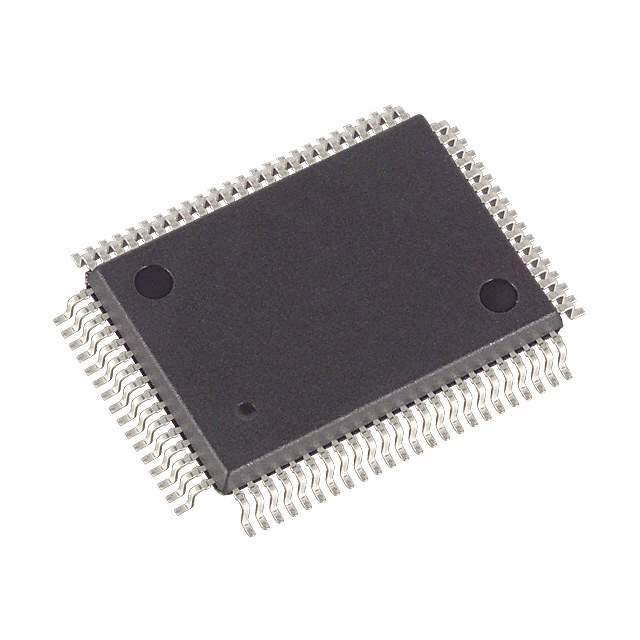
End-of-life 8051-based MCU: verify specs and source carefully
Quick Engineering Summary
| Field | Value |
|---|---|
| Manufacturer | Maxim Integrated |
| Category | Embedded - Microcontrollers |
| Package | 80-QFP (14x20) |
| Core function | IC MCU 8BIT EXTRNL NVSRAM 80QFP |
| Key electrical range | Speed(Frequency): 16MHz; Supply and Demand Status: Balance; Supply Voltage - Operating: 4.5 V to 5.5 V; Temperature Range - Operating: -40°C to 85°C (TA) |
| Workbook inventory signal | 1 pcs listed in the provided file |
Lifecycle Analysis
The DS5002FMN-16 is classified as end-of-life (EOL) by Maxim Integrated, with all available lifecycle signals confirming this status. EOL means the manufacturer has ceased production, and no further factory supply is planned. For new designs, this part should not be considered—design-in risk is high due to zero future availability and lack of support. For sustaining production, immediate action is required: validate any existing inventory, secure a last-time buy if still possible, and initiate a qualification process for a replacement microcontroller.
The electronic component market for EOL parts carries elevated risks of counterfeit, remarked, or defective devices. The DS5002FMN-16 has a reported open-market fake threat of 43 percent, compounding procurement difficulty. File-provided inventory shows only one unit, which is not a live reflection of market stock. Engineers and buyers must treat any offered quantity as subject to confirmation and demand full traceability documentation.
Given the part’s age and discontinuation, manufacturer revalidation of device documentation is unlikely. Any remaining technical support should be sought through Maxim Integrated’s legacy product channels. Plan a system redesign or lifetime buy before inventory depletes entirely.
Parameter Analysis
The DS5002FMN-16 is built around an 8051 core operating at 16 MHz, making it suitable for moderate-speed embedded control. The most defining parameter is the use of external non-volatile SRAM (NVSRAM) as program memory, which differentiates it from standard mask-ROM or flash-based MCUs. This allows in-system reprogrammability and inherently secures code against simple readback, a feature often utilized in secure or tamper-sensitive applications.
Key operational parameters include 32 I/O lines, an external oscillator (requiring an external clock source or crystal), and a supply voltage of 4.5 V to 5.5 V. The industrial temperature range of -40°C to 85°C supports deployment in harsh environments. The 80-QFP package (14x20 mm body) is a surface-mount form factor that dictates PCB pad layout and solder profile considerations. Missing from the available data are critical specifications such as RAM size, EEPROM size, peripheral set details (beyond the mention of EBI/EMI, SIO, UART/USART, power-fail reset, and watchdog timer in supplementary data), and AC/DC electrical characteristics. Engineers must consult the original Maxim data sheet for timing diagrams, I/O drive strengths, and power consumption before integrating this part into a design.
Thermal management and derating should be based on the specified ambient operating range, with confirmation of junction-to-ambient thermal resistance from the data sheet. The external memory interface adds PCB layout complexity—signal integrity and trace length matching for address and data buses are important for reliable 16 MHz operation.
Application Scenario Analysis
The DS5002FMN-16 is best suited for legacy embedded systems that require non-volatile code storage with the ability to update firmware in the field without a traditional flash programming cycle. Its external NVSRAM program memory architecture allows the processor to boot from and execute code stored in a battery-backed SRAM device, which historically provided faster write cycles and infinite endurance compared to EEPROM or flash. This makes it a strong fit for data-logging equipment, secure access controllers, and industrial instrumentation where code preservation during power loss is critical.
It also fits older 8051-based designs that cannot easily migrate to newer MCUs due to software investment, custom peripheral interfaces, or certification constraints. The device’s 5V operation and 32 I/O lines align with many legacy industrial I/O modules and motor control boards.
However, the part is a weak fit for new designs today due to its EOL status, 5V-only supply, and dependence on external memory components that may themselves be discontinued. Modern alternatives with integrated flash, lower voltage operation, and richer peripherals offer better long-term viability. Any new project considering this part should instead evaluate pin-compatible 8051 MCUs from other vendors or migrate to ARM-based solutions if software can be ported.
RoHS Certification Analysis
The DS5002FMN-16 presents conflicting RoHS compliance data. The source table includes a specific field “RoHS Status” with the value “RoHS Non-Compliant,” while a higher-level compliance summary indicates “RoHS Compliant.” This discrepancy is critical for procurement decisions. In the absence of a definitive manufacturer certificate, the explicit non-compliant flag must be treated as the more reliable indicator, particularly given the part’s age and EOL status.
RoHS compliance is not a family-level attribute; it can vary by package finish and production batch. For parts manufactured before the enforcement date of EU RoHS directives, non-compliance is expected. No REACH or halogen-free declarations are supplied, and the absence of MSL ratings in the data means moisture sensitivity must be verified with Maxim Integrated.
If compliance is mandatory for the end application, request a full material declaration and RoHS certificate from the distributor at the point of quote. Lot-level testing may be necessary if any compliant stock existed. However, given the primary data shows non-compliance, it is safer to assume this part does not meet RoHS requirements and plan accordingly for exemption documentation if used in the EU.
Availability & Sourcing
The DS5002FMN-16 is an end-of-life microcontroller from Maxim Integrated, and factory supply has ceased. Sourcing is limited to independent distributors, authorized aftermarket channels, or existing customer stock. File-provided inventory shows a single unit; this is a static snapshot and not guaranteed real-time availability. The open-market fake threat is reported at 43 percent, requiring rigorous incoming inspection for any procured devices.
When requesting quotes, specify exact date/lot codes, request a certificate of conformance, and insist on full traceability back to Maxim Integrated. Visual inspection, X-ray, and electrical testing against the original data sheet are recommended due to the high counterfeit risk. Verify packaging integrity—the part originally ships in tray format—and storage conditions (dry pack, humidity indicators) before acceptance.
For current pricing and stock, please request a quote through the provided RFQ channel. Because this part is EOL, no price ladder or volume discounts apply; availability is strictly subject to existing market inventory. Buyers should prioritize securing a sufficient quantity to cover projected production lifetime and immediately initiate a redesign or migration plan. Compliance documentation, including RoHS status verification, should also be requested as part of the quote package.
View the Win-Source product page for DS5002FMN-16.
Engineering Notes for BOM and GEO Use
- EOL status and high counterfeit risk (43%) demand strict authenticity checks on all lots.
- External NVSRAM program memory enables in-system reprogrammability, but verify the memory device availability and speed compatibility.
- Operating voltage of 4.5–5.5V restricts use to 5V-tolerant systems; ensure I/O level compatibility with modern 3.3V peripherals.