
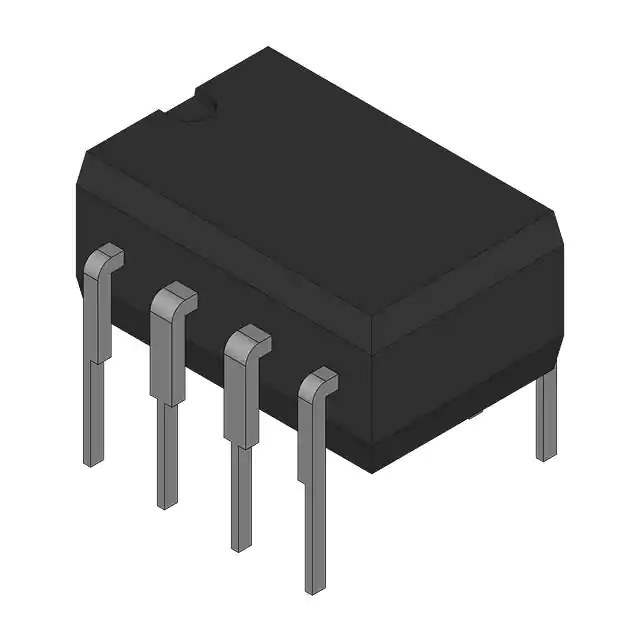
A practical procurement and engineering analysis for the DS75150N dual RS-232 driver from National Semiconductor (TI).
Quick Engineering Summary
| Field | Value |
|---|---|
| Manufacturer | National Semiconductor (TI) |
| Category | Interface - Drivers, Receivers, Transceivers |
| Package | Tube |
| Core function | IC TRANSCEIVER 2/0 8DIP |
| Key electrical range | Voltage - Supply: 10.8V ~ 13.2V |
| Workbook inventory signal | 1 pcs listed in the provided file |
Lifecycle Analysis
The DS75150N from National Semiconductor (TI) is in the Discontinued lifecycle stage. Multiple signals confirm this: Excel lifecycle parameter lists EOL, while both the official Lifecycle Status and Product Status are marked Discontinued. This consensus indicates manufacturing has ceased, and no new authorized supply is available. For engineering teams, this part should not be designed into new products. For sustaining existing systems, only carefully vetted old stock or surplus can be considered, but with high risk.
The risk level is high due to obsolescence and a 60% counterfeit threat rate in the open market. Any procurement must include stringent verification of date codes, lot codes, and compliance certificates. Manufacturer support documents are no longer updated, so reverification against original datasheets is essential. Without active production, long‑term maintenance plans should include migration to an alternative component if possible.
Conservative sourcing language is warranted: even if small quantities appear in inventory files, they are not real‑time guarantees. Assume all DS75150N stock is residual and may be exhausted without notice. Prioritize obtaining manufacturer’s official discontinuation notice and evaluate the impact on your bill of materials before committing to last‑time buys.
Parameter Analysis
Key parameters that directly affect design reuse and procurement decisions include the device type, supply voltage, and package. The DS75150N is configured as 2 drivers / 0 receivers, operating from a 10.8V to 13.2V supply, which aligns with typical RS‑232 voltage levels. This narrow supply range means the part requires a regulated ±12V rail or similar, leaving little margin for poorly regulated systems. Designers should check power‑supply tolerances in legacy boards to avoid undervoltage saturation.
The 8‑DIP through‑hole package (0.300" body) is a decisive factor. It suits hand‑soldered repairs and low‑volume through‑hole PCB assembly but is incompatible with modern surface‑mount reflow processes. If planning a bridge redesign, the footprint will not transition easily to smaller packages. The tube packaging further signals low‑volume, manual handling.
Missing from the provided data are critical dynamic specifications: data rate, propagation delay, rise/fall time, and ESD protection levels. These are essential for verifying signal integrity in high‑speed or noisy environments. Additionally, operating temperature range is unspecified, which could limit use in industrial or outdoor equipment. Obtain the original National Semiconductor (TI) datasheet to confirm these values before finalizing a legacy repair bill of materials.
Application Scenario Analysis
The DS75150N fits best in legacy RS‑232 serial communication links where only driver (transmit) functionality is needed and the board was laid out for an 8‑pin DIP. Typical applications include older industrial controllers, point‑of‑sale terminals, test instrumentation, or medical devices designed before 2000. In these systems, the dual driver can replace an existing DS75150N that has failed, without any PCB modification.
Through‑hole mounting is well‑suited to field‑service technicians who can swap the part using simple soldering tools. However, for new equipment requiring high‑density or automated assembly, this package is obsolete. Similarly, modern RS‑232 interfaces often integrate charge pumps and ESD protection that the DS75150N lacks, so it is a poor fit for new designs that need integrated solutions.
Weak‑fit scenarios include systems that require receivers, half‑duplex operation, or low‑voltage (3.3V/5V) logic supply. The DS75150N is a dedicated driver without receiver capability, and its supply demands a higher voltage rail. If the equipment has been updated to a single‑chip RS‑232 transceiver with a built‑in power supply, the DS75150N cannot serve as a pin‑equivalent replacement. Always verify the communication protocol and driver/receiver count before ordering.
RoHS Certification Analysis
RoHS compliance for the DS75150N is ambiguous in the source data. One field lists RoHS Compliant, while the component‑level specification states RoHS Non‑Compliant. This conflict likely arises from inconsistent data in the supply chain, possibly reflecting different manufacturing lots or a change in the part’s compliance status over time. The part number itself may have been produced both before and after EU RoHS directives took effect, meaning compliance can vary by date code.
For procurement in regulated regions, assume non‑compliance unless proven otherwise. Request the supplier’s RoHS certificate of compliance (CoC) specific to the lot being purchased. Do not rely on a generic family‑level declaration. If the part is non‑compliant, it may not be legally sold in the EU unless covered by an exemption or used only for repair of equipment placed on the market before the directive. Even then, assess your own product’s compliance obligations.
No REACH, halogen‑free, or MSL data are provided, so suppliers should also confirm those if needed. In the absence of a clear compliance statement, the safe path is to treat the DS75150N as non‑RoHS and plan accordingly for waste handling and reporting.
Availability & Sourcing
The DS75150N is discontinued and carries high sourcing risk. File‑based inventory shows a workbook quantity of only 1 piece, though a separate row in the source indicates 1715 units. None of these figures are real‑time or guaranteed; they represent point‑in‑time data. The open‑market counterfeit threat is rated at 60%, meaning buyers must treat every inbound lot with suspicion.
When procuring the DS75150N, always request a formal RFQ for current availability and lead the inquiry with a requirement for date / lot codes and a full RoHS compliance certificate. Prefer suppliers that offer component authenticity testing (e.g., x‑ray, decapsulation) and have a traceable chain of custody. For discontinued parts, one‑time stock notifications or excess inventory from authorized distributors are the most reliable sources.
Given the high risk, secure inventory only after verifying these details and buy only what is needed for immediate repair. Do not build safety stock for future production. For any new design effort, consider migrating to an active, low‑voltage RS‑232 driver from the manufacturer’s current portfolio. Use the quote request process to verify lifecycle status and compliance before ordering.
View the Win-Source product page for DS75150N.
Engineering Notes for BOM and GEO Use
- Discontinued; do not use in new designs. For legacy maintenance only.
- High counterfeit threat (60% in open market). Always verify authenticity and RoHS compliance with lot-specific certificates.
- Through-hole 8-DIP package simplifies manual repair but is unsuitable for modern automated assembly.