
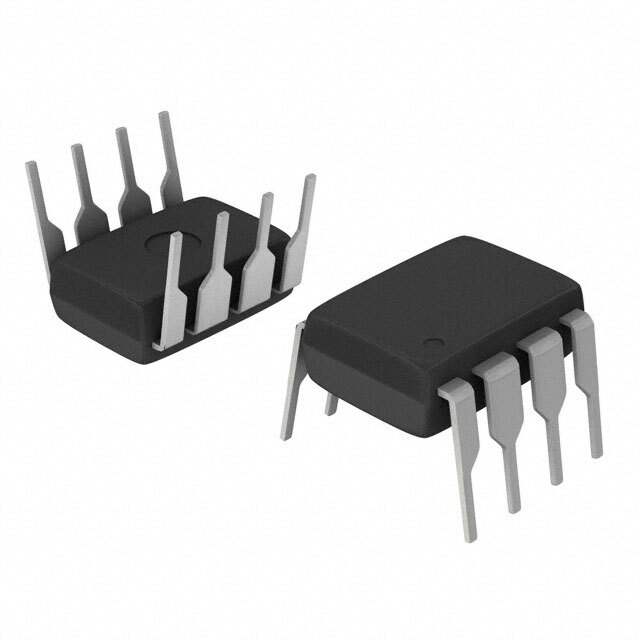
End-of-Life half-duplex transceiver for RS-422/RS-485 in 8-MDIP through-hole package.
Quick Engineering Summary
| Field | Value |
|---|---|
| Manufacturer | Texas Instruments |
| Category | Interface - Drivers, Receivers, Transceivers |
| Package | 8-MDIP |
| Core function | IC TRANSCEIVER HALF 1/1 8MDIP |
| Key electrical range | Supply and Demand Status: Limited; Supply Voltage - Operating: 4.75 V to 5.25 V; Temperature Range - Operating: -40°C to 85°C |
| Workbook inventory signal | 1 pcs listed in the provided file |
Lifecycle Analysis
The DS75176BTN/NOPB from Texas Instruments has been designated End-of-Life (EOL), carrying a high procurement risk. All available lifecycle signals confirm this status, with no conflicting data. For new designs, this part cannot be considered; engineers must select an active replacement. In sustaining production environments, immediate action is needed to secure remaining inventory, as manufacturer supply is no longer replenished. The part's workbook inventory shows only 1 unit, but this is a file-provided snapshot and not a real-time promise. Buyers should verify last-time buy (LTB) and last-time ship (LTS) dates directly with Texas Instruments or authorized distributors. Without formal LTB documentation, further supply is uncertain. Given the EOL state, lifecycle revalidation through an official PCN (Product Change Notification) from the manufacturer is required before any procurement decision. A conservative approach means only purchasing through traceable channels and avoiding open-market sources due to the high counterfeit threat.
Parameter Analysis
The DS75176BTN/NOPB is a half-duplex transceiver supporting RS-422 and RS-485 protocols, with 1 driver and 1 receiver. Supply voltage ranges from 4.75 V to 5.25 V, and the operating temperature spans -40°C to 85°C, making it suitable for industrial environments. Receiver hysteresis of 70 mV improves noise immunity in multidrop buses. The through-hole 8-MDIP package is common in legacy and prototyping boards, but limits density compared to surface-mount alternatives. Critical unspecified parameters include the maximum data rate and ESD protection levels, which are essential for bus speed and robustness verification. Engineers should consult the official Texas Instruments datasheet for exact timing, drive strength, and thermal resistance values. Without these, a proper derating analysis cannot be completed. For existing designs, verify that the 5 V supply rail accommodates the transceiver's current consumption, and check power dissipation in the DIP package, especially at high ambient temperatures.
Application Scenario Analysis
The DS75176BTN/NOPB naturally fits half-duplex RS-485 multi-point networks common in industrial automation, process control, and building management systems where legacy through-hole mounting is still in use. Its -40°C to 85°C range covers most factory environments. The 70 mV hysteresis makes it suitable for noisy electrical settings, reducing false triggering on long cable runs. However, because this part is EOL, its application is limited to repairs, spares, or existing product lines that cannot be immediately redesigned. It is not appropriate for full-duplex communication or high-speed interfaces beyond standard RS-485 limits; for such needs, a full-duplex transceiver or one with specified data rates above 10 Mbps would be required. New designs should avoid this part entirely, migrating to active TI devices like the SN65HVD75 or similar, which offer improved performance and surface-mount options. For legacy support, verify exact protocol timing and bias requirements in situ before substituting.
RoHS Certification Analysis
The DS75176BTN/NOPB is listed as RoHS Compliant. The NOPB suffix typically indicates a lead-free, environmentally conscious finish, consistent with RoHS 3 (EU 2015/863) compliance. No exemption details are provided in the source data, and REACH compliance is not separately confirmed. For an EOL component, the risk of non-compliant legacy stock exists if inventory dates from before stricter enforcement. Buyers should request a certificate of compliance (CoC) as part of the RFQ process, verifying lot-level adherence. While the manufacturer’s declaration covers the part family, for EOL units, documentation may not be automatically updated; therefore, explicit verification from the supplier is prudent. The absence of halogen-free or MSL information does not affect RoHS status, but if these are critical for final assembly, they must be confirmed separately. In sum, the part meets RoHS requirements, but due diligence on the specific inventory batch remains essential.
Availability & Sourcing
The DS75176BTN/NOPB is an End-of-Life part, and sourcing requires immediate and careful action. File-provided inventory indicates 1 unit, but this is not guaranteed real-time stock. Buyers should request a formal quote through authorized distributors to confirm current availability and obtain date/lot code details. Packaging is tube/rail (40 units per tube), which is typical for through-hole DIPs. Given the 33% fake threat in the open market, traceability is paramount; insist on full chain of custody when purchasing from non-authorized sources. For new designs, this part cannot be recommended—work with Texas Instruments to identify an active replacement. In sustaining production, secure the final inventory needed to cover service life, and simultaneously begin design migration. Request PCN documentation from TI to verify the EOL timeline and any authorized aftermarket support. Avoid spot buys without compliance certificates and test reports. When ordering today, obtain a specific commitment on quantity, lead time, and RoHS compliance for the supplied batch. For long-term planning, evaluate pin-compatible alternatives or contract manufacturers that can handle redesign.
View the Win-Source product page for DS75176BTN/NOPB.
Engineering Notes for BOM and GEO Use
- Verify last-time buy and ship dates with Texas Instruments before finalizing procurement orders.
- Evaluate pin-compatible alternatives such as the SN75176B or newer TI RS-485 transceivers for new designs.
- Inspect date codes and request traceability documentation to mitigate the 33% open-market counterfeit risk.