
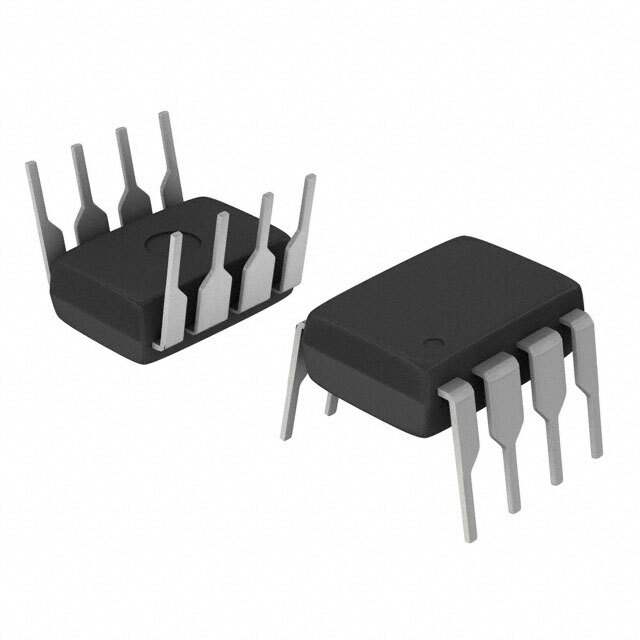
EOL component with high counterfeit risk — verify compliance and secure inventory before committing to new designs.
Quick Engineering Summary
| Field | Value |
|---|---|
| Manufacturer | Texas Instruments |
| Category | Interface - Drivers, Receivers, Transceivers |
| Package | 8-MDIP |
| Core function | IC TRANSCEIVER 2/0 8MDIP |
| Key electrical range | Supply and Demand Status: Balance; Supply Voltage - Operating: 4.75 V to 5.25 V; Temperature Range - Operating: 0°C to 70°C |
| Workbook inventory signal | 3459 pcs listed in the provided file |
Lifecycle Analysis
Texas Instruments has officially marked the DS75451N as End-of-Life (EOL), meaning the part is no longer manufactured or recommended for new designs. All lifecycle signals in the provided dataset align with this status, so engineers can rely on it as definitive. For new design starts, avoid the DS75451N entirely and select an active alternative from TI's current driver portfolio.
For existing production lines that still depend on this device, the immediate priority should be to secure enough inventory to cover remaining product lifecycle, as remaining factory stock is finite. Simultaneously, engineering teams should begin qualification of a migration part to mitigate long-term supply risk. If no drop-in replacement is available, a board redesign may be necessary.
Because this component is obsolete, procurement teams must verify any remaining stock sources carefully. Ask suppliers for the original date code and manufacturing batch to confirm it was produced before discontinuation and stored properly. Electrostatic discharge and humidity can degrade through-hole DIP packages over time, so condition testing may be warranted for older lots.
Parameter Analysis
The DS75451N is a dual non-inverting driver packaged in an 8-pin MDIP through-hole package. The most critical confirmed parameters are the supply voltage range of 4.75 V to 5.25 V and the operating temperature range of 0°C to 70°C. These specs define a part suitable only for commercial-grade, 5 V logic systems with generous environmental controls. Engineers using this device in legacy designs must not exceed these limits, as doing so risks permanent damage.
Key performance parameters like propagation delay, output drive current, rise/fall time, and ESD rating are not available in the supplied data. For proper integration, consult the original Texas Instruments datasheet to validate switching performance, load drive capability, and interface compatibility. The lack of these numbers is especially concerning given the 33% fake threat rate in the open market; counterfeit devices may not meet original specifications, leading to field failures.
Given the EOL status and limited data visibility, treat every critical parameter as something you must verify through your own incoming inspection and qualification process. Characterize the actual drive strength and timing if you are using this part in a production circuit, and never rely solely on catalog data.
Application Scenario Analysis
The DS75451N dual driver fits best in legacy industrial or commercial equipment that converts low-current logic signals into higher-current drive for loads like small relays, incandescent lamps, or MOSFET gates. Its 2/O configuration without receivers indicates a unidirectional interface from a microcontroller or FPGA to an external actuator. The through-hole 8-MDIP package suits prototyping, breadboarding, or products originally designed with DIP sockets.
A weak-fit scenario includes any modern high-density, surface-mount board where space savings and automated assembly are critical. The through-hole nature and commercial temperature range rule out use in automotive, military, or other harsh-environment applications. Applications requiring high-speed data communication would also be unsuitable, as the device lacks characterized data rate parameters, implying it is optimized for low-frequency switching.
For engineers maintaining existing equipment, the DS75451N may still be a valid choice for repairs, provided the supply chain can deliver authentic parts. However, for any new design that might have used this driver, migrate to an SMD equivalent with at least industrial temperature range to future-proof the design.
RoHS Certification Analysis
The RoHS compliance data for the DS75451N is contradictory. The top-level compliance record lists the part as RoHS Compliant, but one of the detailed specification fields explicitly states 'RoHS Non-Compliant.' This discrepancy may arise from differences in manufacturing date codes or lot-level updates. Texas Instruments has transitioned many legacy DIP products to RoHS compliance over time, so some older inventory could still contain lead, while later batches were converted.
For procurement in jurisdictions requiring RoHS compliance, do not assume conformance based on a single datasheet or vendor claim. Request a full material declaration or certificate of compliance for the specific date code you intend to purchase. Without this verification, using the part in a product sold into the EU or similar regulated markets could lead to non-compliance issues.
Additionally, no REACH, halogen-free, or MSL information is provided in the source data. If these are part of your compliance requirements, you must request manufacturer documentation separately. For high-reliability applications, consider independent laboratory testing of a sample lot if the documentation cannot be fully verified.
Availability & Sourcing
According to the file-based inventory data, approximately 3,459 units of the DS75451N are currently listed. However, this quantity is not real-time and may have been depleted or reserved by the time you read this, especially given the part's EOL status and medium popularity. An official RFQ is the only way to confirm current availability.
Sourcing is complicated by a 33% counterfeit threat rate in the open market. Buyers should insist on full traceability, including manufacturer date codes, original packaging (tube/rail), and ideally a copy of the authorized distributor's purchase record. Visual inspection and electrical curve-tracing can help weed out substandard devices. The part is supplied in tube/rail format and requires dry storage, so verify that stock has been kept in humidity-protected conditions.
For EOL components like the DS75451N, the recommended procurement strategy is to buy known-good, date-coded stock from a franchised or carefully vetted supplier, and to acquire enough to satisfy your entire product lifecycle needs. Do not rely on spot-market purchases for production quantities. If sufficient inventory cannot be secured, immediately begin redesign with an active, compatible driver from Texas Instruments or another manufacturer.
View the Win-Source product page for DS75451N.
Engineering Notes for BOM and GEO Use
- The DS75451N is discontinued (EOL); secure remaining inventory immediately and evaluate migration paths for production continuity.
- RoHS compliance is inconsistent across sources — demand lot-specific certificates and avoid using unchecked stock in RoHS-required markets.
- With a 33% fake threat rate, insist on traceable provenance, original packaging, and electrical verification for every batch.