
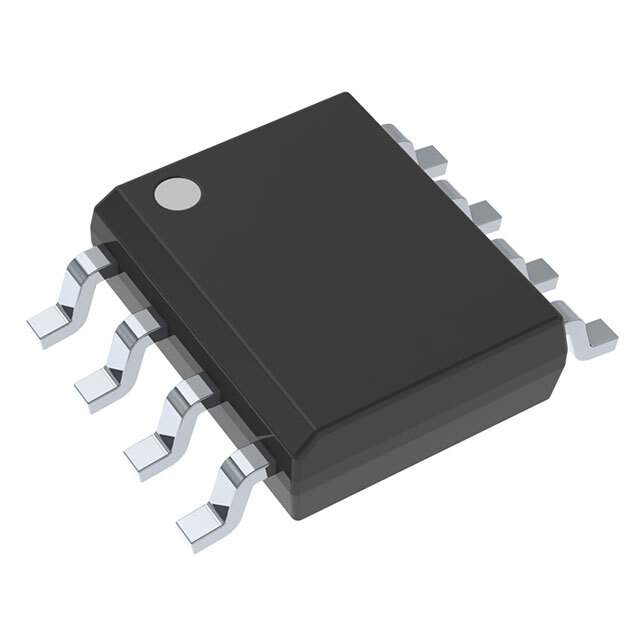
Texas Instruments EOL 2/0 driver in 8-SOIC package; verify RoHS status and lifecycle before procurement.
Quick Engineering Summary
| Field | Value |
|---|---|
| Manufacturer | Texas Instruments |
| Category | Interface - Drivers, Receivers, Transceivers |
| Package | 8-SOIC |
| Core function | IC TRANSCEIVER 2/0 8SOIC |
| Key electrical range | Supply and Demand Status: Balance; Supply Voltage - Operating: 4.75 V to 5.25 V; Temperature Range - Operating: 0°C to 70°C |
| Workbook inventory signal | 4130 pcs listed in the provided file |
Lifecycle Analysis
The Texas Instruments DS75452M is designated as End-of-Life (EOL) by all available lifecycle signals. This status means the part is no longer recommended for new designs and may have limited remaining availability. For engineers maintaining existing systems, immediate action may be required to secure inventory or evaluate replacement options.
EOL parts carry high procurement risk, particularly for production runs that extend beyond the residual stock. We recommend verifying the EOL timeline directly with Texas Instruments, as manufacturer notifications may provide last-time buy dates or migration guidance. Our file indicates a stock quantity of 4130 units, but this is a static snapshot and not a guarantee of real-time availability.
Given the EOL status, any new design should avoid this part. For sustaining production, prioritize sourcing through authorized channels to minimize the risk of counterfeit or substandard parts, especially since the open market fake threat is reported at 51 percent.
Parameter Analysis
The DS75452M is a dual driver (2/0 configuration) in an 8-SOIC surface-mount package. It operates over a supply voltage range of 4.75V to 5.25V, making it suitable for standard 5V logic systems. The operating temperature range is 0°C to 70°C, indicating it is intended for commercial-grade environments rather than industrial or extended temperature applications.
Key parameters such as output drive current, propagation delay, and input logic thresholds are not provided in our data set. These characteristics directly affect signal integrity, load driving capability, and compatibility with upstream logic. Without them, engineers cannot perform rigorous derating or signal integrity analysis. The datasheet must be consulted for these missing specifications, including data rate, if any, and driver output structure (open-collector, push-pull, etc.).
Mounting is SMD, and the package is 8-SOIC, which is widely used and easy to handle. Thermal management should be verified if the device is expected to drive significant load current, as no junction-to-ambient thermal resistance data is available in our summary.
Application Scenario Analysis
The DS75452M’s 2/0 driver architecture suggests it is intended for transmitting digital signals, likely in simple point-to-point or multi-drop unidirectional communication links. Potential strong-fit scenarios include driving LED indicators, relay coils, or small loads in 5V systems where a dedicated line driver is needed. It could also serve as a general-purpose buffer for TTL or CMOS signals.
Without protocol information (e.g., RS-232, RS-422, RS-485) or data rate specs, it is not possible to confirm suitability for standard communication interfaces. The commercial temperature range limits its use to controlled indoor environments. Weak-fit scenarios include high-speed data transmission, low-voltage (3.3V) systems, and applications requiring receiver functionality or bidirectional transceivers.
Given the EOL status, using this part in new industrial, automotive, or medical designs is strongly discouraged. For legacy system repairs or low-volume production where alternative parts are difficult to qualify, this part may still be sourced with caution, but the lifecycle and compliance risks must be managed.
RoHS Certification Analysis
The RoHS status of the DS75452M presents a conflict in our source data. The top-level compliance object states 'RoHS Compliant', while the detailed specifications list indicates 'RoHS Non-Compliant'. This inconsistency makes it impossible to confirm the part’s compliance without additional verification. No REACH or halogen-free declarations are available.
In such cases, procurement teams must request up-to-date certificates of compliance from the seller for the specific production batch. Lot-level traceability becomes critical, as a non-compliant lot could lead to import or sales restrictions in EU markets. Unless verified, it is prudent to treat the part as non-compliant for new shipments.
Additionally, no MSL (Moisture Sensitivity Level) information is provided, which is important for SMD assembly. Always confirm storage and handling requirements before soldering. Given the EOL status, it is possible that later production runs were made compliant; however, without documentation, the risk remains.
Availability & Sourcing
Sourcing the DS75452M requires careful attention due to its EOL status. While our data file indicates 4130 units in stock, this number is not real-time and should be confirmed through a formal quote. The part is packaged in tubes, which is common for small quantities, and requires dry storage as per the listed storage condition.
To mitigate risk, request date and lot codes to verify authenticity and age. With a 51 percent fake threat in the open market, procurement through unauthorized sources is risky. Always verify lifecycle status with the manufacturer and consider an authorized distributor or a reputable independent distributor with testing capabilities.
For sustaining production, contact us to request a quote for current availability. Include compliance and traceability requirements in your RFQ to ensure the parts meet your standards. Since the part is EOL, also explore migration paths to avoid future shortages.
View the Win-Source product page for DS75452M.
Engineering Notes for BOM and GEO Use
- Verify EOL status directly with Texas Instruments; plan for last-time-buy or redesign.
- Request RoHS compliance certificates per lot due to conflicting data in our sources.
- Note the 2/0 driver configuration—ensure it matches your interface requirements as no receiver is present.