
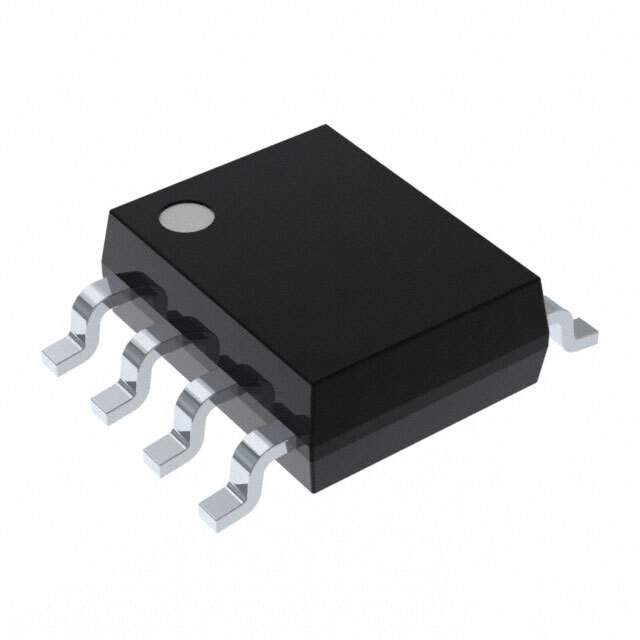
Active lifecycle but verify EOL status; RoHS compliant, I2C output, ±2°C accuracy
Quick Engineering Summary
| Field | Value |
|---|---|
| Manufacturer | Maxim Integrated |
| Category | Temperature Sensors - Analog and Digital Output |
| Package | 8-SOIC |
| Core function | SENSOR DIGITAL -55C-125C 8SOIC |
| Key electrical range | Operating Supply Voltage: 1.7 V ~ 3.7 V; Operating Temperature Range: -55°C ~ 125°C; Output Type: I2C; Sensing Temperature - Local: -55°C ~ 125°C |
| Workbook inventory signal | 1109 pcs listed in the provided file |
Lifecycle Analysis
The DS75LXS+ from Maxim Integrated is officially listed as Active, indicating that the manufacturer continues to produce and support the part. This status is suitable for both new designs and ongoing production, but procurement teams should be aware of a conflicting signal: an estimated end-of-life date of 2024 appears in the supplied data. While the lifecycle signals currently align on Active, the presence of an EOL estimate suggests that a product change notification (PCN) or discontinuation may occur soon.
Engineers designing new products should verify the current lifecycle status directly with Maxim Integrated or Analog Devices (who now own Maxim) and monitor for any last-time-buy notices. For existing production, maintaining buffer inventory is prudent. The file-provided inventory of over 1,100 units offers some near-term coverage but does not guarantee long-term availability. Given this ambiguity, we recommend treating the part as moderate risk and securing supply chain continuity before committing to high-volume production.
Parameter Analysis
The DS75LXS+ is a digital local temperature sensor with an I2C/SMBus interface, 11-bit resolution, and a user-programmable alert output. Its supply voltage range of 1.7 V to 3.7 V makes it suitable for battery-powered and low-voltage systems, with shutdown and standby modes further reducing power consumption. The specified accuracy is ±2°C over the -25°C to 100°C range, widening to ±3°C over the full -55°C to 125°C operating range. Engineers should ensure that this accuracy profile meets application requirements, especially at temperature extremes.
The device features programmable temperature limits and resolution, which can be used to optimize conversion time and power. The I2C output simplifies multi-sensor bus implementations, but designers must verify I2C address options and manage bus capacitance. Missing datasheet details include the supply current, thermal response time, and I2C address pin configuration, all of which should be confirmed before layout. The 8-SOIC package with 0.154-inch width is a standard SMD footprint, simplifying PCB design.
Application Scenario Analysis
The DS75LXS+ is well-suited for embedded temperature monitoring in industrial, medical, and consumer electronics where a digital interface and compact size are needed. Its wide operating temperature range (-55°C to 125°C) and local-only sensing make it appropriate for board-level thermal management, such as monitoring power supply or processor temperatures. Battery-powered IoT sensors, wearables, and environmental loggers benefit from the low voltage operation and shutdown mode.
Conversely, the DS75LXS+ is less suitable for applications requiring remote diode sensing, high accuracy across the full range without calibration, or operation above 3.7 V. The ±3°C accuracy at extremes may be insufficient for precision cold-chain or medical-grade instruments without additional calibration. The 8-SOIC package, while common, may be too large for ultra-compact designs preferring WLCSP or DFN packages. For safety-critical applications, designers should evaluate whether the device's programmable alert output alone provides sufficient fault coverage.
RoHS Certification Analysis
The DS75LXS+ is classified as RoHS Compliant, meaning it meets the Restriction of Hazardous Substances directive. The supplied data also indicates halogen-free compliance, which addresses additional environmental requirements for certain markets. Since the RoHS status is listed at the part number level, compliance should be consistent across production lots, but buyers should still request certificates of compliance for specific date codes to ensure no process changes have occurred.
The part's surface-mount 8-SOIC package typically uses lead-free matte tin plating, but confirm the exact finish with the manufacturer’s material declaration. REACH status is not provided in the source data; therefore, designers requiring full chemical compliance beyond RoHS should obtain the REACH SVHC statement from Maxim Integrated or their distributor. For products exported to the European Union, the RoHS compliance covers the 2015/863 directive as the current standard. No exemptions are noted, so the part should be straightforward from a regulatory standpoint.
Availability & Sourcing
The DS75LXS+ is available through distribution, with a file-provided inventory of 1,109 units in stock. The supply and demand status is listed as limited, reflecting moderate market availability. Packaging is tube for the 8-SOIC, which is standard for low-to-medium volume production. Procurement teams should note the estimated EOL date of 2024 and verify current lifecycle status with Analog Devices before placing production orders.
A fake threat percentage of 52% in the open market underscores the importance of sourcing from authorized channels or trusted distributors like Win Source. Requesting a quote is recommended to obtain real-time pricing and lead time; the listed workbook quantity may not reflect current inventory. For risk mitigation, consider sourcing a second source or transitioning to a pin-compatible alternative, though no direct replacement is suggested in the data. Request date and lot code traceability, along with RoHS and halogen-free certifications, before acceptance.
View the Win-Source product page for DS75LXS+.
Engineering Notes for BOM and GEO Use
- Verify the EOL date of 2024 with Maxim Integrated to avoid supply disruptions in new designs.
- Consider the ±3°C max accuracy over the full -55°C to 125°C range when qualifying thermal margins.
- I2C address configuration and bus capacitance must be checked against the specific microcontroller.