
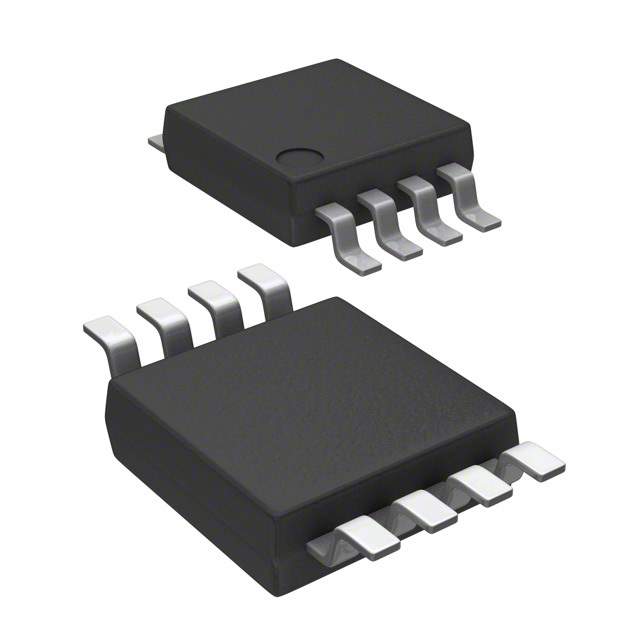
Maxim Integrated DS75LXU+ Digital Temperature Sensor – Active, I2C, 11-bit Resolution, RoHS Compliant
Quick Engineering Summary
| Field | Value |
|---|---|
| Manufacturer | Maxim Integrated |
| Category | Temperature Sensors - Analog and Digital Output |
| Package | 8-uMAX |
| Core function | SENSOR DIGITAL -55C-125C 8UMAX |
| Key electrical range | Operating Supply Voltage: 1.7 V ~ 3.7 V; Operating Temperature Range: -55°C ~ 125°C; Output Type: I2C; Sensing Temperature - Local: -55°C ~ 125°C |
| Workbook inventory signal | 9000 pcs listed in the provided file |
Lifecycle Analysis
The DS75LXU+ temperature sensor from Maxim Integrated carries an Active lifecycle status, indicating full manufacturer support for both new designs and ongoing production. All available signals—including the Excel lifecycle parameter and the Lifecycle Status field—are aligned, with no conflicting data. An Estimated EOL Date of 2023 appears in the record, but this may be a placeholder or outdated entry; Maxim Integrated, now part of Analog Devices, publishes formal product discontinuance notices when status changes.
For new designs, the Active status suggests minimal risk of obsolescence in the near term. However, engineers should periodically revalidate lifecycle status via the manufacturer’s website or direct inquiry, especially if the project has a long design-in phase. The risk level is low based on current signals.
Procurement should note that file-provided inventory data shows 9000 units, but this is not a real-time guarantee. For volume production, confirm current wafer and package availability with authorized distributors. No NRND or EOL warnings are present, making the DS75LXU+ a safe choice for temperature sensing in both industrial and commercial applications.
Parameter Analysis
Key performance parameters for the DS75LXU+ center on its digital output and wide operating range. The sensor communicates via I²C, simplifying multi-device bus integration and reducing pin count compared to analog solutions. Accuracy is specified as ±2°C over the -25°C to +100°C range, widening to ±3°C across the full -55°C to +125°C span. This makes it suitable for general-purpose thermal monitoring, though designers requiring tighter tolerances near extremes should factor in guardbands.
The supply voltage range of 1.7 V to 3.7 V allows direct connection to low-voltage logic, including 1.8 V and 3.3 V rails, which is valuable in battery-powered or mixed-voltage systems. The 11-bit resolution yields temperature steps of 0.125°C, giving sufficient granularity for most control loops. On-board features such as programmable temperature limits and shutdown/standby modes enable power-optimized, interrupt-driven architectures.
Missing from the provided data are critical specifications like conversion time, supply current (active and standby), and I²C addressing options. Engineers should download the full Maxim datasheet to verify these, along with thermal response time, ESD ratings, and any recommended layout considerations for the 8‑uMAX package. Without these, a thorough design review is advised before finalizing the BOM.
Application Scenario Analysis
The DS75LXU+ is a digital, local temperature sensor with an I²C interface, making it a strong fit for embedded systems that require remote temperature monitoring over a shared bus. Typical applications include industrial controllers, power supplies, server and telecom equipment, and consumer electronics where PCB or ambient temperature sensing is needed. Its -55°C to +125°C operating range supports outdoor, automotive, and extended industrial environments, provided the system’s moisture and vibration constraints are met.
Weak-fit scenarios would be those demanding analog voltage or current output, as the sensor only provides digital data. Ultra‑low‑power designs may also need careful evaluation: while standby and shutdown modes are present, the active conversion current must be checked against battery budgets. High‑reliability medical or avionics applications would require supplemental qualification and possibly a different package variant if MSL or long‑term reliability data is insufficient.
Because the sensor is digital and programmable, it can reduce analog signal conditioning and calibration overhead compared to a thermistor or RTD solution. Its small 8‑uMAX footprint is advantageous for space‑constrained boards, but thermal coupling to the measured surface must be ensured through proper layout.
RoHS Certification Analysis
The DS75LXU+ is listed as RoHS Compliant and Halogen Free Compliant according to the supplier’s data. While the specific RoHS directive version is not stated, active components from Maxim Integrated commonly adhere to RoHS 3 (EU 2015/863), which restricts the same six substances plus four phthalates. The declaration of halogen-free compliance further indicates that bromine and chlorine levels are below the IEC 61249-2-21 thresholds, a detail often required for “green” procurement initiatives.
No exemptions are mentioned in the provided specifications, suggesting the part achieves compliance without reliance on exemptions such as lead in glass or high‑temperature solder. However, in high‑reliability or regulated markets, lot‑level certificates of compliance should be requested from the distributor. The RoHS status alone does not cover REACH SVHC obligations; if REACH compliance is needed, consult the manufacturer’s latest statement.
Additionally, moisture sensitivity level (MSL) is not specified in the available data. For SMD parts in the 8‑MSOP package, MSL 1 or 3 is typical, but verification is essential for proper handling and baking procedures before reflow soldering.
Availability & Sourcing
Sourcing the DS75LXU+ requires an RFQ-based workflow to secure current inventory and pricing. The file‑provided stock quantity of 9000 pieces suggests adequate supply, but real‑time availability must be confirmed through authorized Maxim Integrated/Analog Devices distribution channels. The part is supplied in tube packaging (8‑uMAX), which is standard for prototyping and small production runs; tape‑and‑reel options should be verified if automated placement is planned.
Given the medium popularity and a reported 55% fake threat in the open market, buyers should prioritize franchised distributors and request full traceability documentation, including date codes, lot codes, and certificates of origin. Compliance paperwork—RoHS, halogen‑free, and REACH if required—should accompany every shipment. Since the lifecycle is Active, the primary action is to request a quote and negotiate lead times; no immediate migration planning is needed.
For ongoing production, it is wise to monitor manufacturer lifecycle notifications. If EOL discussions emerge, secure buffer stock and evaluate a pin‑compatible alternative early. Always verify the latest datasheet revision and any PCN (Product Change Notification) that could affect form, fit, or function before finalizing procurement.
View the Win-Source product page for DS75LXU+.
Engineering Notes for BOM and GEO Use
- Verify I2C address configuration and pull-up requirements per datasheet to avoid bus contention.
- The 11-bit resolution provides 0.125°C/LSB; consider noise filtering in your ADC reading routine for stable measurements.
- With a rated fake threat of 55% in open market, always source from Maxim/Analog Devices authorized distributors and request traceability documentation.