
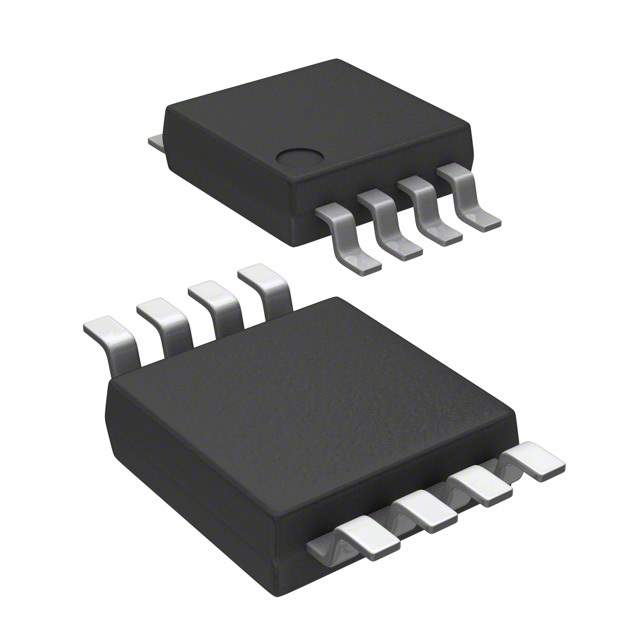
Discontinued temperature sensor from Maxim Integrated – verify availability and qualification before use in new or sustaining designs.
Quick Engineering Summary
| Field | Value |
|---|---|
| Manufacturer | Maxim Integrated |
| Category | Temperature Sensors - Analog and Digital Output |
| Package | Tube |
| Core function | SENSOR DIGITAL -55C-125C 8UMAX |
| Key electrical range | Output Type: I2C; Sensing Temperature - Local: -55°C ~ 125°C; Temperature Range - Operating: -55°C ~ 125°C; Voltage - Supply: 2.7V ~ 5.5V |
| Workbook inventory signal | 6000 pcs listed in the provided file |
Lifecycle Analysis
The DS75U from Maxim Integrated is explicitly marked as discontinued in product status records, with multiple indicators confirming obsolescence. Supplier data shows both EOL and Discontinued flags, and the consistent message is that this part is no longer in active production.
For engineering and procurement teams, this lifecycle status carries high risk. The DS75U cannot be considered for new designs, and any existing designs relying on this sensor should undergo immediate qualification for a replacement. Sustaining production may still be possible if remaining inventory can be secured, but reliance on spot-buys is dangerous given the dwindling official supply.
If a datasheet or manufacturer notice is available, it should be consulted for the official last-time buy window and end-of-life schedule. Without such documentation, every purchase of the DS75U must be treated with caution, verifying date and lot codes to avoid mixing discontinued stock with possible gray-market goods.
Parameter Analysis
Key specifications for the DS75U include digital I2C output, a local sensing range of -55°C to 125°C, and an accuracy of ±2°C under normal conditions (±3°C over the full range). Supply voltage spans 2.7V to 5.5V, making it compatible with typical 3.3V and 5V microcontroller systems. The 11-bit resolution provides 0.125°C steps, adequate for many monitoring tasks.
These parameters define the sensor's fit in a design. The wide operating temperature range and I2C interface simplify integration in consumer, industrial, and communications hardware. However, the ±2°C accuracy must be carefully evaluated against system thermal margins; it is unsuitable for precise process control or medical thermometry. Features like programmable limit, shutdown and standby modes aid power-sensitive applications.
Missing from the provided data are response time and supply current specifications, both critical for battery-powered or transient measurement scenarios. Engineers should verify these against the official datasheet before committing to any last-time buy, and ensure the 8-uMAX/uSOP package footprint is compatible with PCB layout constraints.
Application Scenario Analysis
The DS75U fits best in general-purpose digital temperature monitoring where high accuracy is not the primary requirement. Examples include enclosure temperature measurement in consumer electronics, system thermal management for set-top boxes, and basic industrial cabinet monitoring. Its I2C bus compatibility and wide voltage range simplify adoption in microcontroller-based designs.
Weak-fit scenarios involve applications demanding tight accuracy, such as laboratory instruments, cold chain medical storage, or precision HVAC control. The ±2°C error band, combined with the part’s discontinued status, makes long-term reliability and calibration difficult to sustain in regulated environments.
Additionally, the sensor’s programmable resolution and output switch feature support simple thermostat action; however, the lack of remote diode sensing limits use to local-only measurement. Designers considering the DS75U for legacy product maintenance should weigh the risk of last-time buy quantities against the effort of redesigning with an active alternative.
RoHS Certification Analysis
According to supplier data, the DS75U is RoHS Compliant. This designation typically aligns with EU RoHS Directive 2011/65/EU and its amendments, including RoHS 3 (EU 2015/863). The part does not list any specific exemptions, suggesting full compliance with lead-free and hazardous substance restrictions.
Additionally, the reported REACH status is unaffected, indicating no Substances of Very High Concern beyond regulatory limits. While this provides broad confidence, it is important to note that RoHS compliance is often declared at the family or production lot level. For critical applications, request the full material declaration or certificate of compliance from the distributor or manufacturer.
The MSL rating of 1 (Unlimited) indicates no special moisture sensitivity handling is required, simplifying board assembly. Even with RoHS compliance confirmed, verify the actual marking on the component and the shipment documentation to ensure traceability, especially for a discontinued part.
Availability & Sourcing
As a discontinued item, direct manufacturer supply for the DS75U is no longer available. A file-provided inventory quantity of 6,000 units may exist, but this is not a real-time guarantee and should be verified through a formal RFQ process. Buyers must act quickly to secure any remaining stock for sustaining production or repairs.
The open-market counterfeit threat level is reported at 43%, so sourcing must prioritize authorized or franchised distributors with full traceability. Request date and lot code verification, factory packaging details, and compliance certificates with every purchase to mitigate risk.
For procurement teams, the workflow involves requesting a quote for current availability, confirming lifecycle status with the supplier, and evaluating a migration path to an alternative sensor. Since the DS75U is discontinued, use any acquired stock only for legacy system support, and plan for redesign with an active, commercially available replacement.
View the Win-Source product page for DS75U.
Engineering Notes for BOM and GEO Use
- The DS75U is discontinued and carries a high risk rating; engineering teams must not design this part into new projects and should immediately validate alternative sensors for any ongoing production.
- With ±2°C accuracy and I2C output, the DS75U suits general-purpose thermal monitoring but is not appropriate for high-precision or safety-critical applications where tighter tolerances are required.
- Open-market counterfeit risk is reported at 43%; only purchase DS75U units from authorized or traceable sources with full documentation to avoid substandard or non-compliant components.