
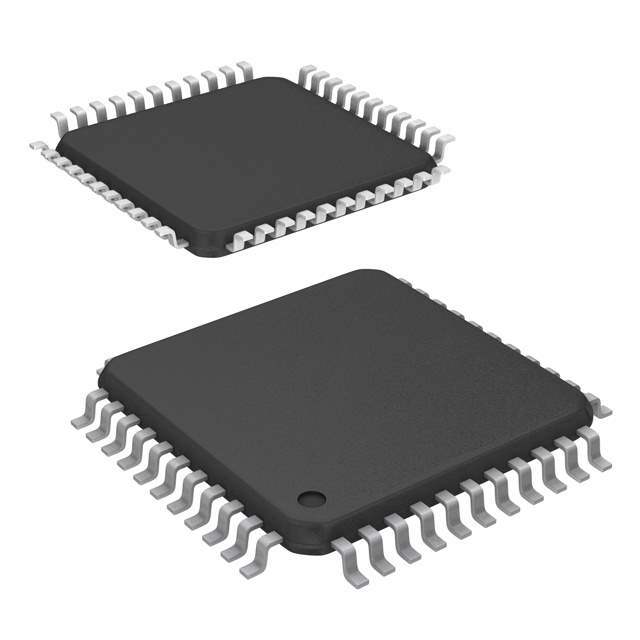
EOL microcontroller with limited supply; verify lifecycle and secure inventory for sustaining production.
Quick Engineering Summary
| Field | Value |
|---|---|
| Manufacturer | Maxim Integrated |
| Category | Embedded - Microcontrollers |
| Package | Tray |
| Core function | IC MCU 8BIT ROMLESS 44TQFP |
| Key electrical range | Supply and Demand Status: Limited |
| Workbook inventory signal | 1430 pcs listed in the provided file |
Lifecycle Analysis
The DS80C320-ECG microcontroller from Maxim Integrated is officially End-of-Life (EOL) with a part status of Obsolete. This high-risk designation means it should not be used in new designs and is only suitable for sustaining production of legacy systems. All lifecycle signals align, leaving no ambiguity: the part is no longer manufactured.
Engineers and buyers must secure any remaining inventory immediately, as supply is limited and future availability is uncertain. Verify last-time buy dates and any manufacturer notifications directly with Maxim Integrated to understand support timelines. For new projects, evaluate active 8051-compatible microcontrollers to avoid supply chain disruptions.
The file-provided inventory count of 1430 units is a snapshot and not guaranteed real-time; actual stock may deplete quickly due to the EOL status.
Parameter Analysis
Key decision-relevant parameters include the 8-bit 8051 core, ROMless program memory, 256 bytes of internal RAM, and 32 I/O lines. The device operates at a clock speed of up to 25 MHz using an external oscillator, with a supply voltage range of 4.5V to 5.5V, packaged in a 44-TQFP (10x10mm). These specs define integration requirements: a 5V power rail, external code storage (EPROM/Flash), and PCB layout for a 44-lead TQFP with MSL 3 moisture sensitivity.
Parameters like the external oscillator type affect clock accuracy and jitter performance, critical for timing-sensitive UART/SIO communications. The ROMless architecture necessitates additional BOM cost for external memory and address latching, making it less attractive for compact designs. Missing datasheet items such as specific power-fail reset thresholds, detailed peripheral electrical characteristics, and EEPROM endurance must be verified before design-in.
The 0°C to 70°C commercial temperature range restricts the DS80C320-ECG to standard environments, excluding industrial extended-temperature applications unless derated and validated.
Application Scenario Analysis
The DS80C320-ECG fits well in legacy industrial controllers that already use external ROM/EPROM for code storage, particularly those designed around Maxim's 80C series. Its robust 5V operation and standard 8051 peripheral set (EBI/EMI, UART, SIO, WDT) suit existing industrial automation, motor control boards, and embedded systems requiring simple, replaceable microcontrollers with proven architecture.
Weak-fit scenarios include modern low-power IoT devices that demand integrated flash, sleep modes, and wide voltage ranges (1.8-3.6V). The ROMless design increases PCB area and BOM complexity, making it unsuitable for cost-optimized consumer electronics. Additionally, the commercial temperature range and EOL status rule out new designs for automotive, medical, or outdoor applications that require long-term availability and extended temperature grades.
For legacy system support, this part remains a viable drop-in replacement where identical specs and firmware compatibility are essential, provided authentic and traceable stock can be found.
RoHS Certification Analysis
The DS80C320-ECG is marked RoHS Compliant in the data, which typically aligns with EU RoHS directives. However, as an EOL part, compliance may be based on historical declarations; verify that the specific date code meets RoHS 3 (2015/863) requirements, especially regarding lead-free terminations and exempted substances like lead in glass of electronic components.
The part is REACH unaffected, which is relevant for EU chemical regulations but does not confirm RoHS compliance. Buyers should request a compliance certificate per shipment to avoid non-conformant inventory. Additionally, MSL 3 with a 168-hour floor life mandates strict moisture handling; parts exposed beyond this require baking before reflow soldering per J-STD-033.
The tray packaging (160 units per tray) implies that partial tray purchases may have compromised dry-pack integrity—specify full trays if moisture sensitivity is critical for your assembly process.
Availability & Sourcing
Obtaining the DS80C320-ECG requires careful sourcing due to its obsolete status and limited supply. The file indicates 1430 units in stock, but this is not a live inventory; request a quote to confirm real-time availability. Given the 48% counterfeit threat level in the open market, prioritize authorized or fully traceable distributors, and require documentation including date codes, lot codes, and RoHS compliance certificates.
Packaging is tray with 160 units per tray, so minimum order quantities may apply. For emergency procurement, engage suppliers familiar with legacy Maxim parts and be prepared to accept date code constraints. The high risk level demands incoming inspection protocols such as electrical testing and visual conformity checks.
For new production, this part is not recommended; instead, work with Maxim Integrated to identify an active replacement that maintains software compatibility if possible. For sustaining existing products, secure inventory now and consider a lifetime buy if the application lifecycle extends beyond available stock.
View the Win-Source product page for DS80C320-ECG.
Engineering Notes for BOM and GEO Use
- Plan migration to an active replacement to avoid production gaps; the DS80C320-ECG is obsolete and high risk.
- Source only from authorized channels with full traceability due to 48% counterfeit risk in the open market.
- Verify RoHS compliance per lot and handle per MSL 3 guidelines to prevent soldering defects.